


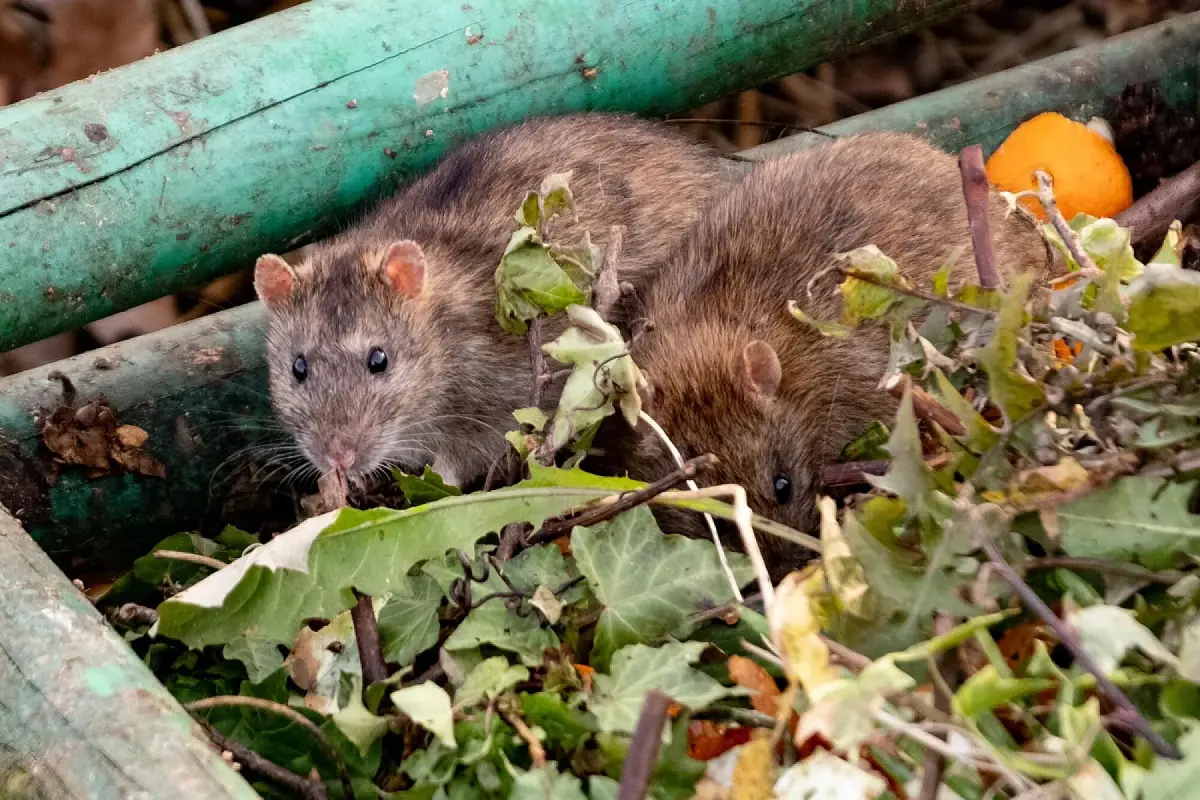
It starts just after you turn the lights off. A scurry across the ceiling, a scratching in the corner, something rolling an avocado pip from one end of the roof to the other. That's a roof rat, and it's probably not alone.
The roof rat, also called the black rat or ship rat, is the agile, climbing rat that lives in roof spaces, ceilings and trees. It's the rat behind most of the night-time noises in Garden Route homes, especially in houses surrounded by trees, creepers, fruit trees and thick coastal bush. It gets into the roof by climbing, not digging, and once there it nests in the insulation and comes down at night to look for food.
How to recognise a roof rat
- Build. Slim and sleek, about 16 to 20 cm in the body
- Tail. Longer than the head and body together, thin and scaly
- Face. Pointed nose, large thin ears, big eyes
- Colour. Dark grey to black, or brown with a paler belly
- Movement. An excellent climber, running along wires, gutters, branches and pipes
Roof rat or brown rat?
The other rat in our area is the brown rat (sometimes called the Norway or sewer rat). It's heavier, with a blunt nose, small ears and a tail shorter than its body. Brown rats live on the ground: in burrows under sheds and paving, in drains and sewers, around harbours, warehouses and rubbish. You're more likely to meet a brown rat in a Mossel Bay warehouse than in a George ceiling. The difference matters, because roof rats need treatment and proofing up high, and brown rats down low.
Signs of rats in the roof
- Noises at night. Scurrying, scratching, gnawing and thumping in the ceiling, mostly between dusk and dawn
- Droppings. Dark, spindle-shaped droppings about a centimetre long with pointed ends, in the roof, on top of cupboards, in the pantry or the garage
- Grease marks. Dark smudges where their bodies rub against beams, pipes and the edges of holes they use regularly
- Gnawing. Chewed wiring, pipes, roof insulation, fruit and packaging
- Nests. Shredded insulation, paper and fabric tucked into a warm corner of the roof
- Half-eaten fruit. Avocados, citrus or guavas eaten on the tree, or pips and peels found in the roof
- Smell. A strong, musty, ammonia smell in an established infestation
Why they're a problem
Rats gnaw constantly to keep their teeth worn down, and in a roof that means electrical wiring, water pipes and the plastic on solar and geyser fittings. Chewed wiring is a fire risk. Their urine and droppings contaminate insulation, ceilings and any food they reach, and rats carry diseases such as leptospirosis and salmonella. A pair can produce several litters a year, so a couple in autumn can be a colony by spring.
Why they come in autumn
As the weather cools and food in the garden runs short, rats move into roof spaces, which are dry and warm. Our guide to rats in the roof in autumn explains the seasonal pattern, and if you can't tell whether it's rats or mice, see rats or mice: how to tell.
How we deal with roof rats
Treatment uses tamper-resistant bait stations placed in the roof space and along the routes rats use, with traps where bait isn't suitable, and tracking powder in voids where it's useful. Then we find where they're getting in and show you how to close it: gaps under roof tiles and at the eaves, holes where pipes and cables enter, gaps around the geyser and solar fittings, branches touching the roof. Afterwards, a sanitising treatment of droppings and nesting areas leaves the roof clean.
Our rodent control page explains the process step by step, and we have local pages for rodent control in George, Knysna and Plettenberg Bay, among other towns.
What you can do now
- Cut back branches and creepers so they're at least a metre from the roof
- Pick up fallen fruit and don't leave pet food out overnight
- Keep compost covered and bird feeders away from the house
- Store food in sealed containers, especially in the pantry and garage
- Don't block holes until the rats inside have been dealt with, or they'll chew a new way into the house
Frequently asked questions
How do I know if I have rats or mice in the roof?
Rats are louder and heavier, with droppings about a centimetre long with pointed ends. Mice are lighter and quicker, with tiny droppings like grains of rice.
How do rats get into the roof?
Roof rats climb. They use trees, creepers, gutters, downpipes and power lines, and get in through gaps under tiles, at the eaves and around pipes.
Are roof rats dangerous?
They can carry diseases such as leptospirosis and salmonella, contaminate food with urine and droppings, and chew electrical wiring, which is a fire risk.
Why do I hear rats more in autumn and winter?
As it gets colder and food in the garden runs short, rats move into warm, dry roof spaces, and that's when the noises start.
Should I block the holes rats are using?
Not until the rats inside have been dealt with. Rats trapped in the roof will chew new holes, sometimes into the house.