

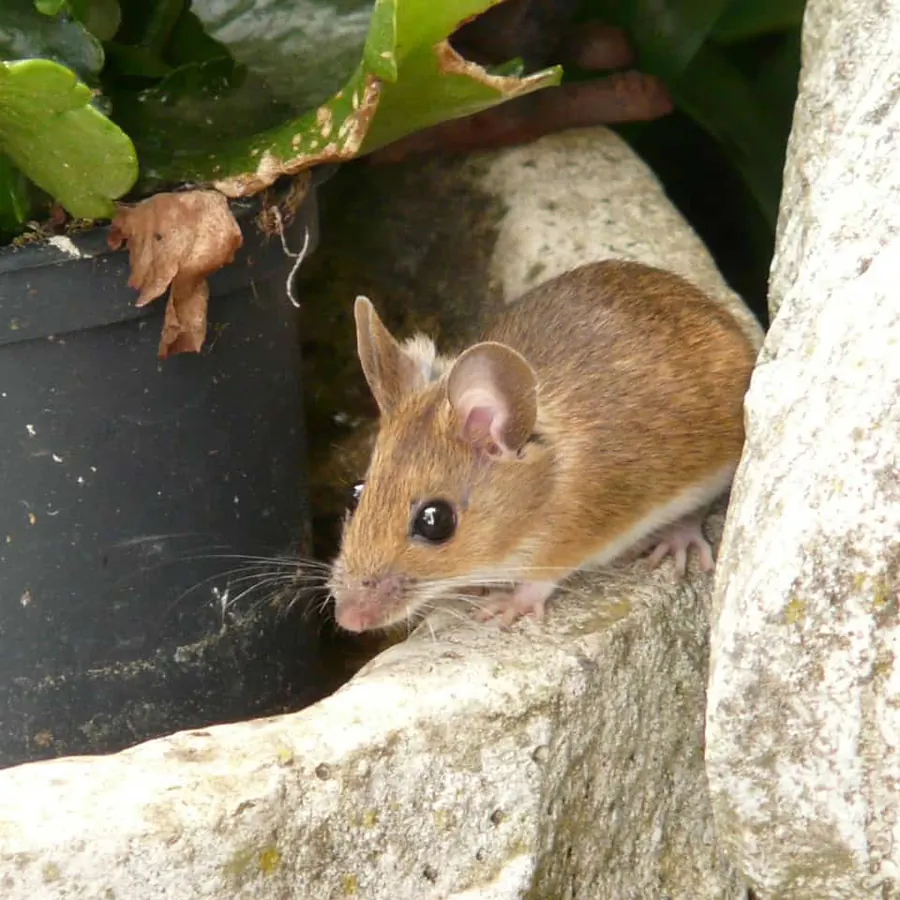
Here's the short version of how we deal with rodents in Stil Bay. We find where they're getting in and where they're nesting, set bait stations or traps that suit the house, come back to check them, and show you what to seal so it doesn't happen again. That last step matters more here than in most towns, because so many houses stand empty for long stretches and nobody notices until the rodents are well settled.
How you usually find out
- A stale, sour smell when you open the front door after a few months away
- Shredded paper, tissue or fabric in a drawer or the linen cupboard, which is a nest
- Droppings on the kitchen counter or along the back of the pantry shelves
- Gnawed soap, candles or the corner of a cereal box
- Greasy dark marks along skirting boards where they run the same route every night
- A light, a gate motor or an appliance that has stopped working because of chewed wiring
Rats or mice? It changes the plan
Mice stay close to food and nest within a few metres of it, so they need lots of small treatment points near the kitchen and cupboards. Rats travel further and are naturally wary of anything new, so they may take days to go near a bait station. Roof rats climb, and they'll be in the ceiling or the top of the garage. Brown rats tend to stay at ground level, in sheds, under decks and along garden walls, and they're more common where there's water and soft soil, like the gardens running down towards the Goukou River.
Droppings are the easiest way to tell them apart: mouse droppings are tiny and pointed, rat droppings are much larger and blunter.
What we do
- Inspection. Roof space, eaves, garage, outbuildings and the spots under sinks and behind stoves where pipes come through the wall. We're looking for nests, runs and the gap they're using.
- Treatment. Lockable, tamper-resistant bait stations, traps, or tracking powder in roof and wall voids, depending on the house and who uses it.
- Proofing. We show you exactly where they're getting in: a gap around a pipe, a garage door that doesn't seal at the bottom, an open vent, a branch over the gutter. Some fixes you can do in an afternoon. Others are for a builder.
- Follow-up and sanitising. We come back to check activity, and once it's stopped we can sanitise the areas where they nested and fed.
Before you lock up for the season
Most rodent problems in Stil Bay holiday homes start with something left behind. Before you go, take home or seal away anything they can eat: pet food, bird seed, fishing bait in the garage, and the open packets in the pantry. Pull food scraps out of the bin and the compost heap. Check the garage door and any outbuilding doors close properly, because those are where many rodents get their start. And if a neighbour or agent checks on the house, ask them to look at the bait stations while they're there.
The mistake: loose poison in an empty house
It's tempting to scatter a few packets of rat poison in the ceiling and leave for three months. The rodents eat it and die where they shelter, often inside a wall or under the roof insulation, and you come back to a smell you can't reach and a cloud of flies. Loose poison is also a danger to any pet or child who visits the house before you do. Bait stations that are placed properly, checked and taken away when the job is done work better and are far safer.
How much will it cost?
It depends on the size of the house, how long the rodents have been there, how many entry points need closing and how many follow-up visits it takes. Travel from George and any outbuildings add to it. A couple of mice in a kitchen is a small job. Rats that have had the roof to themselves all winter take longer and need more checks. Holiday rental owners often prefer a regular service between seasons. If you're staying in the house and have seen a single mouse, a couple of snap traps baited with peanut butter along the skirting may be all it takes.
Have a cockroach or ant problem as well? See pest control in Stil Bay. For more on rodents across the Garden Route, read about rodent control in George.
We're SAPCA registered, with more than 25 years in the Garden Route and a 3-month guarantee on our rodent treatments. Give us a call on 044 012 5011 when you're ready to deal with it.
Questions we get asked
Should I clean up the droppings myself?
You can, but don't sweep or vacuum them dry, because that puts dust from them into the air. Wear gloves, wet the droppings with disinfectant first, then wipe them up, or ask us to sanitise the area for you.
Can rodents do much damage in a house that's empty for months?
Yes, a lot. With nobody disturbing them, they chew wiring, soft furnishings and stored food, and the population keeps growing until someone comes back.
What's the sour smell when I open the house?
It's usually rodent urine, and sometimes a dead rodent in a wall or ceiling. Either way, it means rodents have been active and the house needs an inspection.
Is tracking powder safe in my home?
Yes, when it's used the way we use it: only in enclosed spaces like roof and wall voids that people and pets can't reach.
Do you take the bait stations away afterwards?
Yes, once the activity has stopped, unless you'd like some left in place as a monitoring point for the months the house stands empty.