


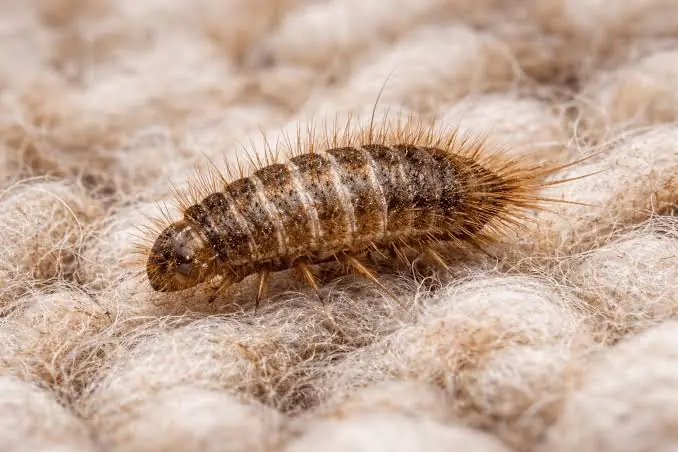
A bare patch on the edge of a wool rug. Holes in a jersey that was folded away all winter. Tiny hairy larvae under the couch. Moths get the blame, but it's often carpet beetles.
Carpet beetles are small beetles whose larvae feed on keratin, the protein in wool, silk, fur, feathers, leather and hair. The adults are harmless and spend much of their time outdoors feeding on pollen. It's the larvae, hidden in dark, undisturbed corners, that do the damage to carpets, rugs, clothing, blankets, upholstery, stuffed animals and anything else made from animal fibres.
What they look like
- Adults. Tiny, rounded beetles, about 2 to 4 mm, like a very small ladybird. Many have a mottled pattern of white, brown, black and orange scales; others are plain dark brown or black. You often see them on windowsills in spring and early summer, trying to get outside to the flowers
- Larvae. Slow-moving, carrot-shaped or oval, about 4 to 5 mm long, brown and covered in bristly hairs, often with bands and a tuft of longer hairs at the tail. They're sometimes called woolly bears
- Shed skins. As they grow, the larvae shed their skins several times. Finding small, hairy, empty skins in a drawer or under a rug is often the first sign
What they damage
- Wool carpets and rugs, especially along the edges and under furniture where the vacuum doesn't reach
- Wool, cashmere and silk clothing stored in wardrobes, drawers and boxes
- Blankets, duvets and pillows filled with feathers or down
- Upholstery with wool or natural fibre fabric
- Furs, leather, felt and taxidermy
- Lint, pet hair and dead insects in cracks and under skirting boards, which is where many populations start
The damage is irregular holes or bare patches, often in hidden places, with larvae or skins nearby.
Carpet beetles or clothes moths?
Both damage the same materials. Clothes moth larvae are pale, cream-coloured caterpillars without hairs, and they spin silky tubes or webbing where they feed. Carpet beetle larvae are brown and hairy, and don't spin webbing. The adults are also easy to tell apart: small beetles on the windowsill versus small, pale, fluttering moths that avoid light.
Where they come from
Adult carpet beetles fly in through open windows in spring and summer, attracted to light, and lay eggs anywhere there's suitable food. Old bird nests in the roof or under the eaves are a common source, because they're full of feathers, droppings and dead insects. So are dead insects in light fittings, and pet hair and fluff under furniture. Second-hand rugs and furniture can also bring them in.
How to get rid of them
- Find the source Check under and behind furniture, under rug edges, in cupboards and drawers, in stored blankets and in the roof space if birds have nested there.
- Clean thoroughly Vacuum carpets, rug edges, skirtings, under furniture and inside cupboards, then empty the vacuum outside.
- Treat affected items Wash woollens and blankets on the hottest setting the fabric allows, dry clean what can't be washed, or seal items in a bag and freeze them for several days.
- Treat the room A residual treatment along carpet edges, skirtings, under furniture and in cracks reaches larvae that cleaning misses.
- Store properly Put clean woollens and blankets away in sealed bags or containers.
Our insect control page covers treatment. If birds are nesting in your roof, see bird control: removing the nest removes a common carpet beetle source.
Rugs, heirlooms and holiday homes
Carpet beetles do their worst damage where nobody looks for months: a wool rug under a bed in the spare room, a box of blankets in the garage, a cedar chest of old clothes, a holiday home closed between seasons. If you store anything woollen for long periods, clean it before storing, seal it, and check it a couple of times a year. In a house that's closed for most of the year, a check before you arrive, like our holiday home pest control visit, catches them early. And if you're finding damage in paper or starched cotton rather than wool, the culprit is more likely fishmoths.
Frequently asked questions
What do carpet beetle larvae look like?
Small, brown, hairy and carrot-shaped, about 4 to 5 mm long, often found with their shed skins under rugs, in drawers and in stored blankets.
Do carpet beetles bite?
No. They don't bite, but the hairs on the larvae can irritate the skin of some people, causing an itchy rash that's sometimes mistaken for bites.
How do I know if it's carpet beetles or moths?
Carpet beetle larvae are brown and hairy and don't spin webbing. Clothes moth larvae are pale caterpillars that leave silky tubes or webbing where they feed.
Where do carpet beetles come from?
Adults fly in through windows in spring and summer. Bird nests in the roof, dead insects, pet hair and second-hand rugs are common sources.
Can I get rid of carpet beetles myself?
Small problems, yes: thorough vacuuming, washing or freezing affected items, and sealed storage. A widespread infestation needs the room treated as well.