


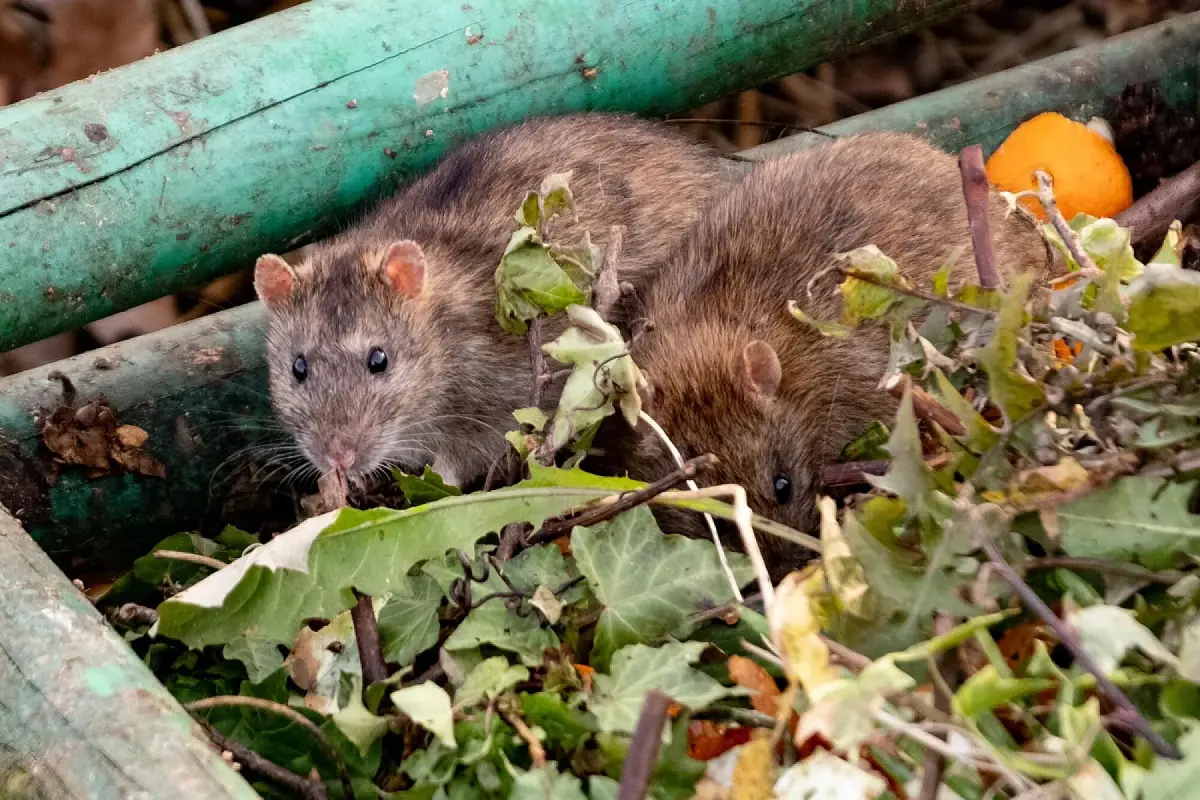
The first cool evening of the year, you're in bed and something runs across the ceiling. Here's why autumn is when it starts, and how to get ahead of it next year.
The cheapest way to deal with rats in the roof is to give them no way in before the nights turn cold. If you're reading this in February or early March, do the walk-around below this weekend. If you're reading it because something is thumping above the bedroom, skip to "The first week", and don't block any holes yet.
Why it starts when the evenings cool
Rats breed through the warm months. By late summer there are far more of them than there were in spring, and many are young animals looking for a place of their own. At the same time, the garden stops being such an easy place to live. Nights get colder, and a roof space, sitting under sun-warmed tiles with a blanket of insulation to burrow into, is about as good as shelter gets.
So it's not that rats suddenly appear in autumn. They were in the trees and hedges all summer. Autumn is when they look for a way up.
Late summer: a walk around the house
Pick a dry afternoon and walk slowly around the outside of the house. You're looking for two things: a way up, and a way in.
Ways up
- Tree branches that touch or overhang the roof
- Creepers and ivy growing up the walls to the gutters
- Downpipes, especially where they run tight into a corner
- Telephone, power or satellite dish cables running to the eaves
- A wall, carport or garage roof that joins the main roof
Ways in
- Gaps between the top of the wall and the roof sheeting or tiles, often where the fascia or barge board has warped
- Lifted or cracked tiles, and crumbling mortar under the ridge tiles
- Holes where pipes, the geyser overflow or solar fittings pass through the roof
- Air vents and gable vents with no mesh behind them
- Any hole bigger than about the width of your thumb. A young rat needs no more than that
Then, at dusk, stand quietly in the garden for ten minutes with a torch. Rats travel the same routes every night. You may see one run along a wall top, a cable or a branch, and that tells you exactly where it's getting up.
Inside the roof
Open the trapdoor and look with a strong torch. Fresh droppings, dark and roughly a centimetre long, along the tops of the walls and on the ceiling boards are the giveaway. So are flattened runways through the insulation, shredded nesting material in a warm corner near the geyser, and dark greasy smears on beams where bodies rub past. Our roof rats profile has the full list of signs.
The first week of noises
- Note when and where Which room, what time of night, and whether it's a light pattering or something heavier. Light and quick could be mice, and our guide on rats or mice explains how to tell
- Leave the holes open for now If you close the entrance with rats inside, they gnaw a new way out, sometimes into the house through a cornice or a cupboard
- Don't throw loose poison into the roof A poisoned rat often dies somewhere you can't reach, and the smell comes through the ceiling for days. Loose bait also gets carried around and can end up where a pet finds it
- Pick up fallen fruit and bring pet food inside at night Less food nearby makes bait and traps work better
- Call us early A pair dealt with in the first week is a small job. A family that has been breeding in the insulation since March is not
How we handle it
We start with an inspection of the roof and the outside of the house, because finding the way in is as important as removing the rats. Tamper-resistant bait stations go into the roof space and along the routes outside, with traps where bait isn't suitable. Once the activity stops, we show you what needs closing and how, so a builder or handyman can do it properly with mesh, mortar or a new fascia section. Roof spaces with lots of droppings are sanitised afterwards. The rodent control page explains each step.
The smell
Even with careful baiting, now and then a rat dies inside a wall or ceiling void that nobody can reach. The smell is unpleasant, but it fades as the body dries out, usually over a couple of weeks. Opening windows and keeping air moving in the roof helps. If you can pinpoint the spot, a small inspection hatch is sometimes worth cutting so it can be removed.
Holiday homes
A house standing empty from Easter to December is perfect for rats: warm, quiet and undisturbed. If you close up a holiday home for the winter, do the walk-around before you lock up, and ask a neighbour or caretaker to listen for noises when they check in. Our holiday home pest control page covers getting a house ready for a long absence.
In your town
Wooded suburbs with tall trees close to the houses give roof rats an easy way up. If you live in Knysna, Plett or George, the local rodent page goes into the houses and gardens there.
If it's started already, phone 044 012 5011 or book a roof inspection, and tell us which room the noise is over.
Frequently asked questions
When is the best time to check my roof for rats?
Late summer, before the nights start to cool. That gives you time to cut back branches and close gaps before rats go looking for winter shelter.
I've only heard one rat. Should I still do something?
Yes. Rats rarely stay on their own for long, and they breed quickly. Dealing with one or two is much simpler and cheaper than dealing with a family.
Can I just put rat poison in the roof myself?
You can, but loose bait makes it more likely a rat dies somewhere out of reach in the ceiling, and it can be carried to where pets find it. If you do it yourself, use lockable bait stations, never loose pellets.
Will cutting back the trees keep rats out?
It removes one of the easiest ways up, but roof rats also climb walls, downpipes and cables. Branches cut back plus gaps closed is what works.
Can rats damage the cables to my solar panels?
Yes. Rats gnaw cable insulation and plastic fittings, including on and around solar installations. Check the area where cables enter the roof when you do your walk-around.
Does the ceiling insulation need replacing after rats?
Only if it's heavily soiled with droppings and urine or badly shredded. Lightly affected roof spaces can be cleaned and sanitised instead.