

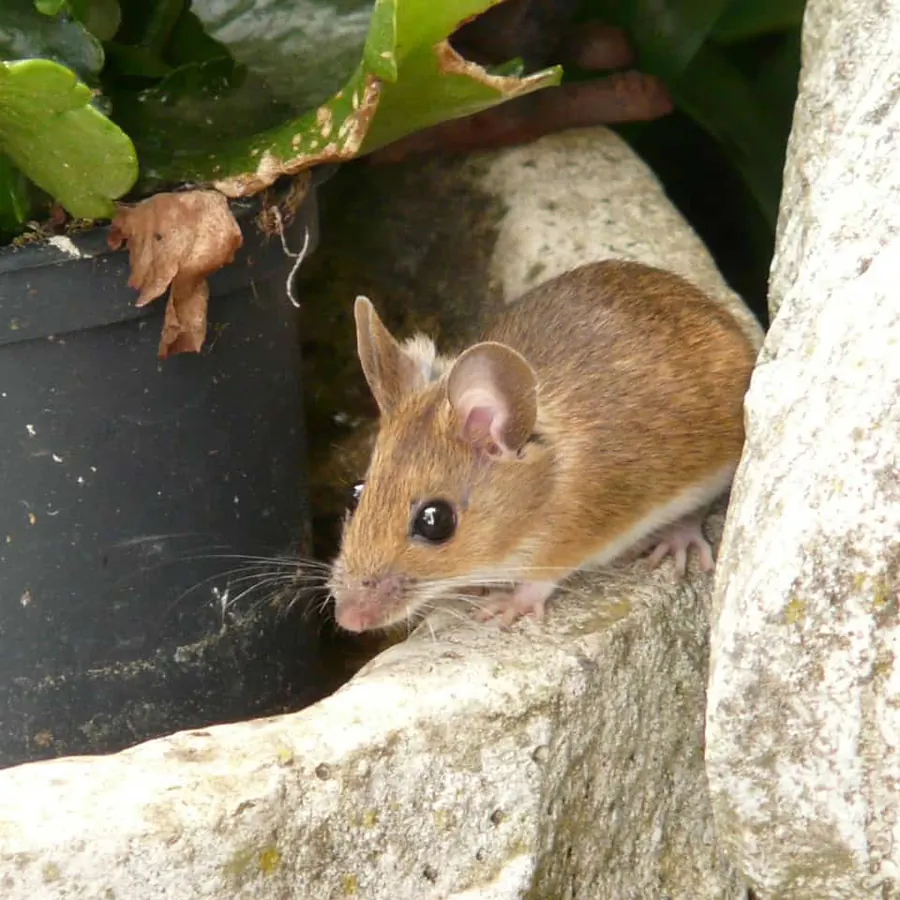
Rodents in Oudtshoorn are almost always about feed. Ostrich farms, lucerne sheds, feed stores and grain bins hold the kind of steady food supply that lets a rat or mouse population grow fast. Our job is to bring the numbers down with bait stations and traps, find where they're nesting and getting in, and help you make that food harder to reach, so the next lot doesn't move straight back in.
Farms and feed sheds
On a farm the trouble spots are easy to predict once you know what to look for: spilled feed around troughs and pens, bags stacked straight on the floor, bales of lucerne that make warm, dry nesting cover, and outbuildings with open eaves and gaps under the doors. Rodents eat a surprising amount of feed, but the bigger loss is what they spoil. They chew through bags, and their urine and droppings contaminate far more than they actually eat. They also gnaw electrical cables in sheds and pump houses.
In town, when the winter nights bite
Oudtshoorn's winters are cold, and once the nights drop, mice and rats move into roofs, ceilings, the space behind the stove and the geyser cupboard. Summer brings its own pull. In the dry heat, a dripping tap, a pet's water bowl or a leaking irrigation line is worth travelling for, and rodents will set up close to it.
What tells you they're there
- Torn feed bags and small spills of grain or pellets that you didn't make
- Burrows along shed walls, under concrete slabs or beside water troughs
- Tracks and tail marks in the dust on a shed floor, which is often the quickest way to see where they're running
- Droppings in feed bins, on shelves or along roof beams
- Noise in the ceiling at night, especially in the colder months
- Chewed wiring, irrigation pipe or plastic containers
How we deal with it
On a farm or in a feed store
We start with a walk around every building to map out where the rodents are feeding, nesting and travelling. Then we set lockable bait stations around the outside of the buildings to intercept them on the way in, with traps inside where feed is handled or stored. On larger properties, stations are placed on a plan and checked on a schedule, and most farms and commercial stores do best on a service contract.
In a house
We inspect the roof space, eaves, kitchen and outbuildings, set up bait stations, traps or tracking powder in voids to suit the household, and show you where they're getting in. Once the activity stops, we can sanitise the areas they've used.
Working dogs, cats and other animals
Most properties out here have dogs, farm cats and livestock around. Our bait stations are lockable and tamper-resistant, and we position them where animals can't get at them. Near feed and livestock, we lean towards traps. We'll also ask you to watch for dead rodents and pick them up, so a dog doesn't eat one.
The mistake: letting the feed do the baiting
If there's loose feed everywhere, rodents simply ignore the bait. Why would they bother with a station when there's a pile of spilled pellets next to it? Cleaning up is the single biggest thing you can do. Keep feed in sealed bins or a rodent-proof room, stack bags on pallets off the floor and away from the walls, and sweep spills at the end of each day. A local tip for the Karoo: give the shed floor a quick sweep before we arrive, then look at it again the next morning. The fresh tracks in the dust show you exactly where they're running.
Where fumigation fits in
Rats and mice often share a store with weevils and beetles. If the feed or grain itself is infested with insects, that's a separate job, and you can read about it on our Oudtshoorn fumigation page.
How much will it cost?
For farms, it depends on how many buildings need covering, the size of the property, how many stations are needed, how established the rodents are, how often the stations are checked and the travel over the Outeniqua Pass from George. For a house, it's the size of the home, how much proofing is needed and how many follow-ups it takes. If you've seen one mouse in a town house, a couple of traps may do the job. Once they're in the feed shed, you need a proper programme.
For other pests, see pest control in Oudtshoorn. We also cover Dysseldorp, and you can read more about our approach on the George rodent control page.
We're SAPCA registered, with more than 25 years in the Garden Route and Klein Karoo, and our rodent treatments carry a 3-month guarantee. Call 044 012 5011 to arrange an inspection.
Questions we get asked
Do you do rodent control on farms outside town?
Yes, we work on farms and smallholdings around Oudtshoorn and the wider Klein Karoo, as well as homes and businesses in town.
How often should bait stations on a farm be checked?
It depends on how busy the rodents are. Sites with heavy activity need checking more often at first, and we set a schedule that suits your property once the numbers come down.
Can you work around livestock?
Yes. We use lockable stations placed out of reach of animals, and traps instead of bait in places where livestock feed or drink.
Do rodents attract snakes?
They can. A steady population of rats and mice around sheds and houses is a food source for snakes, which is one more reason to keep the numbers down.
Why are there more mice in my house in winter?
The cold Klein Karoo nights drive them indoors looking for warmth, and roofs and the space behind stoves are the warmest places they can find.