


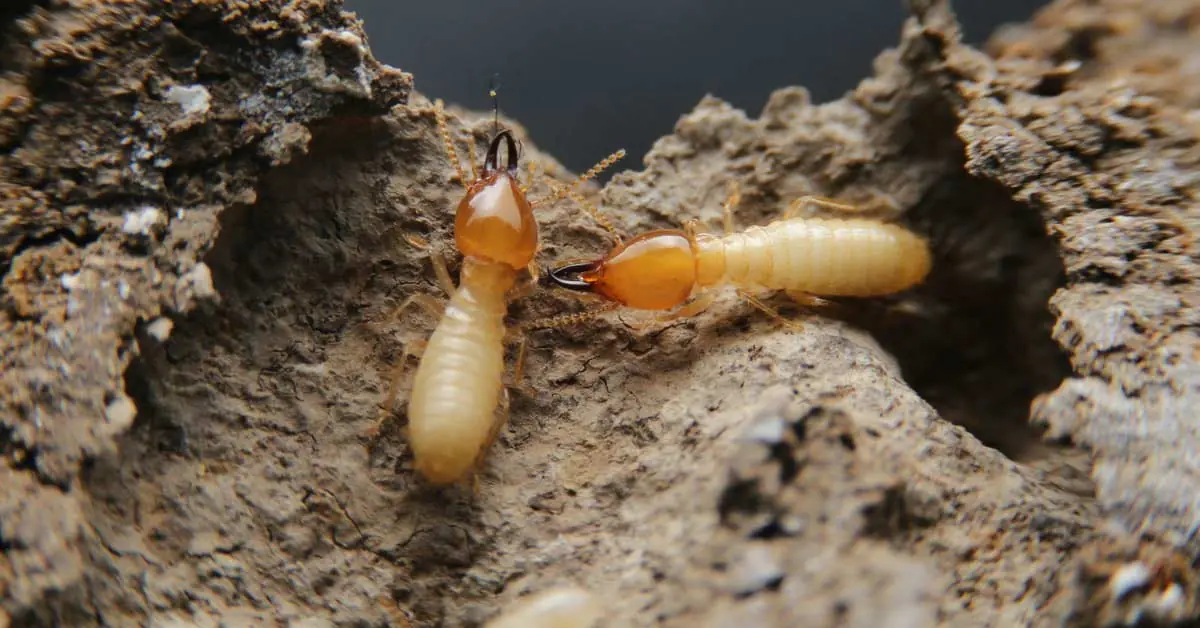
Bare, dead patches spreading across the lawn, each with a scatter of tiny soil heaps and small holes. Early on a cool morning, you may see dark termites carrying pieces of grass down those holes.
Harvester termites are grass-eating termites that live in large underground nests and come to the surface to cut grass, dry leaves and plant litter, which they carry back down to feed the colony. Unlike subterranean termites, they don't attack the timber in your house. Their damage is to lawns, sports fields, gardens and grazing, where they can strip an area bare. They're common in the drier parts of the region, especially the Klein Karoo, and in lawns on the coastal side as well.
How to recognise them
- Darker colour. Unlike the pale workers of wood-eating termites, harvester termite workers that forage above ground are darker, brown to almost black, because they're exposed to sunlight
- Small holes in the ground. Foraging holes a few millimetres across, scattered across the lawn or veld
- Little soil heaps. Loose soil dumped around the holes, which is often the first thing people notice
- Grass cut into short pieces. Neat lengths of grass, a centimetre or two long, lying near the holes or being carried into them
- Bare patches. Areas where the grass has been cut down to the ground and dies off, usually getting bigger in dry weather
They forage mostly when it's cool: early mornings, late afternoons, and on overcast days. In the heat of a Klein Karoo summer afternoon you won't see them, but the holes will be there.
Why they cause so much damage
A single colony is big, and it can forage over a wide area. In a dry season, when grass is already struggling, harvester termites can take a lawn from patchy to bare in a few weeks. On farms, they compete with livestock for grazing, and on sports fields the bare patches turn to dust and then mud. Because the nest is deep underground, mowing, watering or digging around the holes makes no real difference.
Are they a danger to the house?
Not directly. Harvester termites eat grass and plant material, not building timber. But when people see termites in the garden, it's worth making sure that's what they are. If you're also finding mud tubes on walls, hollow skirtings or swarms indoors, that's a different species, and it needs a proper termite inspection.
How they're controlled
Harvester termites are treated by applying a registered product to the active foraging holes and the affected area of lawn, so that foraging workers pick it up and the colony is weakened. The timing matters: treatment works best when the termites are actively foraging, which is usually in cooler weather and after rain has softened the soil. A large or long-established infestation may need more than one treatment, and treating early, while the patches are small, gets the best results. Pets and children are kept off the treated lawn until it's dry.
Once the termites are under control, the bare patches need time, water and sometimes reseeding or new turf to recover.
What you can do
- Keep the lawn healthy and well watered in dry spells. A thick lawn recovers better
- Don't pile dry grass clippings or mulch in the affected area, as it feeds the colony
- Note where the patches are and how fast they spread. That helps us judge the size of the colony
We treat harvester termites in home gardens, estates, sports fields and on farms around George, Oudtshoorn and the Klein Karoo. Our termite control page covers both types, and if you're on a farm, see farm pest control. Phone 044 012 5011.
Harvester termites in the Klein Karoo
Around Oudtshoorn and the farms of the Klein Karoo, harvester termites are part of the landscape, and in a dry year they compete with livestock for every bit of grazing. On a farm, the aim is usually to protect lawns around the homestead, gardens and sports fields rather than open veld. Our page on termite control in Oudtshoorn covers both harvester termites and the wood-eating kind in Karoo homes, and farm pest control covers the wider farm. In town, school fields and estate lawns are the usual targets.
Frequently asked questions
What are the small holes and soil heaps in my lawn?
If the grass around them is dying and cut into short pieces, it's most likely harvester termites, which forage through those holes and dump soil around them.
Do harvester termites eat houses?
No. They eat grass and plant material, not building timber. Termites in walls and roofs are a different species.
Why can't I see the termites during the day?
They forage mostly in cool conditions, early in the morning, late in the afternoon and on overcast days. In hot sun they stay underground.
Will my lawn grow back after treatment?
Usually, yes, once the termites are under control. Bare patches may need water, time and sometimes reseeding or new turf.
When is the best time to treat harvester termites?
When they're actively foraging, usually in cooler weather and after rain has softened the soil. Treating early, while patches are small, works best.