

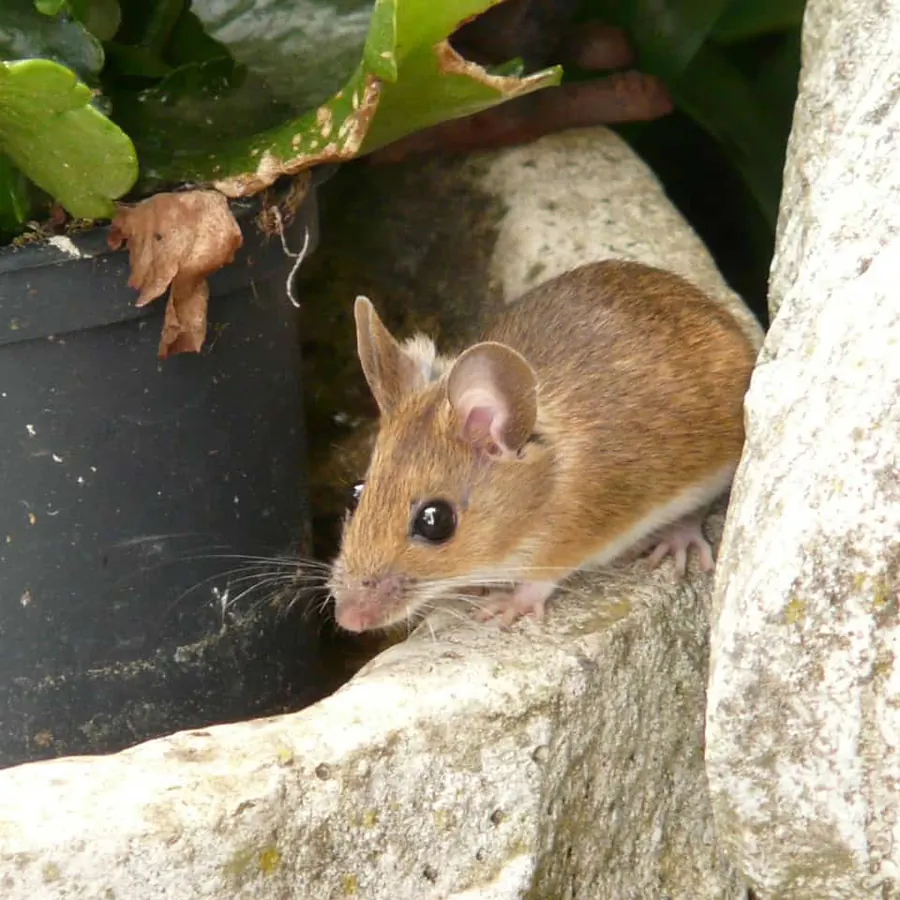
In Dysseldorp, rodent problems almost always start where there's feed or grain. A chicken run, a bag of mealies in the back room, lucerne bales in a shed, a sack of dog pellets on the stoep. Rats and mice find that food first, breed around it, and then move into the house when the Klein Karoo winter nights turn cold. The way to stop them is to deal with the house and the outbuildings together, and to take the free meal away.
What we're up against out here
Dysseldorp is a small, dry farming community east of Oudtshoorn. Summers are hot and winters are cold, and both extremes push rodents towards buildings: in summer for water and shade, in winter for warmth. A lot of properties have a garden, a vegetable patch, a few chickens or animals and somewhere feed is kept. To a rat, that's a complete home: food, water from a trough or a dripping tap, and shelter under a pile of zinc sheets or in the roof of a store.
Mice are the more common indoor problem. Rats tend to stay around outbuildings, animal pens and feed until numbers build up, and then they spread.
Signs to look for
- Holes chewed in feed bags, with spilled grain or pellets around them
- Burrows along the base of walls, under concrete slabs or beside the chicken run
- Droppings on shelves, in cupboards or along the top of walls in the shed
- Eggs disappearing from nests, or chicks going missing
- Gnawing on door frames, plastic water pipes or electrical cables
- Noise in the ceiling at night, especially from April onwards
Why it's worth dealing with properly
Rodents spoil a lot more feed than they eat, because their droppings and urine contaminate what's left. They carry diseases such as leptospirosis and salmonella, which can spread to people and to animals. And in roofs and sheds they chew wiring, which is a genuine fire risk in a dry place.
There's also the numbers problem. Rodents breed quickly when food is easy, so a few rats around a feed store in autumn can be a serious population by spring.
How we do it
Our first visit is an inspection of the whole property, not just the room where you saw the mouse. We look at the house, the roof, the outbuildings, animal pens and wherever feed or grain is stored. We're finding burrows, runs, nests and the gaps they're using to get into buildings.
Then we set up a control programme to suit the place:
- Lockable bait stations along walls, at burrows and around stores. They're tamper-resistant, which matters around dogs, children and farm animals.
- Traps where bait isn't suitable, for example inside a store where animals or food are kept close by.
- Tracking powder in voids and roof spaces where rodents travel but can't easily be reached.
We'll come back to check and replenish the stations, because rodent control in a farming setting is rarely a one-visit job. Once activity has stopped, we can sanitise the areas where rodents have been nesting and feeding.
Making the place less attractive
Bait reduces the rodents that are there. Taking away their food and shelter stops the next lot moving in. The most important changes are usually simple:
- Keep feed and grain in metal drums or bins with tight lids. A rat can chew through a plastic bucket or a sack overnight.
- Feed chickens and animals what they'll finish, and clean up spilt feed at the end of the day.
- Collect eggs daily.
- Clear rubble, old zinc sheets, unused tyres and long weeds away from buildings. They're perfect rodent cover.
- Close gaps under shed doors and around pipes where they enter the house.
A Dysseldorp tip: in a dry town, water is as big an attraction as food. Fix dripping garden taps, keep animal water troughs away from the house walls and don't leave buckets standing. In a hot Karoo summer, a leaking tap next to the kitchen door can do more to bring rats in than the food inside.
Where people go wrong
Relying on the cat. A good cat may catch the odd mouse, but cats don't keep up with a breeding rat population around a feed store, and a lot of cats won't take on a full-grown rat at all. The other common mistake is putting out loose poison near the chicken run, where hens, dogs or children can find it. Keep poison inside locked stations, always.
How much will it cost?
That depends on the size of the property, how many buildings are involved, how established the rodents are and how many follow-up visits the job needs. Because Dysseldorp is a drive from our George office, it makes sense to plan visits efficiently, and farms or businesses with stores often do best on a regular service. We'll quote after the inspection.
If it's a single mouse in the kitchen, a couple of snap traps and sealing the gap it came through may genuinely do the trick. If you're finding burrows, chewed feed bags and droppings in more than one building, it's past that point.
Weevils or beetles in your stored feed as well? That's a different problem; see fumigation in Dysseldorp. For other pests, see pest control in Dysseldorp, and for our work in the bigger town nearby, rodent control in Oudtshoorn.
Call us on 044 012 5011 to arrange an inspection. We're SAPCA registered, we've worked across the Garden Route and Klein Karoo for more than 25 years, and our rodent treatments carry a 3-month guarantee.
Questions we get asked
Do you come out as far as Dysseldorp?
Yes. We cover the Klein Karoo as well as the coast, including Oudtshoorn and Dysseldorp. Let us know about all the buildings that need attention so we can plan the visit properly.
Is rat bait safe around chickens?
Only if it's inside a locked bait station that chickens can't get into, placed where they don't scratch it about. Near animals and their feed we often use traps instead.
Can rodents damage stored lucerne or feed?
Yes. Rats and mice nest in bales and sacks, eat the feed and contaminate much more of it with urine and droppings, which can make it unsafe for animals.
Why do I get more mice in winter?
Because the cold Klein Karoo nights drive them into warm buildings. Autumn is the best time to check your seals and put stations in place, before they settle in.
Do I need to keep my animals away during treatment?
Keep them clear while we're placing stations and applying any treatment. The bait stations are locked, so day-to-day life with your animals can carry on afterwards.
How do I know the treatment has worked?
Bait taken from the stations drops off, fresh droppings stop appearing and the noise in the roof goes quiet. We check this on the follow-up visit.