

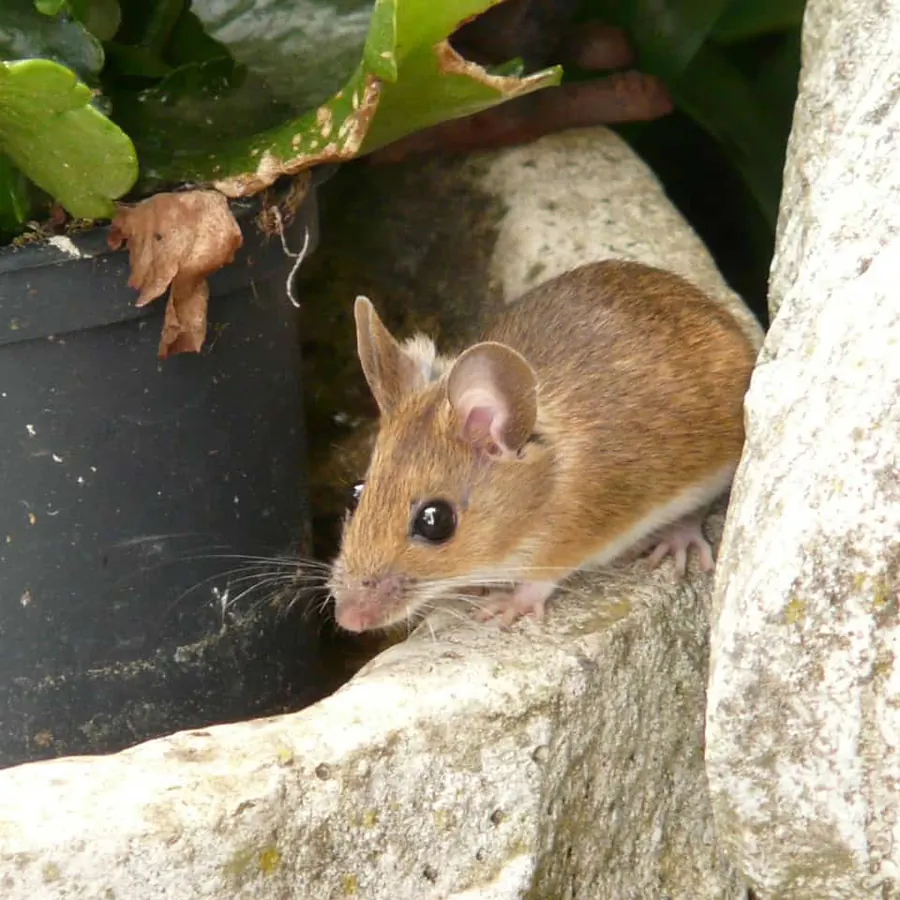
Getting rid of rats and mice in a Plettenberg Bay property comes down to four things done in order: find out where they're getting in, remove the ones already living there, close the gaps, and keep checking while the house is empty. Skip any of those and you'll be dealing with the same problem next season.
The four steps
1. A proper look around
We check the roof space, eaves, garage, storerooms, kitchen and the outside of the house. We're looking for droppings, greasy rub marks along beams and walls, gnawed wood or wiring, shredded insulation used as nesting, and the actual gaps they're using. In Plett that often means a gap around a pipe or cable where it enters the house, an open vent, a garage door that doesn't seal at the bottom or a tree branch resting on the roof.
2. Removing them
Lockable, tamper-resistant bait stations go where rodents travel, usually in the roof and along outside walls. Where bait isn't suitable, for example in a kitchen, near a pet's area or in a food business, we use traps. Tracking powder is useful in voids where rodents run but people never go.
3. Proofing
Here we show you exactly where they came in and what will close it: mesh over vents, sealing around pipes, a brush strip under the garage door, cutting back a branch. Some of it is a quick fix for the homeowner or a handyman. Bigger gaps in rooflines may need a builder.
4. Checking back and cleaning up
Rodent work nearly always needs a follow-up visit to see how much bait has been taken and whether activity has stopped. Once it has, we can sanitise the affected areas. Rat droppings and urine carry diseases such as leptospirosis and salmonella, so this isn't just about appearances.
Why Plett homes are a target
Many Plettenberg Bay homes are only lived in for part of the year. When a house is closed up, rodents have the roof, the garage and the pantry to themselves with no one disturbing them. Most owners only find out when they arrive for the holidays and hear running in the ceiling at night, or open a drawer full of droppings.
The busy months bring a different set of problems. Restaurants and takeaways work at full stretch, bins overflow, and holiday homes produce far more food waste than usual. Brown rats follow rubbish and drains. Roof rats prefer to climb and come in from above, along branches, creepers and overhead cables.
Signs to look for when you arrive
- Droppings in drawers, on top of cupboards or along the edges of the garage floor
- A stale, sharp smell in a room that's been closed up
- Chewed packets, candles, soap or the corners of cardboard boxes
- Nesting material: shredded paper, fabric or insulation
- Scratching or running sounds in the ceiling, mostly after dark
- Lights or appliances that suddenly stop working, which can mean chewed wiring
Our local advice: plan for the off-season
Most of the damage in a Plett holiday home happens while nobody is there. So the most useful thing you can do is have bait stations in place and checked between seasons, not just treated once in a panic in December. If a caretaker or rental agent looks after the house, we can work with them for access.
Before you lock up, take open food out of the pantry and garage, including pet food and birdseed, empty every bin, and don't leave rubbish bags in the garage for collection later. A house with nothing to eat in it is far less interesting.
One thing to avoid
Scattering loose poison in the roof before you leave for the winter. The rodents eat it, die somewhere you can't reach, and you come back to a smell that can take weeks to clear. Loose poison is also a real risk to dogs, cats and the wildlife around town. Bait stations and traps are safer and give you a record of what's going on.
How much will it cost?
It depends on how large the property is, how established the rodents are and how much proofing the house needs. A few mice in a kitchen is a small job, and a couple of snap traps can sometimes sort it out. Rats nesting across a big roof, in a restaurant storeroom or in a house that's empty for months need more stations, more visits and probably some building work to close up gaps. Restaurants and guesthouses usually go onto a service contract with regular checks. We'll explain what's needed before we start.
We also handle cockroaches and general pest control in Plettenberg Bay. For more on how we deal with rodents across the region, see our rodent control page for George.
If you're hearing things in the roof, call 044 012 5011 and tell us what you've noticed. We're SAPCA registered, rodent treatments carry a 3-month guarantee, and we've been working in the Garden Route for more than 25 years.
Questions we get asked
I only use my Plett house in December. Is a once-a-year treatment enough?
Usually not. Rodents do most of their damage while the house is empty, so stations need to be in place and checked during the off-season too.
Can rats get into an upstairs roof without a tree nearby?
Yes. Roof rats are good climbers and will use creepers, downpipes, rough walls and overhead cables to reach the roof.
Is it safe to use bait in a restaurant?
In food areas we rely on traps rather than bait. Lockable bait stations are used outside and in areas away from food preparation.
Why do I have mice in a house nobody has lived in for months?
Because it's quiet, sheltered and often has something to eat, such as pet food, birdseed or packets left in the pantry. The lack of people is part of the attraction.
Do you clean up after a rat problem?
Yes. Once activity has stopped we can sanitise the affected areas, which matters because droppings and urine carry disease.
Will I hear the rats less straight away?
Activity normally drops over the first week or two. A big infestation takes longer, which is why we come back to check.