

To get rid of rats or mice in George for good, three things have to happen: the rodents already inside are removed, the way they got in is closed, and whatever was feeding them is taken away. Skip any one of those and they come back. This page explains how we handle each part, for homes and businesses, across George and the wider Garden Route.
Which rodent have you got?
Three species cause nearly all the trouble here, and knowing which one you have changes how we treat it.
- Roof rats are slim, agile climbers with long tails. They run along walls, fences, cables and branches and get into roofs from above. Scratching overhead at night is the classic sign.
- Brown rats are heavier and live at ground level. They burrow under slabs, along garden walls and beside drains, and come in through gaps at floor level, broken air bricks and drains.
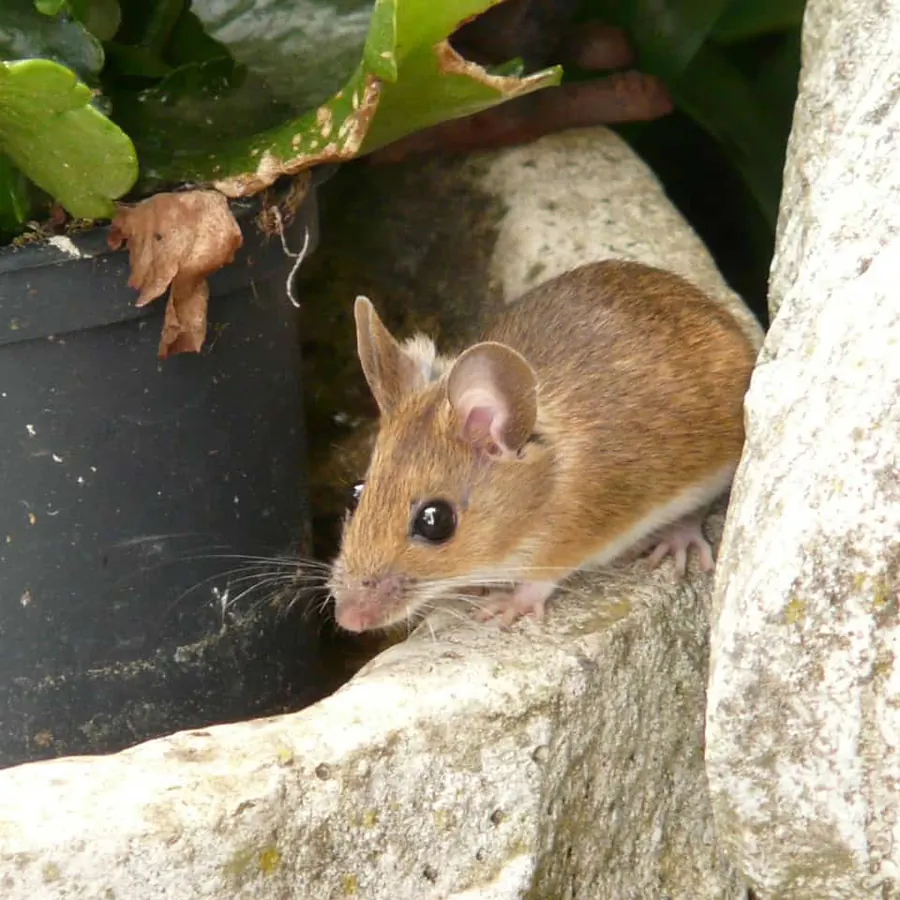
- House mice are small enough to get through a gap the width of a pencil. They live inside walls, kitchen units, stoves and stored goods, and they breed fast.
Not sure? Our identification guide shows the droppings, tracks and damage each one leaves.
Why George keeps rodents busy
George gets more rain than most of the Garden Route and stays green, with big gardens, fruit trees, compost heaps and bush running up towards the Outeniqua Mountains. That gives rodents food and cover all year. In older suburbs like Denneoord, Heatherpark and Blanco, mature trees reach over roofs and older buildings have more gaps at the eaves and around pipes. The golf and security estates aren't immune either: landscaped gardens, water features and open ground around the edges suit rodents well. Then there's the commercial side of town, with restaurants, shops, warehouses and industrial sites, where food waste, deliveries and stored stock bring their own problems.
The busiest stretch is usually autumn into winter, when cold, wet weather sends rodents looking for a dry roof.
Our rodent programme
- Inspection. Roof space, eaves, kitchen, garage, outbuildings, garden and boundary. We look for droppings, rub marks, gnawing, nests, burrows and, above all, entry points.
- Control. The right mix of bait stations, traps and tracking powder for your building.
- Proofing. A clear list of the gaps and routes we found, with what to do about each one.
- Follow-up. Rodent work is rarely a single visit. We come back to check stations, see what's been taken and adjust.
- Sanitising. Once activity stops, we can sanitise areas contaminated by droppings and urine, which carry diseases such as leptospirosis and salmonella.
Bait stations, traps or tracking powder?
Lockable bait stations are the backbone of most jobs. They're tamper-resistant, so dogs, cats and children can't get at the bait, and they can be placed along outside walls, runs and in the roof.
Traps are used where we don't want bait at all, such as food preparation areas, living spaces or homes with especially curious pets. They also avoid the problem of a rodent dying somewhere you can't reach.
Tracking powder goes into voids, runs and cavities where rodents travel but people and pets don't. Rodents pick it up on their fur and swallow it when they groom.
Proofing a George house
- Cut back branches that touch the roof or gutters. In a town this green, it's the most common roof rat route we find.
- Fit steel mesh over roof vents, gaps at the eaves and broken air bricks.
- Seal around pipes and cables where they enter the walls with something rodents can't chew through.
- Fit brush strips to the bottom of garage and outside doors.
- Keep compost in a closed bin, pick up fallen fruit, and store pet food and birdseed in sealed containers.
Some of that is a Saturday morning job. Some is work for a builder or roofer, and we'll tell you which.
Restaurants, shops, warehouses and industrial sites
For businesses, rodent control is usually a contract: bait stations and traps that are mapped and numbered, checked on a schedule, with records you can show an inspector or a client. Food businesses need traps in prep areas and bait stations outside and in storage. Warehouses need a perimeter around the building and attention at loading bays, where doors stand open for hours. We fit visits around your trading or shift hours, and 24-hour call-outs are available when something can't wait.
The mistake we see most often
Putting shop-bought poison in the roof and waiting. It may kill some rats, but it does nothing about how they got in, so new ones move into the same space. And a rat that dies inside a ceiling or wall cavity can leave a smell for weeks. Rodent control works when the building changes, not just when bait goes down.
How much will it cost?
The main variables are the size of the property, how established the rodents are, which species we're dealing with, how much proofing is needed and how many follow-ups it takes. A couple of mice in a kitchen is a small job, and honestly, two or three snap traps baited with peanut butter may sort it out. Rats nesting in the roof of a large older home, or activity across a warehouse, needs a full programme. Commercial sites are priced as a contract based on the number of stations and the visit schedule. We quote for free, and treatments carry our 3-month guarantee.
Rodent control around the Garden Route
From our office in Denneoord we cover the whole region, and each town has its own challenges: forest-edge roofs in Knysna and Wilderness, the harbour and warehouses of Mossel Bay, riverside homes in Groot Brak River and feed stores around Oudtshoorn.
Pest Worx is SAPCA registered, and branch manager Simon Kennell runs the George team. Call 044 012 5011, tell us what you're hearing or finding, and we'll take it from there.
Questions we get asked
Can you come out urgently in George?
Yes, we offer 24-hour call-outs for problems that can't wait, such as rats in a food business. For most homes we'll book a time that suits you.
Do you offer rodent contracts for businesses?
Yes. We set up mapped bait stations and traps with scheduled checks and service records, timed around your trading or shift hours.
Can rats really chew through electrical wiring?
Yes. Rodents gnaw constantly to keep their teeth in check, and wiring in a roof space is an easy target. Chewed cables are a genuine fire risk, which is one of the best reasons not to wait.
Will I end up with a dead rat smell?
It can happen with any baiting, which is why we use traps in living areas and place stations thoughtfully. If you do notice a smell, tell us and we'll help find the source.
Do I need to be home for follow-up visits?
Not always. Outside bait stations can be checked without you, but we'll need access if there are stations in the roof or inside the house.
What if the rats come back after you've treated?
If they return within three months of treatment, we come back under our guarantee. We'll also look again at proofing, because that's usually where the answer is.