

Cooing at five in the morning, droppings all over the patio, a gutter packed with nesting material. And more and more often, pigeons nesting under the solar panels.
Pigeons and other nuisance birds are dealt with by proofing: closing the gaps they nest in and making the ledges they sit on uncomfortable, so they move somewhere else. Chasing them off works for an afternoon. Removing nests without closing the gap means a new nest in the same spot within weeks. Pigeons are loyal to a good nesting site and will keep trying to get back in, so the job is only done when there's nowhere left for them to go.
Houses, sectional title complexes, shopfronts, warehouses, factories and farm buildings: we proof them all, from Mossel Bay through to Plett and inland.
Where birds cause trouble
- Under solar panels. The gap between the panels and the roof is sheltered, warm and out of reach of cats. Pigeons nest there in numbers, and the droppings and nesting material block gutters and can hold damp against the roof
- In roof spaces. Through gaps under the roof tiles, broken eaves and open gable vents. Birds in the roof bring noise, smell and parasites
- On ledges and signs. Shopfronts, window sills, beams and signage, where droppings land on the pavement and on customers
- In warehouses and factories. Pigeons and sparrows roost on the beams and steelwork, and droppings land on stock, machinery and loading areas. In food premises this is an audit failure
- In farm buildings. Feed stores, barns and dairies, where birds eat and foul feed
Why droppings matter
Bird droppings are acidic and eat into paint, metal sheeting and some roof finishes over time. They block gutters and downpipes. A heavy build-up in a roof space or under panels is a health concern, because dried droppings can carry fungal spores and bacteria that become airborne when disturbed. Don't sweep a large dry build-up without a mask and gloves. Nests also bring bird mites, tiny biting mites that wander into the house once the chicks fledge or the nest is abandoned, often through ceiling light fittings. People sometimes mistake those bites for bed bugs or fleas.
How we deal with birds
- Survey We look at where the birds are nesting and roosting, how they get in, and what's attracting them. Often there's a food source nearby: spilt feed, open bins, someone feeding them.
- Clean-out Nests and nesting material are removed from the sites we're proofing, and the area is cleaned so new proofing isn't fitted over a mess.
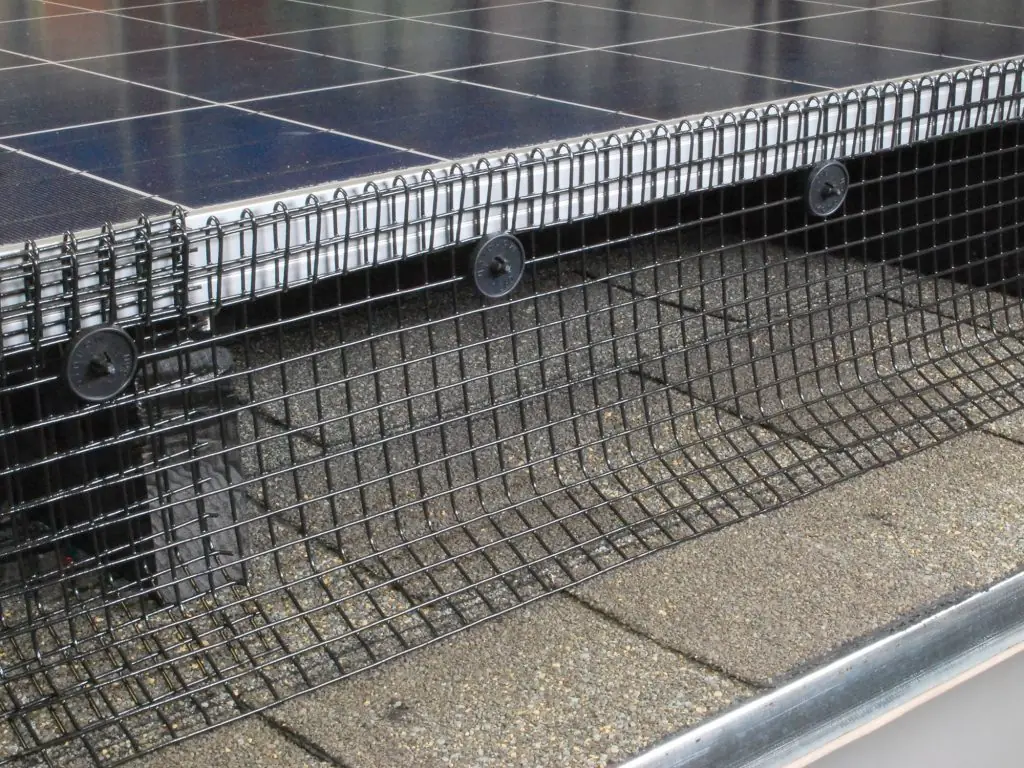
- Proofing Mesh around the edges of solar panels, closed gaps under tiles and eaves, and deterrents on ledges and beams where birds perch. The aim is to make the site unusable, not to harm the birds.
- Advice Stopping feeding, managing spilt feed and bins, and a look at the building once the next breeding season has passed.
Pigeons and indigenous birds
Feral pigeons are the main problem bird in towns. But plenty of the birds nesting in our roofs are indigenous, including speckled pigeons, and many indigenous birds are protected. Proofing is the right approach for both: the birds aren't harmed, they simply can't get back into the space. If you have a nest with eggs or chicks in it, we'll talk to you about timing, because the humane option is often to wait until the chicks have left and then close the gap.
Solar panels
Solar panels are now on so many Garden Route roofs that birds nesting underneath them are a common problem. The fix is mesh fitted around the panel edges so birds can't get underneath, while air still flows and the panels can still be serviced. If birds have been nesting there for a while, the nests and droppings come out first. Do it before the panels are on for long, and the job is simpler.
Bird work in the towns
In Mossel Bay, the harbour, fishing activity and busy beachfront take-aways keep pigeons and gulls close to the buildings by the water. Inland, in George and the Klein Karoo towns, the trouble tends to be pigeons under solar panels and in warehouse roofs. On farms, birds in feed stores are part of our farm pest control work, and in food premises bird proofing usually sits inside a commercial pest control contract. How pigeons pick a building, and why they keep coming back, is covered in our pigeon profile.
What you can do yourself
Stop feeding pigeons, and ask the neighbours to do the same. Keep bins closed and clean up spilt pet food and bird seed. Fix broken tiles and eave boards early, before birds find them. Hang reflective tape or fake owls if you like, but expect pigeons to get used to them within a week or two. Physical proofing is what lasts, and it's the only thing that works once a pair has started nesting.
What it costs
Bird proofing is quoted on how many solar panels or how much roof edge needs proofing, how high and accessible the work is, how much cleaning is needed first, and whether it's a house or a large commercial building. Meshing a few panels on a bungalow roof doesn't take long. A warehouse with birds roosting across the whole roof structure is a bigger project. We'll survey first and then quote.
Ring us on 044 012 5011, or drop us a line with a photo of where the birds are getting in.
Frequently asked questions
Do you kill the birds?
No. We proof: closing gaps and making ledges unusable so the birds settle somewhere else. Many indigenous birds are protected, and proofing is fair to all of them.
What's the difference between proofing and scaring birds off?
Scaring, with fake owls, tape or noise, works until the birds learn it's harmless. Proofing physically stops them landing or nesting, so it keeps working.
Can you clean up the droppings as well?
Yes. Heavy build-ups are cleared and the area sanitised, keeping the dust down while we work.
What are the tiny biting mites in my bedroom?
If birds have been nesting in the roof, they may be bird mites, which wander indoors when chicks fledge or a nest is abandoned. Removing the nest and closing the entry deals with them.
What if there are eggs or chicks in the nest?
We'll talk to you about timing. Often the kindest option is to wait until the chicks have left and then close up the gap.
Do you work on warehouse and factory roofs?
Yes. Big roofs, loading bays and the trusses inside warehouses are proofed in sections, planned around your working hours.