

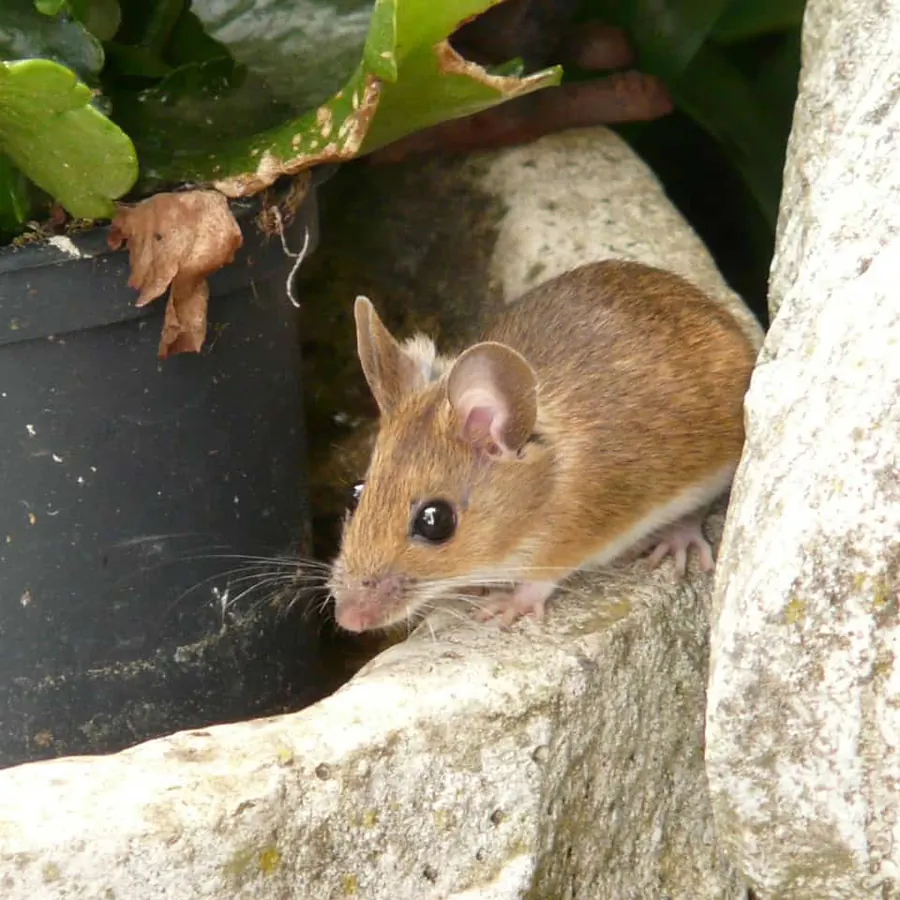
Here's how we deal with rats and mice in Herolds Bay, step by step, because the order matters more than the poison.
- Find the way in. We check the roof space, eaves, garage, under the sink, around pipes and cables where they enter the walls, and the garden edge. Rodents always have a route, and we want to know where it is before we do anything else.
- Find where they're living and eating. Droppings, grease marks along walls, chewed packets and shredded insulation tell us where the nest is and what's feeding them.
- Deal with the ones inside. We use lockable bait stations, traps or tracking powder, depending on the house and whether there are pets or children around.
- Proof. We show you exactly where to seal, trim or mesh. Some of that is a DIY job; some needs a builder or roofer.
- Check and clean up. A follow-up visit confirms the activity has stopped. Then we can sanitise the areas they've used, because droppings and urine carry disease.
Signs you'll notice when you arrive
If you only get to the house now and then, the clues are usually waiting for you:
- Droppings in the kitchen drawers, on top of the geyser or along the back of the cupboards
- A musty smell in a room that's been closed up
- Chewed soap, candles, packets or the corner of a mattress
- Insulation pulled down or scattered in the roof
- Scratching or running in the ceiling once it gets dark
- A dead rodent smell somewhere you can't reach
Why Herolds Bay houses are easy targets
The village is built on a slope, with coastal bush between and behind many of the houses. Rats live in that bush quite happily, and once the weather turns cold and wet they look for somewhere drier. A house where nobody has walked in for a month is perfect: no noise, no cats, no one sweeping up.
The sea air plays a part too. Salt corrodes old vent covers and mesh, and gaps open up around roof sheets and fascia boards over time. A mouse needs a hole about the width of a pencil. A young rat doesn't need much more than that.
Proofing a house that's often empty
For a home that's lived in every day, proofing and good habits do most of the work. For a holiday house, you also need something working while you're away.
- Leave bait stations in place in the roof and garage between visits, and have them checked before each season.
- Take all food home, including pet food, bird seed and the fishing bait in the garage freezer if it's switched off.
- Cut back branches and bush that touch the roof or gutters.
- Check that the garage door seals at the bottom and that vents and air bricks still have intact mesh.
- Don't leave bedding, towels or cushions stacked loose in cupboards. Rodents shred them for nests.
The mistake: loose poison in an empty house
It's tempting to scatter rat poison in the roof before you lock up and drive home. The problem is that the rats eat it, die in the ceiling or a wall cavity, and you arrive weeks later to a smell you can't get at. Loose poison is also a risk to pets and to children who come with you on holiday. Lockable stations placed in the right spots, with a proper check-up, are safer and work better.
Why it's worth dealing with quickly
Rodents chew electrical wiring, which is a real fire risk in a roof that nobody's watching. They contaminate kitchen surfaces and stored food, and they carry diseases including leptospirosis and salmonella. And they breed fast, so what starts as a few mice in autumn can be a colony by spring.
How much will it cost?
The cost depends on the size of the house, how long the rodents have been there, how many entry points need proofing and how many follow-up checks are needed. A couple of mice in a kitchen is a small job. A roof full of rats in a house that's been empty all winter is a bigger one, with more stations and at least one return visit. If you'd like stations checked before each holiday season, we can plan that with you. We quote free.
To be fair, if you've seen one mouse and you're living in the house, a couple of snap traps along the kitchen wall may be all you need. If you're hearing them in the roof, or finding droppings in more than one room, call us.
Our rodent treatments carry a 3-month guarantee. For other pests at the house, see pest control in Herolds Bay, or read about rodent control in George.
Call us on 044 012 5011 and tell us what you've found. We'll take it from there.
Questions we get asked
Rats or mice: how can I tell?
Look at the droppings. Mouse droppings are tiny, about the size of a grain of rice. Rat droppings are much larger, closer to a raisin, and rats make a lot more noise in the ceiling.
Can bait stations stay in the house while it's empty?
Yes, that's what they're designed for. They're lockable and tamper-resistant, so they can keep working in the roof and garage while you're away.
Should I clean up the droppings myself?
You can, but don't sweep or vacuum them dry, because that lifts contaminated dust into the air. Wear gloves, wet the area with disinfectant first and wipe up. For a heavy mess, we can sanitise the area once the rodents are gone.
Is tracking powder safe?
It's used only in places like wall voids and roof spaces where people and pets don't go. We'll explain where we've put it and why.
Do I need a builder to proof my house?
Not always. Trimming a branch, fitting mesh over a vent or sealing a gap around a pipe can often be done yourself. We'll tell you which jobs need a professional.
How long before the rodents are gone?
You'll usually notice a clear drop in activity within one to two weeks. Larger infestations take longer, which is why we come back to check.