


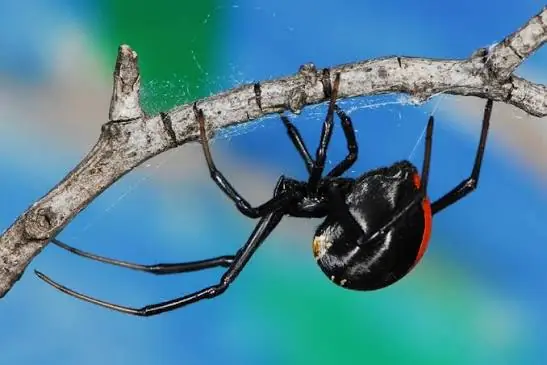
South Africa's button spiders are relatives of the widow spiders found around the world. One kind lives under your garden chairs and is rarely a real worry. The other is shy, rarely seen, and needs respect.
Button spiders are small, round-bodied spiders with glossy abdomens, named for their button-like shape. They build untidy, tangled webs close to the ground or in sheltered corners and hang upside down in them. Several species occur in South Africa, and they fall into two groups that matter: the black button spiders, whose bite is medically serious, and the brown button spider, which is far more common around houses and much less dangerous.
Black button spiders
- Look. Adult females are jet black with a round, shiny abdomen, often with a red stripe or red spots on top. Young ones have more red, orange or white markings that fade as they mature
- Size. The body is around 1 cm, with legs spanning a few centimetres
- Where. Outdoors, away from houses: in low shrubs, fynbos, grass, wheat and vineyards, under rocks and in old rubble, holes and burrows. They're shy and rarely come indoors
- Egg sacs. Smooth, round and cream to white, like a small pea
The bite of a black button spider contains a powerful nerve toxin. Symptoms can start within an hour: severe pain that spreads from the bite, muscle cramps especially in the stomach, which can be mistaken for appendicitis, sweating, restlessness and a rise in blood pressure. It needs medical treatment promptly. Antivenom is available in South Africa, and with proper care people recover. Deaths are very rare.
Brown button spider
- Look. Mottled grey, brown or beige, with an orange or red hourglass mark on the underside of the abdomen. The top has a pattern of lighter lines and spots
- Size. Similar to the black button spider, sometimes slightly smaller
- Where. Around buildings. Under garden furniture and the rims of pots, in meter boxes, garages, sheds, outdoor toilets, under window ledges and in the corners of patios. It's the button spider most people actually see
- Egg sacs. The giveaway: round, cream to tan, and covered in small spikes, like a tiny seed pod or an old-fashioned sea mine
The brown button spider's venom is far weaker in practice, and bites usually cause only local pain and mild symptoms. Children and anyone with a stronger reaction should still see a doctor.
Other spiders that get mistaken for them
- False button spiders are dark, shiny and round too, and are often confused with black button spiders. Their bite is painless or mild
- Sac spiders are small, pale yellow-green night hunters whose bite can cause a slow-healing sore
- Rain spiders are big and hairy and come indoors before rain. They look alarming and are harmless
If you've found a dark, shiny spider and you're not sure, trap it under a glass and take a clear photo.
If someone is bitten
Keep the person calm and still, apply a cold compress, and get medical help, especially for a child, an older person, or anyone with spreading pain, cramps or sweating. If it's safe, bring the spider in a closed jar, because it helps the doctor decide on treatment.
Reducing button spiders around the house
- Wear gloves when moving pots, bricks, firewood and garden rubbish
- Check and clean under outdoor furniture, braai equipment and children's play equipment
- Remove spiky brown button spider egg sacs when you find them, before they hatch
- Keep sheds, garages and meter boxes tidy so there's less shelter
- Shake out shoes and gloves left outside
A barrier treatment around the house, outbuildings and outdoor living areas cuts spider numbers sharply. Our scorpion and spider control page explains how we treat, and the scorpion profile covers the other night visitor of the Klein Karoo.
Where we find them in the region
Brown button spiders are everywhere in the Garden Route, from town gardens in George to beach houses in Mossel Bay, and they love outdoor furniture, braai areas and garages. Black button spiders are more of a country concern, turning up on farms, in fynbos and in the drier Klein Karoo around Oudtshoorn and Dysseldorp. If you're not sure what you've found, a clear photo on WhatsApp or our identification guide is a good place to start.
Frequently asked questions
How do I tell a black button spider from a brown one?
Black button spiders are glossy black, often with red on top, and live away from houses. Brown button spiders are mottled grey-brown with an orange hourglass underneath and spiky egg sacs.
Is a brown button spider bite dangerous?
Usually not. Bites tend to cause local pain and mild symptoms. Children and anyone with a stronger reaction should still see a doctor.
What are the spiky little balls under my garden chair?
Those are brown button spider egg sacs. Remove them with gloves, and check other sheltered spots nearby.
What happens if a black button spider bites you?
Spreading pain, stomach cramps, sweating and restlessness can follow within an hour. Get medical help promptly; antivenom is available in South Africa.
Do button spiders come into the house?
Brown button spiders sometimes do, around windows, garages and patios. Black button spiders are shy and rarely come indoors.