


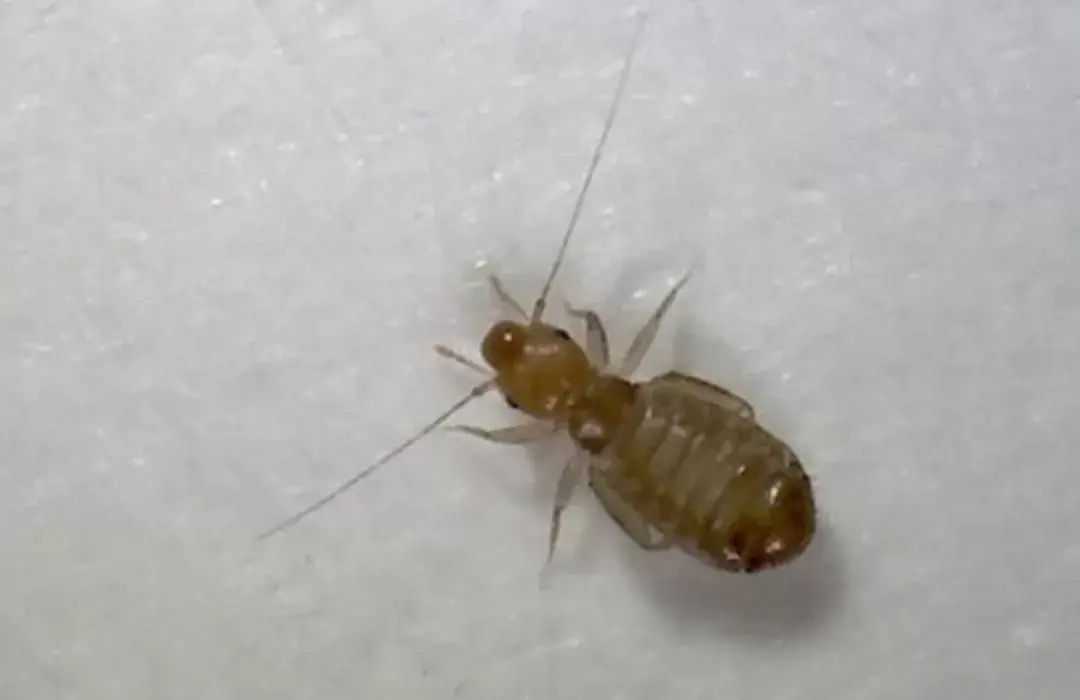
Tiny, pale specks moving across an old book, a windowsill or the inside of a packet of flour. Look closely and they're alive. They're booklice, and they're telling you the room is damp.
Booklice are very small, soft, pale insects, usually no more than a millimetre or two long, that live in damp places and feed on the microscopic mould that grows on paper, plaster, wood and food in humid conditions. Despite the name, they aren't lice. They don't bite people or pets, and they don't live on bodies. They're a nuisance and a sign of damp, and the most effective cure is to dry the room out.
What they look like
- Very small: about 1 to 2 mm, easy to mistake for moving dust
- Pale grey, cream or light brown, soft-bodied
- Usually wingless
- Quick, jerky movements across surfaces
- Often seen in large numbers once you notice them
Where they show up
Booklice appear wherever there's damp and a bit of mould to eat:
- Books and papers in damp rooms, cupboards and garages, especially old books with starchy bindings
- Newly built or renovated houses, where the plaster and concrete are still drying out. This catches a lot of people by surprise: the house is brand new and suddenly there are tiny insects on every wall
- Window frames and sills where condensation collects on cold mornings
- Food cupboards, in flour, cereal, rice and pet food that's been stored in a damp spot
- Behind furniture pushed up against a cold, damp outside wall
- Closed holiday homes along the coast, where the air stays still and damp for months
Are they a problem?
On their own, booklice do very little direct harm. They don't bite, they don't spread disease, and they don't eat much. But they contaminate food they get into, they can damage old books and documents by grazing the surface, and in large numbers they're unpleasant. More importantly, they show you there's a damp problem that may be affecting the house in other ways: mould on walls, musty smells and damage to stored things.
How to get rid of them
- Dry the room Open windows, improve airflow, run a dehumidifier, move furniture a little away from outside walls and fix leaks. Booklice can't survive long in dry conditions, and this alone often clears them within weeks.
- Throw out infested food Any packet with booklice in it goes, and the cupboard gets a vacuum and a wipe. Store dry food in sealed containers.
- Air the books and papers Move them somewhere drier, and out of cardboard boxes.
- Treatment where needed In heavy infestations, or where conditions can't easily be changed, a treatment of cracks, voids and shelving reduces numbers while the drying out takes effect.
In a new house, the problem usually fades by itself as the building dries out over its first year, especially if you keep it well ventilated.
Booklice or something else?
Tiny pale insects on books can also be young fishmoths, which live in the same damp conditions but grow much larger and have a silvery, carrot-shaped body. Tiny dark beetles in flour are more likely stored product insects. If you're not sure, a close-up photo helps.
For the damp side of the problem, read why damp homes get fishmoths and booklice, and our insect control page covers treatment.
Checking how damp a room really is
A cheap hygrometer from a hardware store shows the humidity of a room, and it's often an eye-opener. Leave it in the room for a few days, including a cold morning. If the reading stays high even with the windows open during the day, booklice and fishmoths will keep coming back until the cause is dealt with: a leak, rising damp, a bathroom with no extractor fan, or furniture packed against a cold outside wall. Closed-up holiday homes are the classic case, which is why our holiday home pest control visit includes advice on keeping the air moving while you're away.
Frequently asked questions
Do booklice bite?
No. Booklice don't bite people or pets and don't live on the body. They feed on microscopic mould in damp places.
Why do I have booklice in my new house?
New plaster and concrete take months to dry out, and the damp air lets mould grow on surfaces, which booklice feed on. They usually fade as the house dries.
How do I get rid of booklice?
Dry out the room with ventilation and a dehumidifier, throw out infested food, and store dry food in sealed containers. Treatment helps in heavy infestations.
Are booklice in my flour dangerous?
They aren't harmful, but the food is contaminated and should be thrown away. Clean the cupboard and use sealed containers.
Are booklice the same as lice?
No. Despite the name, booklice aren't lice and don't live on people or animals.