


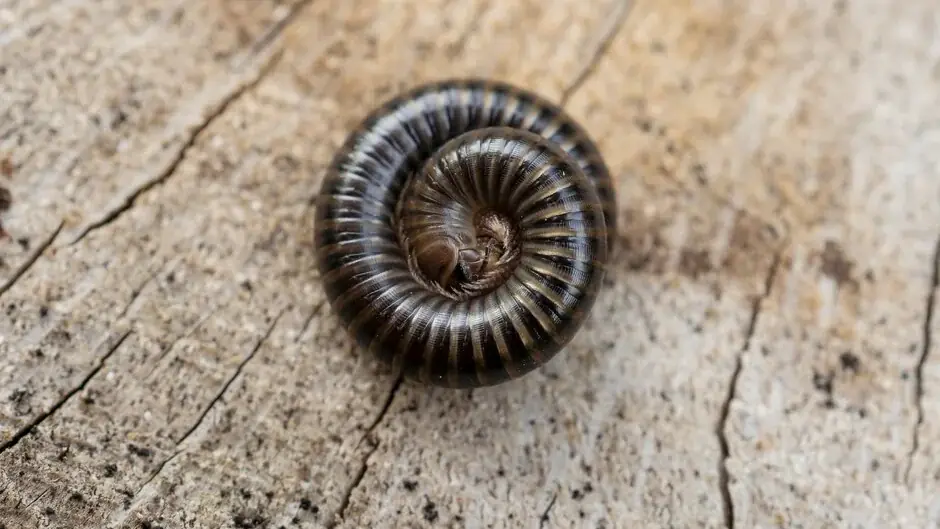
The first proper rains come, and the next morning there are millipedes everywhere: curled on the kitchen floor, climbing the walls, piled in the corner of the garage. A week later there are more.
Millipedes are harmless, slow-moving creatures that live in leaf litter, mulch, compost and damp soil, where they feed on decaying plant material. They're useful in the garden. The trouble comes when they move indoors in large numbers, which they do in the Garden Route after heavy rain, when the ground floods, or in dry spells when they're looking for moisture. They don't breed in houses and die fairly quickly indoors, but when dozens come in every day, it's not a small nuisance.
What they look like
- Long, round, segmented bodies with many short legs, two pairs per segment
- They curl into a tight spiral when disturbed
- The ones that invade houses are usually small to medium, a few centimetres long, and dark brown to shiny black
- The large, thick black or brown millipedes many South Africans know as shongololos are bigger, slower and rarely come indoors in numbers
They are often confused with centipedes, which are flatter, faster, have one pair of legs per segment, and can bite.
Why they come inside
Millipedes need moisture but drown in waterlogged soil. After heavy rain, they move up and out of the ground to drier places, and walls and houses are in the way. In a hot dry spell they do the opposite and move towards damp, including into the house through gaps under doors and around pipes. Homes next to bush, fynbos, thick garden beds or large mulched areas see the most.
They come in through:
- Gaps under exterior doors, especially garage doors and sliding doors
- Air bricks, weep holes and cracks in the plaster near the ground
- Gaps around pipes and drains entering the house
Are they harmful?
Millipedes don't bite or sting, and they don't damage the house or furniture. When disturbed or crushed, many release a defensive fluid with a strong smell that can stain skin, floors, grout and carpets yellow-brown, and that can irritate the eyes. Wash your hands after handling one, and don't let children rub their eyes. They're not poisonous to dogs and cats in the normal sense, but a pet that chews one may drool and look uncomfortable for a while.
How to keep them out
Millipedes come from the garden, so the solution is mostly outside:
- Clear a strip Rake back mulch, leaf litter, compost and thick ground cover from the base of the walls, leaving a dry strip of paving, gravel or bare soil.
- Seal the gaps Fit brush strips or rubber seals to the bottom of doors, especially garage doors, and seal gaps around pipes.
- Barrier treatment A residual band applied outside, along the foundations, door thresholds, air bricks and the edges of paving, stops most of them before they get in.
- Sweep up indoors Indoors they dry out and die. Vacuum or sweep them up rather than crushing them on the carpet.
Treating indoors alone doesn't help much, because new ones keep coming in from the garden. Read our guide to millipedes after rain, and our insect control page for how we treat them.
Where we see the most
Homes on the edge of bush, forest and fynbos see the biggest invasions. That includes the newer estates around George that back onto open ground, houses in the forest around Wilderness and Hoekwil, and gardens in Knysna with deep, mulched beds under indigenous trees. If you live in one of these areas and it happens every year, a barrier treatment just before the first heavy rains of the season gets ahead of it. Our local pages on insect control in George, Wilderness and Knysna cover the other insects these houses tend to get.
Frequently asked questions
Why are there so many millipedes in my house?
Usually because heavy rain has flooded the soil they live in, or a dry spell has sent them looking for moisture. They move out of the garden and the house is in the way.
Are millipedes dangerous?
No. They don't bite or sting. Their defensive fluid can stain skin and floors and irritate the eyes, so wash your hands after touching one.
Do millipedes breed in the house?
No. They breed outside in damp soil and leaf litter, and usually die fairly quickly indoors because it's too dry.
How do I stop millipedes coming in?
Clear mulch and leaf litter away from the walls, seal gaps under doors and around pipes, and have a barrier treatment applied around the outside of the house.
What's the difference between a millipede and a centipede?
Millipedes are round, slow, curl up and have two pairs of legs per segment. Centipedes are flat, fast, have one pair per segment and can bite.