


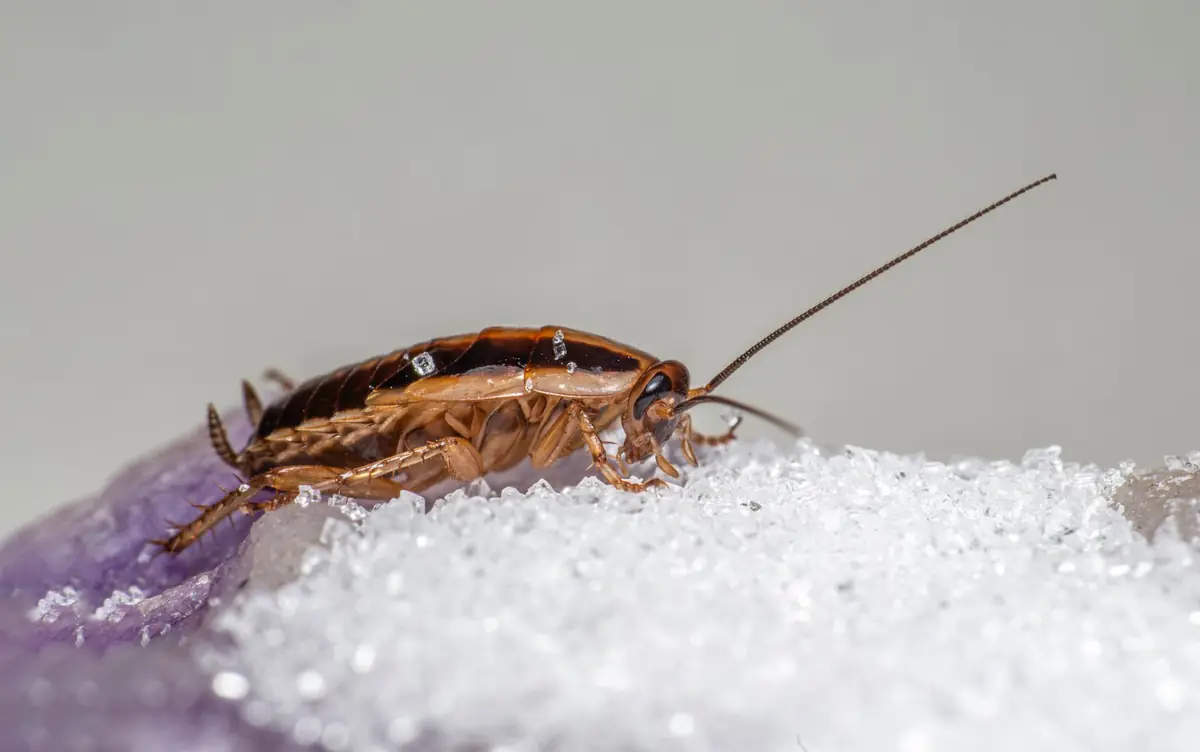
You see one at night. There are fifty you don't see, tucked into the warm gap behind the fridge motor. That's where the treatment has to go.
The fastest way to get rid of cockroaches is to treat where they hide and breed, not where you happen to see them. For German cockroaches that means gel bait placed in tiny dots in hinges, cracks, appliance voids and under the sink, often with a growth regulator that stops the young from maturing. For the big American cockroaches it means drains, manholes and the outside of the building. A can of spray in the middle of the kitchen floor does neither.
We treat cockroaches in homes, flats, holiday rentals, restaurants and food businesses across the Garden Route and Klein Karoo.
How bad is it?
A cockroach running across the floor at night tells you they're there. What tells you how many is where else you find them. Droppings like ground pepper along the top of the cupboard doors, a musty, oily smell in a closed cupboard, egg cases in the hinges, and above all cockroaches out in daylight all point to a well-established population. German cockroaches stay hidden until their harbourages are full, so daytime sightings usually mean the hiding places are crowded. That's useful to know before we come, because it changes how much bait goes in and how soon we come back.
Two very different cockroaches
German cockroaches
Small, light brown, with two dark stripes behind the head, and fast. They live indoors in warm, humid spots close to food: behind fridges and stoves, inside dishwashers and microwaves, under sinks, in the hinges of kitchen cupboards. A single female carries an egg case with dozens of young, which is why a few become a few hundred in one season. They're the main problem in kitchens, flats and restaurants. More in our German cockroach profile.
American cockroaches
Big, reddish brown, up to about four centimetres, and able to fly short distances on warm nights. They live in sewers, drains, manholes and damp outbuildings and wander indoors through floor drains, gaps under doors and open windows. Seeing one in the bathroom after a hot day doesn't mean the house is infested. Seeing several a week usually means there's a drain or manhole nearby that needs treating. Our American cockroach profile has more.
How we get rid of them
- Inspection with a torch We look in the places they actually live: behind and under appliances, in the motor compartments, cupboard hinges, the gap where the countertop meets the wall, electrical boxes and under the sink. Droppings that look like ground pepper and small brown egg cases show us the hot spots.
- Gel baiting Small dots of cockroach gel go into those harbourages. Cockroaches eat it and carry it back, and others feed on their droppings and the dead, so it reaches insects that never touch the bait directly.
- Growth regulator Where the population is large, an insect growth regulator stops nymphs from becoming breeding adults. It's how we deal with the egg cases that baits can't reach.
- Residual treatment where it fits Outside, around drains and in wall voids, an odourless, non-staining residual spray stops American cockroaches coming in.
- Follow-up German cockroach egg cases hatch after the first visit. A follow-up is often needed to deal with those young before they breed.
Why the supermarket spray makes it worse
Repellent sprays and foggers chase cockroaches deeper into walls and appliances and spread them to the next room or the next flat. They also contaminate the surfaces where we would place bait, so the cockroaches avoid it. If you've already sprayed, that's fine, just tell us what you used and where.
Flats, complexes and rentals
In a block of flats, cockroaches move through service ducts and plumbing runs, and treating one unit often just moves them next door. The best results come when the body corporate or managing agent arranges treatment for neighbouring units at the same time. Holiday rentals have the opposite problem: a quiet house where cockroaches build up between bookings. A treatment before the season is usually enough.
Restaurants and food premises
Commercial kitchens are the ideal home for German cockroaches: heat, moisture, food and hundreds of hiding places. Food businesses need a regular service with records, not a once-off spray. Our commercial pest control contracts include scheduled visits, service reports and a treatment log, and our guide to pest control for restaurants covers what a health inspector expects to see.
Local cockroach pages
Every town we cover has its own cockroach page. Start with cockroach control in George, Mossel Bay or Knysna, or find yours on the list alongside.
What it costs
It depends on which cockroach it is, how established the infestation is, the size of the kitchen or building, and whether a follow-up visit is needed. A few American cockroaches coming in from a drain is a quick job. A German cockroach infestation in a busy restaurant kitchen, or across a block of flats, takes more time and more visits. We quote once we've seen it.
Call 044 012 5011 or book a visit online. For normal cockroach treatments you don't need to empty your cupboards or leave the house.
Frequently asked questions
Why do I still see cockroaches after treatment?
For the first week or two it's normal, and it's a sign the bait is working: cockroaches come out in daylight as they're affected. Young hatching from egg cases can also appear, which is why we follow up.
Are cockroach baits safe around children and pets?
Gel bait is placed in tiny amounts in cracks, hinges and voids where children and pets can't reach it. Tell us if you have pets that get into cupboards and we'll plan placement around them.
Do I need to empty my kitchen cupboards?
No. Gel baiting is done in the cracks and voids around the cupboards, not on your dishes or food, so there's no need to unpack.
Do cockroaches mean my house is dirty?
Not necessarily. German cockroaches arrive in boxes, appliances and second-hand furniture, and American cockroaches come up from drains. Clean homes get them too, though food scraps help them breed.
Can cockroaches spread from my neighbour's flat?
Yes. They travel through plumbing runs, ducts and gaps in shared walls, which is why treating neighbouring units together works best in blocks of flats.
How often should a restaurant have cockroach treatment?
Food premises should be on a regular service rather than waiting for a problem. How often depends on the size and type of kitchen, and we set the schedule with you.