


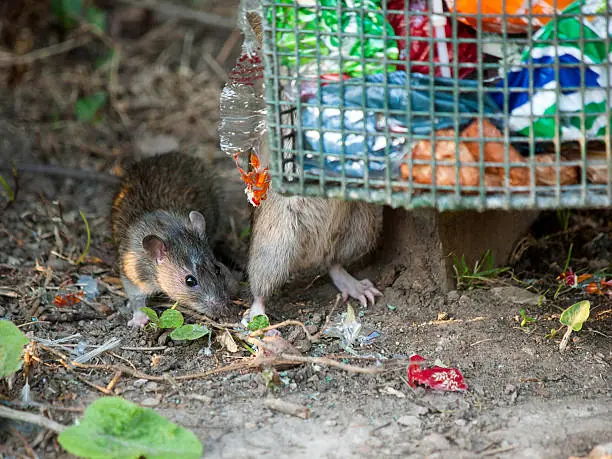
Scratching above the ceiling at 2am, droppings in the bread drawer, a chewed cable in the roof. We find how they're getting in, deal with the ones inside and show you how to close the way in.
Rats and mice are dealt with in three parts: remove the ones already inside, close the gaps they're using, and take away whatever is feeding them. Skip any one of those and you'll be back where you started by next winter. Poison on its own, thrown into the roof, is a sure route to a dead rat smell in the ceiling and a new family of rats a month later.
Homes, holiday houses, restaurants, warehouses and farms all get the same approach from us, anywhere from Stil Bay to Nature's Valley and up into the Klein Karoo.
Which rodent have you got?
It matters, because they live differently and the treatment follows the animal.
- Roof rats are the climbers. Slim, dark, with a tail longer than their body. They come in over branches, gutters, vines and power cables and live in roofs, ceilings and dense creepers. If the noise is above you, it's probably a roof rat. See our roof rat profile.
- Brown rats are heavier, with a blunt nose and a shorter, thicker tail. They burrow, follow drains and water, and live under sheds, decks, compost heaps and in sewers. They're the ones around harbours, rivers and rubbish areas.
- House mice are small enough to get through a gap the width of a pencil. They nest in insulation, behind kitchen units and in stored boxes, and leave lots of small droppings. Our house mouse profile covers the signs.
Not sure? Our guide to telling rats from mice uses the droppings, the noise and the damage to work it out.
When and why they move in
Rodents are around all year, but late autumn is when they head indoors. As the nights cool down and the rain sets in, rats and mice move from gardens, bush and veld into roofs, garages and storerooms. Fruit trees, bird feeders, dog food left outside and compost heaps keep them close to the house in the first place. Why the scratching starts as nights cool, and what to do before it does, is in rats in the roof in autumn.
Rodents chewing through wiring in the roof are a recognised cause of electrical faults and fires, and it's often the first sign people find: lights that flicker, a plug that stops working, or a cable with the insulation stripped back to copper. If you find chewed wiring, have an electrician look at it once the rats are dealt with.
How we deal with rats and mice
- Find the route in We check the roofline, eaves, gutters, overhanging branches, air vents, gaps around pipes and cables, garage doors and drains. Rub marks, droppings and runways show us where they're travelling.
- Reduce the population Lockable, tamper-resistant bait stations are placed along those runways, inside and out. Where bait isn't suitable, for example in a food area or where pets could get to a carcass, we use traps.
- Proof the building We show you the gaps and how to close them: mesh over vents and eaves gaps, pipe gaps packed and sealed, brush strips fitted to doors, branches cut back from the roof. Some you can do yourself, some need a builder.
- Follow up Rodent jobs are rarely finished in one visit. We come back to check stations, see what has been taken and confirm the activity has stopped.
- Clean up Droppings and urine can carry disease, including leptospirosis and salmonella. Where there has been heavy activity we advise on cleaning and sanitising safely.
Pets, owls and responsible baiting
The Garden Route has a lot of owls, raptors and pets, and a poisoned rat that wanders off can be eaten by any of them. That's why bait always goes into locked stations, never loose into roofs or gardens, and why we use traps in situations where secondary poisoning is a real risk. If you have dogs that dig or cats that hunt, tell us when you book and we'll plan around them. If a pet does get into bait, our page on pets, children and treatments says what to do.
Homes, businesses and farms
At home, rodent work is usually a once-off treatment with a follow-up visit. Restaurants, food shops and warehouses need more than that: a permanent station layout, a site map and regular service records that stand up to a health inspection or an audit. That's part of our commercial pest control service. On farms, feed stores and grain bins are the magnet, and we cover those under farm pest control.
Rodent control in your town
We have local rodent pages for every town we've served for years, including rodent control in George, Knysna, Mossel Bay and Oudtshoorn. Each covers what we see there and why.
What it costs
The price depends on whether it's rats or mice, how established they are, the size of the property, how many stations are needed and how much proofing is involved. Two or three mice in a kitchen won't take long. Rats breeding in the roof of a large house, or a warehouse with several entry points, need more time and more follow-ups. Honest advice: for one or two mice in a house, a few well-placed snap traps along the wall often do the trick. Once you're hearing them every night, call us.
If the scratching has started, phone 044 012 5011 or ask us to ring you.
Rat or mouse?
Three rodents, three different ways in. Match what you're seeing to the right one.
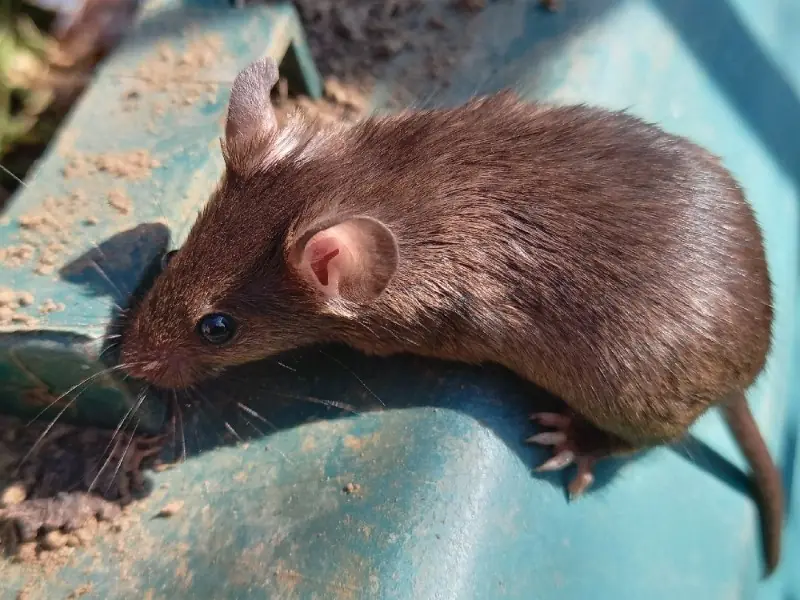 In the kitchen
House mouse
Mus musculus
- Body
- 7 to 10 cm, grey-brown
- Tail
- About as long as its body
- Lives
- Cupboards, walls, insulation
- Gets in by
- Gaps a pencil wide
What you'll notice
Rice-sized droppings in drawers and along skirtings, and small neat holes nibbled in food packets.
Risk level
- Health
- Chewing damage
- Spreads if left
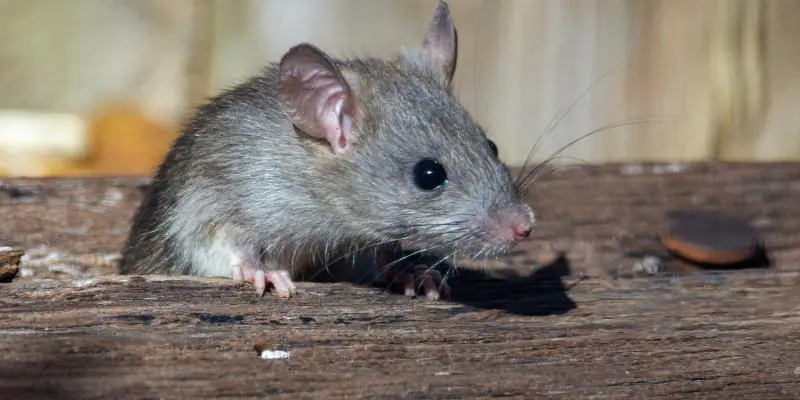 In the roof
Black rat
Rattus rattus · roof rat, ship rat
- Body
- 16 to 20 cm, slim
- Tail
- Longer than its body
- Lives
- Roofs, ceilings, trees
- Gets in by
- Climbing, not digging
What you'll notice
Scurrying and thumping in the ceiling after dark, and pointed droppings about a centimetre long.
Risk level
- Health
- Chewing damage
- Spreads if left
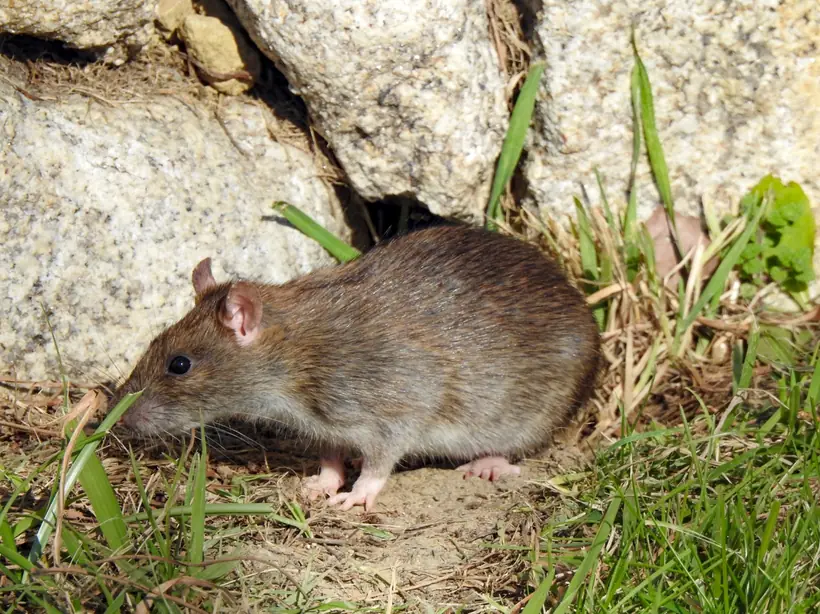 On the ground
Brown rat
Rattus norvegicus · Norway rat, sewer rat
- Build
- Heavy, with a blunt nose
- Tail
- Shorter than its body
- Lives
- Burrows, drains, under sheds
- Gets in by
- From below, at ground level
What you'll notice
Burrows under sheds and paving, and chunky droppings up to 2 cm with blunt ends, low down.
Risk level
- Health
- Chewing damage
- Spreads if left
Frequently asked questions
How do I know if it's rats or mice?
Check the droppings. Mouse droppings are rice-sized, rat droppings far chunkier, nearer a raisin or a small olive pip, and rats make a lot more noise.
Is rat poison safe around my dog?
Loose poison isn't. We only use bait inside locked, tamper-resistant stations, and we use traps where there's a real risk of a pet or wildlife getting to the bait or a carcass.
Why do rats keep coming back?
Usually because the way in was never closed or there's still food nearby, like fruit trees, pet food or a compost heap. Proofing and removing food sources is what stops the cycle.
How long until the rats are gone?
Activity usually drops noticeably within one to three weeks, depending on how many there are. We check the stations on a follow-up visit to confirm.
What about the smell if a rat dies in the roof?
It can happen, which is why we use stations and traps placed on the rodents' runways rather than throwing poison into the ceiling. If there is a smell, call us and we'll help you work out where it's coming from.
Can you rodent-proof my house?
We find every entry point and show you exactly how to close each one. Small gaps around pipes and vents are often a DIY job with mesh and sealant; roof gaps and damaged fascia boards are work for a builder.