


A new slab is the one moment you can put termite protection under the whole house. We time it with your builder and leave you with the certificate.
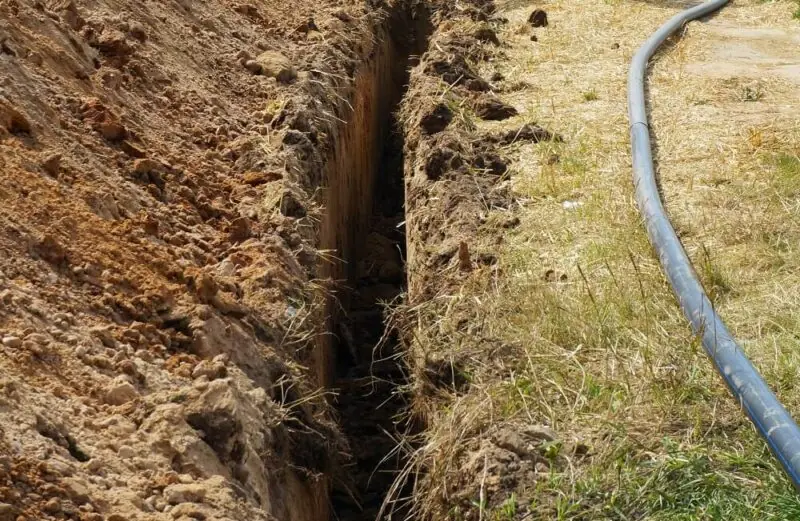
Soil poisoning is a termite treatment applied to the ground before a building goes up. A registered termiticide is sprayed onto the soil in the foundation trenches and over the compacted fill where the floor slab will be cast, so the finished building sits on a treated layer that subterranean termites can't cross unnoticed. Once the concrete is poured, that ground is sealed off for good. Getting it done properly, at the right stage, is far cheaper than treating an existing house later.
We do soil poisoning for new houses, extensions, garages, granny flats and commercial slabs along the coast and over the mountains as far as Oudtshoorn.
When in the build it happens
Timing is everything. Soil poisoning isn't a single visit that can happen any old time, and a builder who calls us the morning the concrete truck arrives is making life hard for everyone.
- Foundation stage Once the trenches are dug and before the foundations are cast, the bottom and sides of the trenches are treated.
- Under-slab stage After the fill inside the foundations has been placed and compacted, and before the plastic damp-proof membrane goes down, the whole area that will sit under the slab is treated. Plumbing and electrical trenches inside the footprint are treated too, because termites love to follow a pipe.
- Finishing When the building is up, the soil along the outside of the foundations can be treated so the barrier is complete round the edge.
Your builder phones us a day or two before each stage. We'd much rather be told early than find a membrane already down.
The certificate
After the treatment you get a soil poisoning certificate listing the site, the product used, the areas treated and the dates. Builders, inspectors and future buyers ask for it, so keep it with your plans and your occupation certificate. The treatment is done in line with SANS 10124, the South African standard for applying soil insecticides to protect buildings.
Why it's worth doing in the Garden Route
From the coast to the Klein Karoo, there are subterranean termites in the soil. In a new house the risk isn't obvious for years. The colony finds its way up through a crack in the slab, an expansion joint or the gap around a waste pipe, and starts on the door frames and built-in cupboards long before anyone notices. By the time there are mud tubes on a wall, the only option is a termite treatment around the existing building, which means drilling through finished floors and paving.
On a building site, the same protection costs a fraction of that and takes a few hours.
What the site needs to be like
- Trenches and fill should be finished and compacted. Treated soil that gets dug up or moved afterwards loses its protection.
- The ground shouldn't be waterlogged. If the forecast shows heavy rain, we'll talk to your builder about moving the date rather than wash the product away.
- No concrete, membrane or brick on the areas that still need treating.
- Someone on site who can confirm where the plumbing and service trenches run.
Additions, granny flats and paving
The same logic applies to anything built onto an existing house. A new room, a garage or a granny flat gets its own trenches and slab, and they should be treated just as a new house would be. The joint where the new slab meets the old one is a weak point termites find easily, so we pay particular attention to it. If you're laying new paving or a patio right against the house, ask about treating the ground underneath before the pavers go down. Once the paving is laid, getting a barrier under it means drilling through it.
What it doesn't cover
Soil poisoning protects against termites coming up from the ground. It doesn't protect timber against wood-boring beetles, which arrive by air or in infested wood. If you're using reclaimed beams or untreated timber, ask us about wood borer first. It also doesn't last forever if the barrier is disturbed: when you lay new paving against the house, dig flower beds against the wall or add a room, the new ground needs treating too.
Building in George?
For building work in and around George, our page on soil poisoning in George covers the local side of it, and our guide to soil poisoning for new builds is written for owners who are building for the first time and want to know what to ask the builder.
What it costs
Soil poisoning is priced on the size of the footprint, the length of the foundations, the number of visits the build needs and how far the site is from George. A single garage slab is a small job. A double-storey house with a big footprint and three treatment stages is a bigger one. Send us the plans or the floor area and we'll quote before the builder breaks ground.
Builders and owners can phone 044 012 5011, or send the plans and site address for a quote and dates.
Frequently asked questions
What is soil poisoning?
It's a termite treatment for new buildings: a registered termiticide is applied to the soil in the foundation trenches and under the slab before the concrete is poured, so termites can't come up into the building unnoticed.
When should my builder call you?
A day or two before the foundations are cast, and again once the fill under the slab is compacted but before the plastic membrane goes down. Early is better than late.
Do I get a certificate?
Yes. You get a soil poisoning certificate with the site details, the product, the areas treated and the dates. Keep it with your building plans.
Do I need soil poisoning for an extension or a garage?
Yes, if it has a new slab or foundation. The new ground isn't protected by any treatment done when the original house was built.
What happens if it rains after the treatment?
Light rain is fine once the product has soaked in. Heavy rain straight after treatment can wash it off loose soil, which is why we check the forecast with the builder and move the date if needed.
Can you do soil poisoning on an existing house?
Not under the slab, because it's already there. For an existing house we do a termite treatment around the foundations instead, which involves trenching and drilling.