


Tiny round holes and a little heap of fine dust under a beam or a cupboard leg. That's usually wood borer, and the dust tells us whether it's still busy.
Wood borer is the larva of a wood-boring beetle. It spends one to several years tunnelling through timber, eating as it goes, then chews its way out as an adult beetle and leaves a small exit hole behind. By the time you see holes, the damage has been happening for a while. The good news: most infestations we find in Garden Route homes are treatable without replacing anything, as long as they're caught before the timber loses its strength.
Is it active?
This is the first question, and the one that decides whether you need treatment at all. Old holes are everywhere in older houses. What we look for is:
- Fresh bore dust (frass). Clean, pale powder or tiny pellets under the holes, especially after you've wiped the area and it comes back
- Clean-edged holes. New exit holes have sharp, light-coloured edges. Old ones are dark and dirty inside
- Beetles. Newly emerged adults gather on window ledges in spring and early summer, heading for the light
- Soft or crumbly timber when you press a screwdriver into it
If the holes are old and the dust never comes back, the beetles may be long gone. That's common in houses built decades ago.
The beetles behind it
The three we deal with most are the common furniture beetle, which leaves small round holes in pine and older furniture; powderpost beetles, which reduce hardwood to fine flour-like powder; and the European house borer, which goes after softwood roof timbers and leaves larger oval holes. Each one has a slightly different habit, which is why identification comes before treatment. Our wood borer beetle profile has photos and the tell-tale signs of each.
How we treat wood borer
- Inspection and identification We check the affected timber and the timber around it, identify the beetle, map the extent of the attack and check whether anything has lost strength.
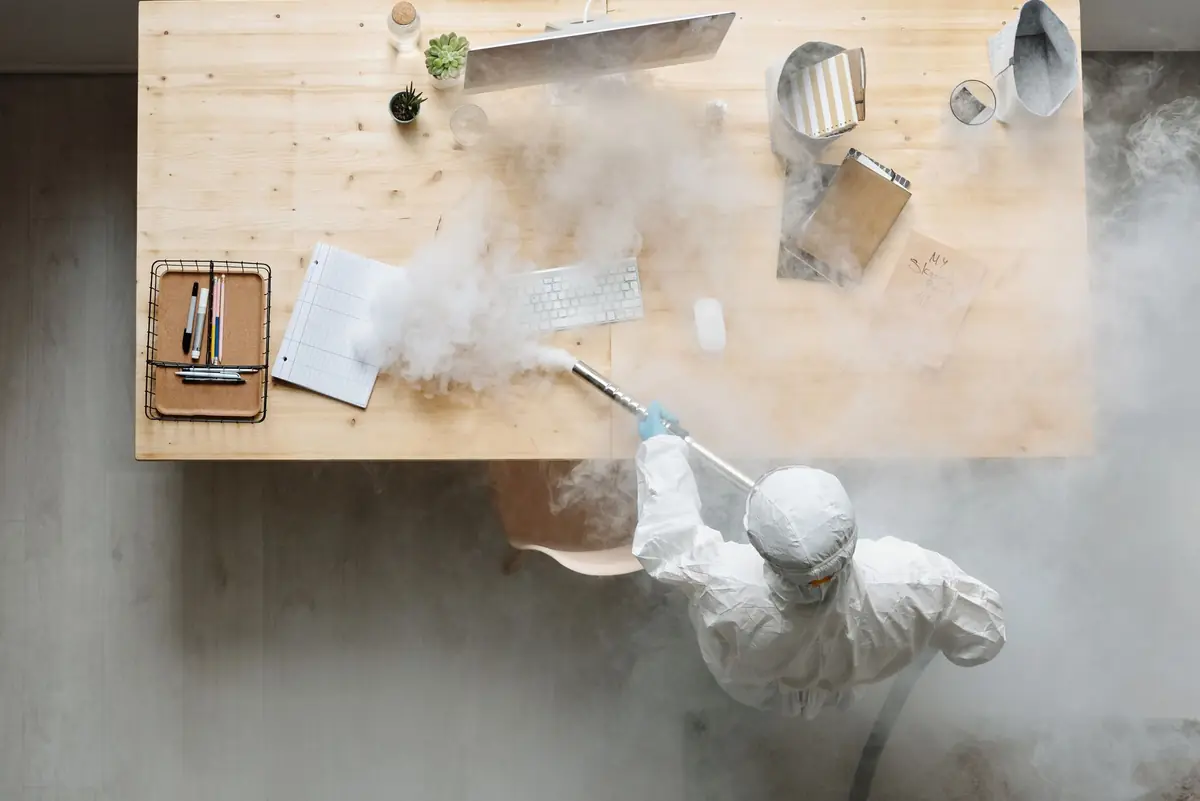
- Surface treatment Exposed timber in roofs, under floors and on beams is treated with a registered wood insecticide that soaks into the surface layers, so emerging beetles and the larvae close to the surface are killed and new eggs aren't laid there.
- Injection Where the larvae are deep in thick timber, or in furniture where we can't spray freely, product is injected into the exit holes and galleries.
- Replacement where needed A batten or a floor board that has been hollowed out should be replaced, not treated. We'll point those out so your builder or carpenter can deal with them.
- Moveable items Badly infested furniture, picture frames and wooden artefacts can be treated separately, sometimes by fumigation, so the infestation doesn't spread to the rest of the house.
Finished floors and furniture are treated with products that won't stain, but we always test a hidden spot first on anything with a good finish.
Wood borer and selling a house
If you're selling in the Western Cape, a buyer will almost certainly ask for a beetle certificate, and an active infestation will need to be treated and re-inspected before it can be issued. If you suspect beetles in the roof, it's worth sorting out before the house goes on the market rather than discovering it in the week before transfer.
Where we see it most
Knysna is the obvious one. A lot of older homes there have yellowwood or pine floors, timber ceilings and furniture that has been in the family for generations, and beetles have had a long time to settle in. Our page on wood borer in Knysna covers it in detail. The holiday houses and timber-framed homes in the forest around Wilderness are the other area where we find a lot of activity, especially in roofs that nobody has been into for years.
Second-hand furniture and antiques
A lot of wood borer arrives in the house rather than flying in. An old wardrobe from an auction, a pine dresser from a farm sale, a box of picture frames: if there's fresh dust under it or bright, clean-edged holes, the beetles inside are active. Keep it out of the house, away from your floors and roof timbers, until it's been checked and treated if needed. It's much easier to treat one cupboard on the stoep than a roof.
Wood borer or termites?
People confuse the two, but the signs are different. Borer leaves exit holes and dry dust. Termites leave mud: soil packed into the damaged wood and mud tubes running up from the ground. Termite-damaged timber is hollowed out along the grain with soil in it, and you'll rarely see a neat round hole. If you're not sure, send us a photo of the holes and the dust.
What it costs
Borer work is priced on the amount of timber to treat, how awkward it is to reach, whether we're injecting or spraying, and whether any pieces need replacing first. A handful of floor boards is a small job. A whole roof space in a large house takes longer. We look first and then quote.
Call 044 012 5011 or book an inspection. If you WhatsApp us a clear photo of the holes, with something for scale, we can usually tell you straight away whether it looks active.
Frequently asked questions
How can I check if the borer is still active before I call you?
Wipe the area around the holes clean and leave it for a week. New pale dust means beetles are still at work. If nothing appears, it may be old damage, and we can confirm it.
Can wood borer weaken a roof?
Yes, if it's left long enough. Larvae can tunnel through battens and trusses for years before anyone notices, which is why roof timbers are checked for a beetle certificate.
Can you treat antique furniture?
Yes. Furniture is usually treated by injecting the holes and galleries, and badly infested pieces can be fumigated so the beetles don't spread to the rest of the house.
Will the treatment stain my floors?
We use products that shouldn't stain, but we always test a hidden spot first on floors and furniture with a good finish.
Is wood borer the same as termites?
No. Wood borer is the larva of a beetle and leaves round exit holes and dry dust. Termites come up from the soil and leave mud in the damaged wood.
Do I need to move out while you treat?
No. You can stay at home. We'll ask you to keep everyone out of the room being treated until it's dry.