


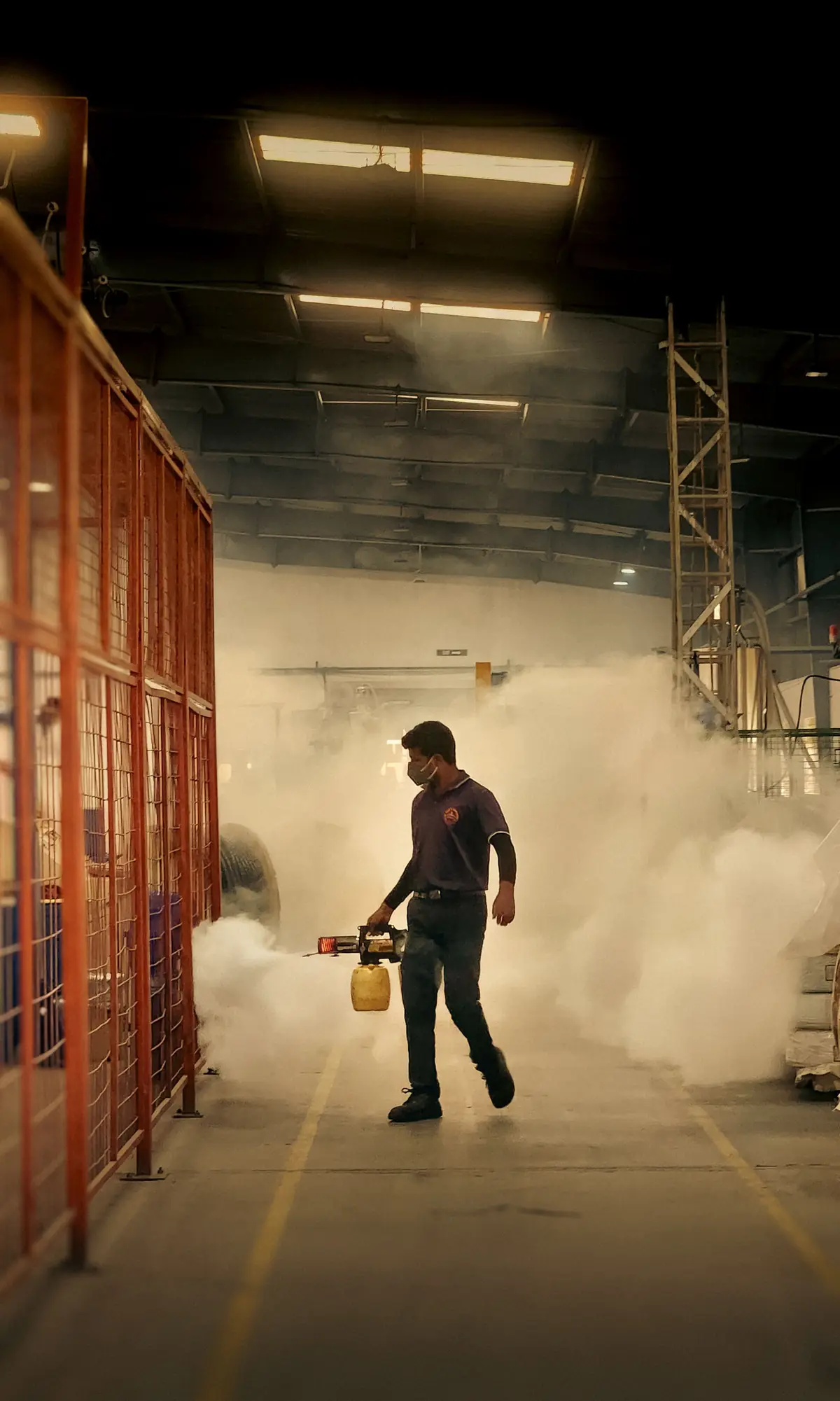
A health inspector doesn't care that the cockroaches came in with a delivery. A guest doesn't care that the mouse came from next door. In business, a pest problem is your problem, so the aim is to stop it before anyone sees it.
Commercial pest control works best as a regular contract, not a phone call when something goes wrong. A technician visits on a fixed schedule, checks and services bait stations and monitors, treats where there's activity, looks for the conditions that invite pests, and leaves a written report. Over a year, that record shows an inspector, an auditor or a head office that pests are being managed properly. One-off treatments still have their place, but a food business, a hotel or a warehouse that waits for a problem usually finds it at the worst possible moment.
We look after restaurants, takeaways, bakeries, butcheries, food factories, packhouses, shops, offices, schools, guest houses, hotels, warehouses and farms across the Garden Route and Klein Karoo.
What a contract includes
- A site survey first. We walk the premises, inside and out, and look at entry points, deliveries, waste areas, drains, storage, and any history of pest trouble
- A site plan. Bait stations and monitors are numbered and marked on a plan, so anyone checking the file can see where every station is and when it was serviced
- Scheduled visits. How often we come depends on the risk. A busy commercial kitchen needs more frequent visits than an office. Each visit covers rodents and crawling insects, and flying insects where they're a risk
- Treatments as needed. Gel baits for cockroaches, residual treatments, ant baits, rodent bait stations and traps, fly control, and fumigation of stored products, all with registered products suited to the site
- Written service reports. What was checked, what was found, what was treated and with what, and what needs fixing on your side
- Recommendations. Proofing gaps, door seals, drain covers, waste handling, storage practice. Pest control only works when the building is helping
Food premises and audits
For anyone handling food, pest control is part of food safety. Environmental health officers inspect against the food hygiene regulations (R638), and retailers and export customers often require HACCP or similar audits. They all want the same things: evidence of a professional pest control programme, a current site plan, service records, the safety data sheets for products used on site, and proof that problems found were dealt with. Our reports are written with that file in mind. Our guide to pest control for restaurants and food premises goes into what inspectors look for.
The pests that cause the most trouble in food premises are German cockroaches breeding in kitchen equipment, rats and mice coming in with deliveries and through drains, flies from waste areas, and stored product insects in dry goods.
Hospitality, guest houses and lodges
A single sighting can turn into a one-star review that stays online for years. For guest houses, B&Bs, lodges and hotels, the main worries are bed bugs arriving in guests' luggage, cockroaches in kitchens, rodents in roof spaces and wasps near outdoor areas. A contract covers the routine side, and when something urgent happens, like bed bugs in a room the night before a full house, our 24-hour call-out is there.
Warehouses, factories and stores
Large buildings bring rodents along the walls and through roller doors, birds roosting in the roof steelwork, and insects in stored products. We set up perimeter rodent stations, look at bird control where pigeons are fouling stock, and plan fumigation of stored products when monitoring shows it's needed.
Schools, offices and retail
These are usually lower-risk sites, but they have their own problems: rodents in roof spaces, ants and cockroaches in staff kitchens and tuck shops, bees and wasps around playgrounds. Treatments are timed for after hours, weekends or school holidays where possible.
Complexes, estates and body corporates
Sectional title complexes and estates have a problem a single business doesn't: pests move between units. Treat one flat for cockroaches and they move next door, then come back. Bait the roof of one townhouse and the rats carry on in the shared roof space over the rest of the block. The answer is to treat the common property and the affected units together, on a schedule the trustees or managing agent can plan around. We work with body corporates and home owners' associations to set up a programme for the complex as a whole, with residents told in advance when we're coming and what to do.
Farms
Feed stores, dairies, packing sheds and farm stalls have their own version of all this. See our farm pest control page.
Working around your business
Visits are arranged so they don't disrupt trading. Kitchens can be treated after service, schools in the holidays, offices after hours. Treatments are kept away from food, packaging and prep surfaces. For normal treatments, you don't need to close.
What it costs
A contract price depends on the size of the premises, the type of business and its risk level, how many bait stations and monitors are needed, how often we visit and whether services like fly control or stored product fumigation are included. A small office is a modest monthly or quarterly cost. A food factory is a bigger programme. Every site is surveyed before we quote, so the price matches the site.
We work with businesses in George, Mossel Bay, Knysna, Plettenberg Bay, Oudtshoorn and the towns in between. To start with a site survey, ring 044 012 5011 or request one online.
Frequently asked questions
Do I need a pest control contract for my restaurant?
In practice, yes. Health inspectors and auditors expect to see a professional pest control programme with a site plan and service records, and a contract is the simplest way to have that in place.
What records do you provide?
A site plan with numbered bait stations and monitors, a written report after every visit, and the safety data sheets for products used on site.
How often will you visit?
It depends on the risk. Food premises need more frequent visits than offices or warehouses, and we set the schedule after the site survey.
Do we have to close for treatments?
Not for normal treatments. We work around your trading hours, after service, after hours or at weekends. Gas fumigation of stored products is the exception, and that area must be closed off.
What happens if we see pests between visits?
Call us. Activity between scheduled visits is followed up, and your file records what was found and done.
Do you do pest control for guest houses and lodges?
Yes. Guest houses, B&Bs, lodges and hotels are covered by contract, with call-outs for urgent problems like bed bugs or wasps near guest areas.