


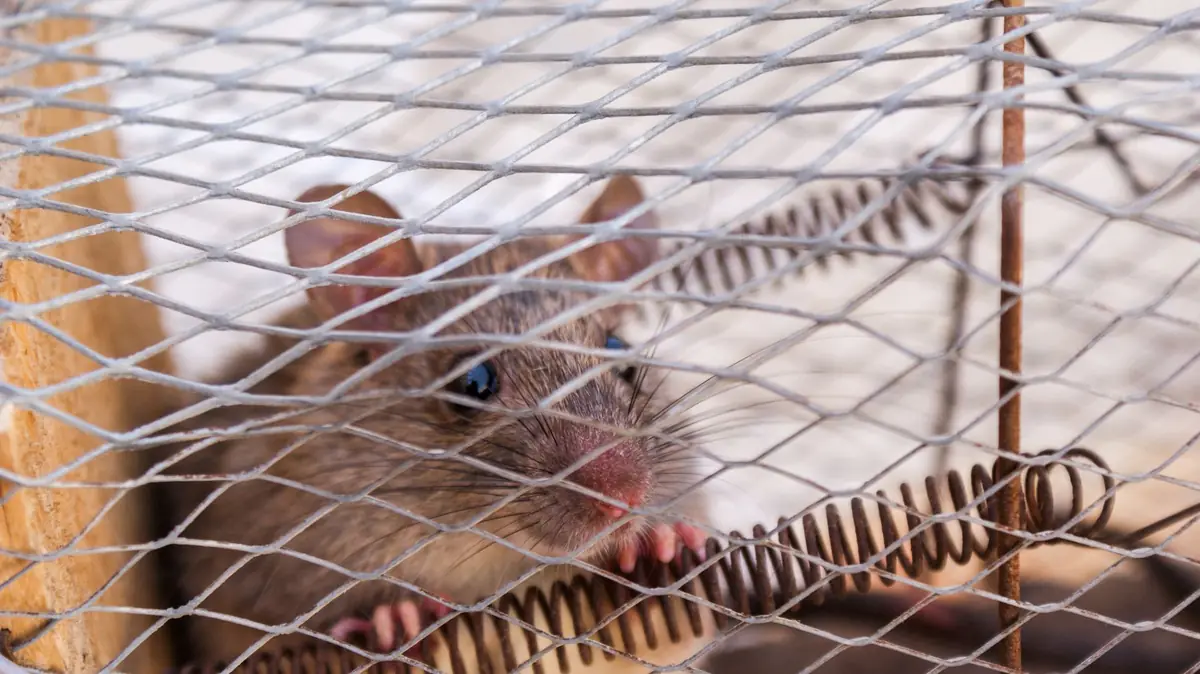
Tiny dark droppings in the cutlery drawer. A nibbled corner on the cereal box. A flash of grey behind the stove. A mouse doesn't need much of a gap, and once it's in, it doesn't stay alone for long.
The house mouse is a small, curious, fast-breeding rodent that lives inside buildings, close to food. It nests in wall cavities, roof insulation, behind kitchen units and in quiet cupboards, and it's active mostly at night. House mice are found in homes, flats, offices, restaurants, shops and farm buildings throughout the Garden Route and Klein Karoo, and they're most noticeable when the weather turns cold and they move in from outside.
How to recognise a house mouse
- Size. Small: the body is around 7 to 10 cm, about the length of your little finger
- Colour. Grey-brown, with a slightly paler belly
- Ears. Large and rounded for the size of the head
- Tail. Long and thin, roughly as long as the body
- Behaviour. Quick and curious, exploring new things in its territory, where rats are wary of them
In rural houses, smallholdings and farms, you may also see field mice coming in from outside, including striped mice with stripes down their backs. They behave differently, but the signs in a house are similar.
Signs of mice
- Droppings. Small, dark and rod-shaped, about the size of a grain of rice, scattered in drawers, cupboards, along skirtings and behind appliances
- Gnawing. Small holes in food packaging, nibbled soap, chewed paper and cardboard
- Nests. Balls of shredded paper, fabric, insulation and fluff tucked into a cupboard, a drawer, the back of the stove or inside the roof
- Smell. A distinctive musky, stale smell in cupboards with a lot of activity
- Noises. Light scratching and scurrying in walls and ceilings at night
- Tracks. Tiny footprints and tail marks in dust on shelves or in the garage
How they get in
A mouse can squeeze through a gap about the width of a pencil. They come in under doors, through gaps around pipes and cables, air bricks and weep holes, gaps in the eaves, and the openings around stove and dishwasher connections. They also arrive in boxes, firewood and deliveries.
Why they're more than a nuisance
Mice contaminate food and surfaces with urine and droppings, and they carry bacteria such as salmonella. They chew wiring, insulation and anything stored in a cupboard. They breed quickly: a female can have a litter every few weeks, so a couple of mice can become a real infestation within a season.
When DIY is enough, and when it isn't
If you've seen one mouse or a few droppings, a few snap traps baited with peanut butter, set along the wall where you've seen activity, often deal with it. Set them at right angles to the wall, with the trigger end against the skirting. Once you're catching mice every night, hearing them in several rooms or finding droppings throughout the kitchen, there's an established population, and it needs a proper treatment and proofing.
How we deal with mice
We place tamper-resistant bait stations and traps where mice are active, use tracking powder in wall voids and other hidden spaces where it suits, and find every entry point. Then we show you how to close them: steel wool and sealant around pipes, brush strips under doors, mesh over vents. A sanitising treatment where droppings and nests were found finishes the job. Our rodent control page explains it in full.
If you're not sure whether it's mice or rats, our guide to rats or mice: how to tell compares the signs, and our roof rat profile covers the bigger, louder visitor in the ceiling.
On farms and smallholdings, mice build up in feed stores and sheds long before they come into the house. Our farm pest control page covers that side.
In a block of flats or a row of townhouses, mice move between units through shared roof spaces and service ducts, so it's worth telling the neighbours and the body corporate.
Frequently asked questions
How small a gap can a mouse get through?
About the width of a pencil. Gaps under doors and around pipes and cables are the usual way in.
What do mouse droppings look like?
Small, dark and rod-shaped, about the size of a grain of rice, usually scattered where mice travel and feed.
Can I get rid of mice myself?
For one or two mice, snap traps set along the wall often work. If you're catching them every night or seeing signs in several rooms, it needs a proper treatment and proofing.
Are mice dangerous?
They contaminate food and surfaces with urine and droppings, can carry bacteria such as salmonella, and chew electrical wiring.
Why do mice come in when it gets cold?
Food and shelter outside become scarce, and houses offer warmth, nesting material and easy food, so mice move indoors in autumn and winter.