


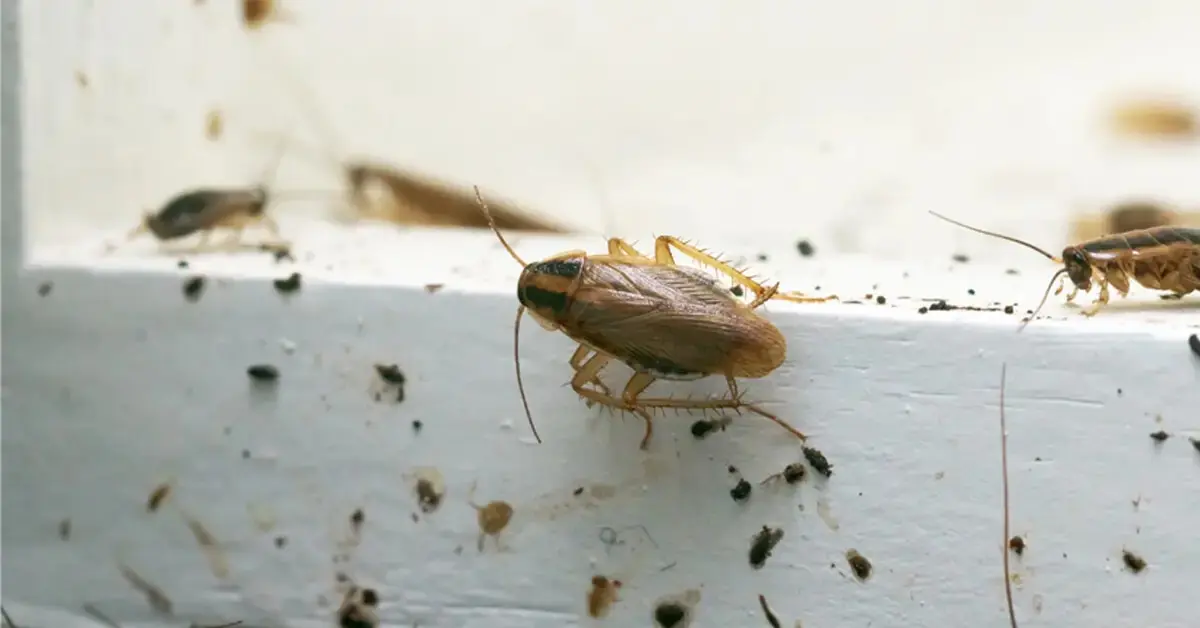
Switch on the kitchen light at midnight and something small and brown shoots under the kettle. That's almost always a German cockroach, and where there's one, there are many more.
The German cockroach is the small cockroach of kitchens, flats, restaurants and guest houses. It lives almost entirely indoors, close to warmth, moisture and food, and it breeds faster than any other cockroach we deal with. It's not a sign of a dirty house. German cockroaches arrive in grocery boxes, appliances, second-hand furniture and deliveries, and once inside, they move between units in a block of flats through pipes and service ducts.
How to recognise them
- Size. About 12 to 15 mm, much smaller than the big cockroaches that come up from drains
- Colour. Light brown or tan
- Markings. Two dark, parallel stripes running lengthways on the shield behind the head. That's the giveaway
- Behaviour. Fast runners that hide in daylight. They have wings but hardly ever fly
- Young. The nymphs are smaller, darker and wingless, often with a pale stripe down the back
Where they hide
German cockroaches like tight, warm cracks where their backs and bellies touch a surface. In a kitchen that means the motor compartments of fridges and freezers, behind and under stoves, inside dishwashers, microwaves and kettles, in cupboard hinges and the gaps where the counter meets the wall, under the sink, and in electrical boxes and plug points. In a restaurant they're in the equipment: fryers, prep fridges, coffee machines, the underside of steel tables.
Why numbers explode
A female German cockroach carries her egg case attached to her body until the eggs are nearly ready to hatch, which protects them from most treatments. Each case holds dozens of young, and those young can be breeding adults within a couple of months in a warm kitchen. That's how a few cockroaches arriving in a box become hundreds in one season.
Signs of an infestation
- Small dark droppings, like ground pepper or coffee grounds, in cupboard corners, hinges and on top of door frames
- Brown, purse-shaped egg cases, empty or full, in cracks
- A musty, oily smell in closed cupboards when numbers are high
- Cockroaches seen during the day, which usually means their hiding places are full
Why the spray can makes it worse
Household sprays kill the cockroaches they hit, but they're repellent: the rest scatter deeper into walls and appliances, and into the neighbours' flats. Many German cockroach populations are also resistant to common insecticides after years of exposure. The result is cockroaches that come back stronger.
What works
Professional gel baits placed in the exact cracks where they live, so they eat it and spread it to others in the harbourage. Where numbers are high, an insect growth regulator stops the young becoming breeding adults. A follow-up deals with nymphs that hatch from egg cases afterwards. Our cockroach control page explains the treatment, and our cockroach control in George and Knysna pages look at the local picture.
What you can do
- Wipe up crumbs and grease every night, including under the toaster and behind the stove
- Don't leave dishes or pet food out overnight
- Check boxes and second-hand appliances before they come into the kitchen
- Don't spray around bait stations or gel, because it makes the bait less attractive
- In a block of flats, tell the body corporate. Treating one unit at a time rarely works for long
For restaurants and food businesses, see commercial pest control.
Cockroaches and allergies
German cockroaches shed skins, droppings and saliva that break down into fine dust. In homes with a heavy infestation, that dust is a recognised trigger for allergies and asthma, especially in children. It's one more reason to deal with an infestation properly, and to clean thoroughly after treatment, rather than living with a few cockroaches in the kitchen.
Frequently asked questions
How do I know if it's a German cockroach?
German cockroaches are small, about 12 to 15 mm, light brown, with two dark parallel stripes on the shield behind the head. They live indoors in kitchens.
Why do German cockroaches spread so fast?
Each egg case holds dozens of young, the female protects it until it hatches, and the young can breed within a couple of months in warm conditions.
Does seeing cockroaches mean my house is dirty?
No. German cockroaches arrive in groceries, boxes, appliances and furniture, and spread between flats through pipes and ducts.
Why don't shop sprays work on German cockroaches?
Sprays scatter them deeper into walls and appliances, and many populations are resistant to common insecticides. Gel baits work far better.
Can German cockroaches fly?
They have wings but very rarely fly. They run, and they're very fast.
Where do German cockroaches hide in a kitchen?
In warm, tight cracks close to food: fridge and freezer motors, behind stoves, inside dishwashers and microwaves, cupboard hinges and under the sink.