


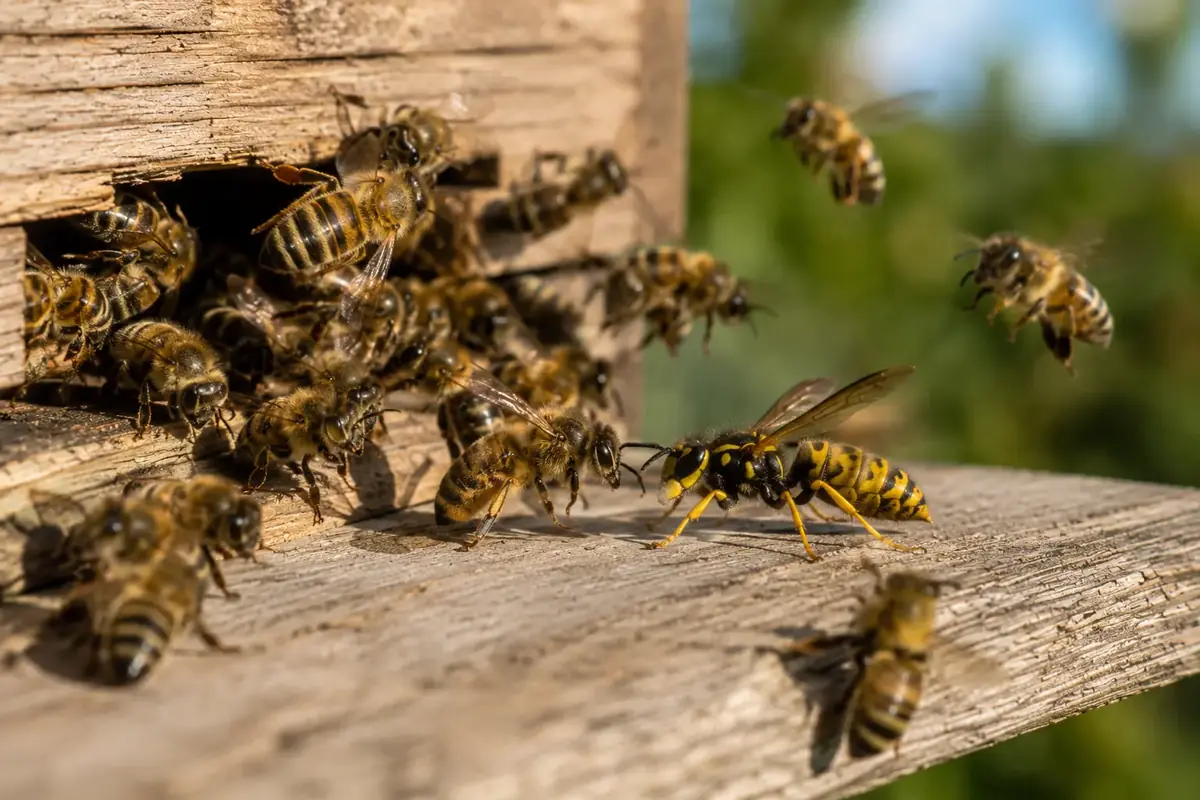
A swarm on the gate is usually gone by tomorrow. Bees flying in and out of a gap under the roof tiles are not. That's a colony, and it needs to come out properly.
If bees are hanging in a ball on a branch, a fence or the side of a car, leave them alone and keep people and pets back. That's a swarm resting while scouts find a new home, and it often moves on within a day or two. If bees are flying steadily in and out of one spot on your house, a wall, a roof, a water meter box or a compost bin, they've already moved in and started building comb. That colony will grow, and it won't leave on its own.
We remove established bee colonies from homes, schools, businesses and farm buildings across the Garden Route and Klein Karoo.
Swarm or colony?
- A swarm is a dense cluster of bees, sometimes the size of a rugby ball, hanging quietly in the open. Swarms are most common in spring and early summer, and the bees are usually calm because they have no comb or honey to defend
- A colony has a fixed entrance. You'll see a stream of bees going in and out of the same crack or gap all day, often with bees fanning at the entrance. In a wall or roof you may hear a hum when you put your ear to it
Our guide on what to do about a bee swarm covers the first hours, and our honey bee profile explains why they choose the spots they do.
Why a colony in the wall has to come out completely
Killing the bees and leaving the comb is the mistake that does the most damage. The honey and wax left in the cavity melt in summer heat and seep through plaster and ceilings, leaving stains that are hard to fix. The smell of the old comb attracts new swarms to the same spot year after year, and wax moths and other insects move in to feed on what's left. A proper removal means getting the colony out, taking out the comb and then closing the entrance.
How we deal with a bee colony
- Assessment We find the entrance and work out where the comb sits and how big the colony is. That tells us how much needs to be opened up and how long it will take.
- Making it safe People and pets are kept well away. We work in full protective gear, and we plan around neighbours, school times and busy walkways.
- Removal Whether a colony can be moved alive depends on where it is, how big it is and how accessible the comb is. We'll tell you honestly what's possible. Where it can't be saved, the colony is destroyed and then the comb is removed.
- Closing up The entrance is sealed or a builder is advised on what to close, so the next swarm can't move into the same space.
Bees in a roof sometimes need tiles lifted or a section of ceiling or fascia opened. We'll explain that before we start.
What not to do
- Don't spray a colony with insecticide or hose it. Bees defend their home, and a disturbed colony can sting everyone nearby
- Don't block the entrance while bees are inside. They'll find another way out, and that is often into the house
- Don't try to remove comb yourself without protective gear. Honey bee stings are dangerous for anyone who is allergic, and many stings at once are dangerous for everyone
If someone has been stung many times or is having trouble breathing, get medical help immediately.
Keeping the next swarm out
A house that has had bees once is more likely to have them again, because the gaps that let the first colony in are still there and the scent of old comb lingers. Once a colony has been removed, walk around the house in late winter, before swarm season, and look for openings bees could use: gaps in the fascia boards, open gable vents, unused chimneys, the space behind a loose meter box cover, cracks where the roof meets the wall. Close them with mesh or sealant, or ask a builder. Empty water meter boxes and compost bins with lids that don't fit are favourites, so check those too.
Bees and wasps
Wasps get confused with bees a lot. Wasps are smooth, shiny and narrow-waisted, build grey papery nests under eaves, and are interested in your braai. Bees are hairy, build wax comb inside cavities, and ignore your food. If it's wasps, see wasp nest removal.
Bee removal in your town
We have local pages for bee removal in George, Knysna, Plettenberg Bay, Mossel Bay, Wilderness and Oudtshoorn.
What it costs
The price comes down to where the colony is, how big it is, how much needs to be opened to reach the comb, how high it is, and how much closing up is needed afterwards. A colony in a water meter box at ground level is a quick job. A large, old colony between the ceiling and the roof sheeting of a double-storey house is a much bigger one. We look first, then quote.
Phone 044 012 5011 and, if you can do it safely from a distance, send us a photo of the entrance on WhatsApp. You can also book online.
Frequently asked questions
Will a bee swarm go away on its own?
Usually, yes. A swarm resting in the open often moves on within a day or two once scouts find a new home. If bees start flying in and out of a gap in your house, they've moved in and need removing.
Do you kill the bees?
Only when they can't be removed alive. Whether a colony can be saved depends on where it is and how accessible the comb is, and we'll tell you honestly before we start.
Why can't you just kill them and leave the comb?
Left-over comb and honey melt and stain walls and ceilings, smell, and attract new swarms and other insects to the same spot. The comb needs to come out.
When is bee swarm season?
Mostly spring and early summer, when strong colonies split and send out swarms. Swarms can turn up in other months too, but spring is the peak.
Can I block the hole the bees are using?
Not while bees are inside. They'll look for another way out, often into the house. Close the entrance only after the colony and comb have been removed.
What if someone is stung many times?
Get medical help straight away, especially if they're allergic, struggling to breathe or have been stung many times. Keep everyone else away from the bees.