


You wake up with a line of itchy bites on your arm that weren't there last night. Lift the corner of the mattress and look closely at the seam. If there are tiny dark spots, you may have found them.
Bed bugs are small, flat, wingless insects that feed on human blood, usually at night while people are asleep. They hide in the seams of mattresses, bed bases, headboards and furniture close to where people sleep, and come out to feed for a few minutes before going back into hiding. They don't live on the body like lice, and they aren't a sign of a dirty home. They're travellers, carried from place to place in luggage, clothes, handbags and second-hand furniture, which is why guest houses, holiday rentals and backpackers in busy tourist towns see them regularly.
What they look like
- Adults. About 5 to 7 mm long, the size and shape of an apple pip. Flat and oval when unfed, reddish brown. After feeding they swell up and turn darker red
- Nymphs. Smaller versions of the adult, pale or straw-coloured until they feed, when you can see the red blood inside them
- Eggs. Tiny, about 1 mm, pearly white, glued in clusters into seams and cracks
- Shed skins. Pale, empty, bug-shaped skins left as the nymphs grow
Signs of bed bugs
- Bites. Itchy red bumps, often in a row or a small cluster, on skin exposed during sleep: arms, shoulders, neck and face. Some people don't react at all, so in a shared bed only one person may notice
- Dark spots. Small black or dark brown spots on mattress seams, sheets, the bed base and the headboard. They're droppings of digested blood and smear like ink when wiped with a damp cloth
- Blood spots. Small rusty stains on sheets and pillowcases from bugs crushed after feeding
- The bugs themselves. In seams, piping, the corners of the base, behind the headboard and in cracks in the bedside table
- A smell. In heavy infestations, a sweetish, musty odour in the room
Where they hide
Bed bugs stay close to their food source. Most are found within a couple of metres of the bed: in mattress seams and labels, bed base corners and staples, headboard joints, bedside drawers, skirtings, behind loose wallpaper and picture frames, curtain folds, plug points and upholstered chairs. In a busy guest house they can spread to neighbouring rooms through wall voids and on housekeeping trolleys and linen.
How long they live
An adult bed bug feeds every few days to a week or so and can survive for months without feeding, especially in cool conditions. That's why bed bugs can still be present in a room that has been empty for a long time, and why throwing out a bed and waiting rarely solves the problem.
Are they dangerous?
Bed bugs aren't known to transmit disease to people. Even so, the bites itch, some people react badly to them, and a long infestation affects sleep and causes real stress and anxiety. Scratching the bites can lead to skin infections.
Where they come from
- Luggage and clothing after staying somewhere with bed bugs
- Second-hand beds, couches and furniture
- Visitors' bags
- Public transport, cinemas and other shared seating, occasionally
How they're treated
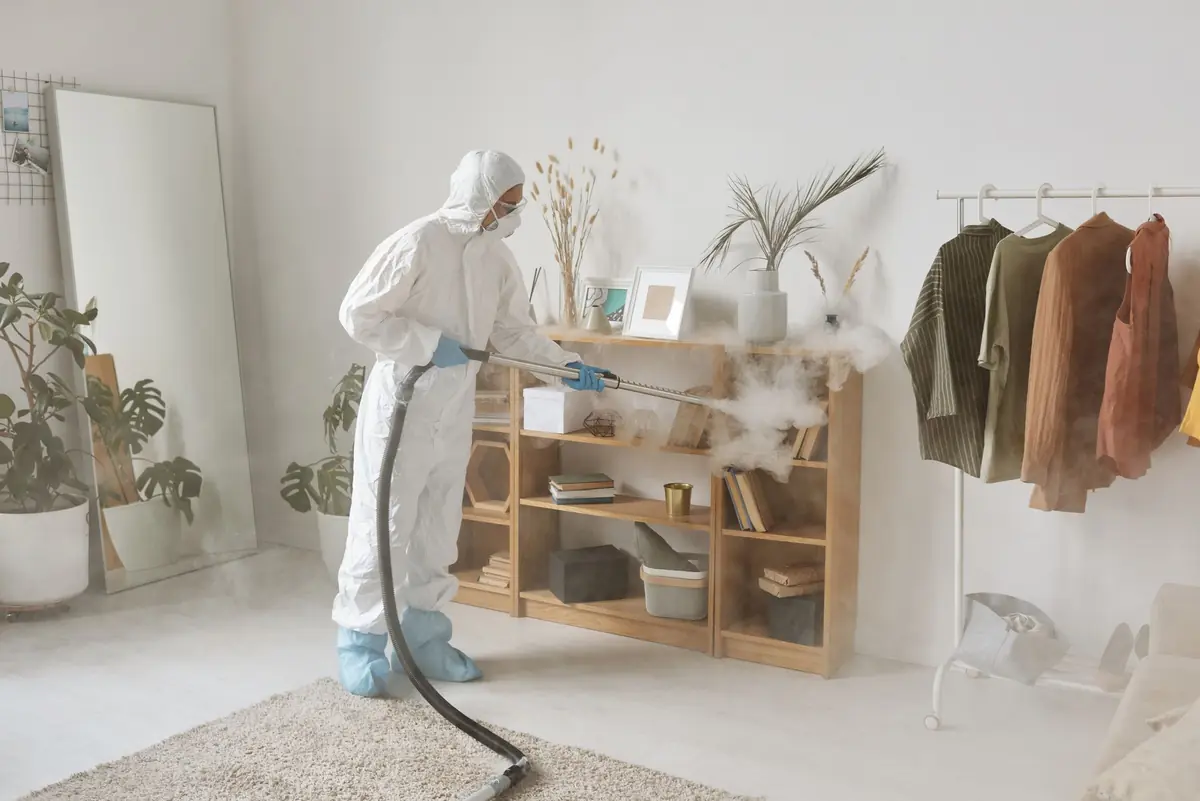
Bed bugs need a thorough, targeted treatment of every hiding place near the bed, and a follow-up treatment about two weeks later to catch the young that hatch from eggs. Our bed bug treatment page explains the process and how to prepare the room. We have local pages for Plettenberg Bay, Knysna, George and Mossel Bay.
When you travel, keep your suitcase on the luggage rack rather than the bed or floor, check the mattress seams when you arrive, and wash everything on a hot cycle when you get home.
If you run a guest house or a rental, train whoever does the beds to glance at the mattress seams and headboard every time the linen is changed. Early detection in one room is a small job. Discovering it after it has spread through the house is a much bigger one.
Frequently asked questions
What do bed bugs look like?
Adults are flat, oval, reddish brown and about the size of an apple pip. Young ones are smaller and pale until they feed.
What do bed bug bites look like?
Itchy red bumps, often in a line or small cluster on arms, neck, shoulders or face. Some people don't react to the bites at all.
Are bed bugs a sign of a dirty house?
No. They travel in luggage, clothing and second-hand furniture, and they're found in clean homes and expensive hotels as often as anywhere else.
Can bed bugs live without feeding?
Yes, adults can survive for months without feeding, especially in cool conditions, which is why empty rooms can still have bed bugs.
Do bed bugs spread disease?
They aren't known to transmit disease to people, but the bites itch and some people react badly. Scratching can lead to skin infections.