


Some people who phone us for "fumigation" need a normal spray treatment. Others need the real thing: a sealed space, a gas, and nobody inside until it's cleared. Here's how to tell which you need.
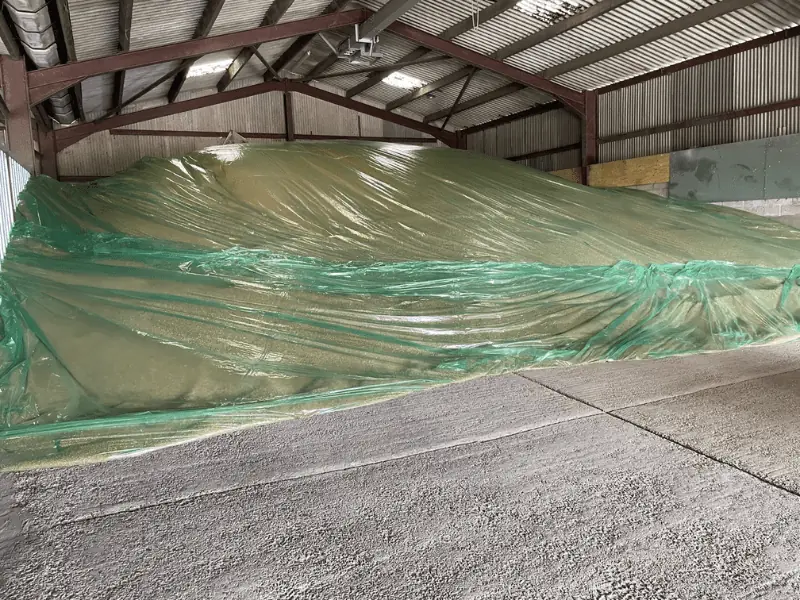
Gas fumigation is used when pests are hidden deep inside something a spray can't reach: a stack of bagged grain, a store of dried fruit or animal feed, a shed full of seed, or a building where insects are spread through the structure and contents. The space is sealed, a registered fumigant such as phosphine is released, and the gas penetrates every gap, bag and crevice. Because the gas is toxic, the fumigated space must be vacated by people and animals and stays closed until it has been aired and tested clear. That's the big difference from an ordinary treatment, where you can carry on living in the house once the spray is dry.
We fumigate homes, warehouses, grain and feed stores and stored products across the Garden Route and Klein Karoo.
Do you need fumigation, or a treatment?
In everyday speech, "fumigate" often means "spray for insects". If you have cockroaches in the kitchen, ants in the bathroom or fleas in the carpet, you don't need gas. You need a targeted treatment with gel baits, ant baits or an odourless residual spray, and you won't have to move out or empty your cupboards. Our pages on cockroach control, ant control and flea and tick control cover those.
Gas fumigation is the right tool when:
- Weevils, grain moths or beetles are breeding inside bagged or bulk stored products: maize, wheat, flour, rice, seed, nuts, dried fruit, animal feed
- A warehouse or store has an infestation spread through stock that can't all be unpacked and treated by hand
- A severe, long-running infestation has spread through a building's contents in a way that surface treatments can't reach
How a fumigation works
- Assessment We identify the pest, look at what needs treating and check whether the space can be sealed properly. A fumigation that leaks gas doesn't work and isn't safe.
- Preparation You get a clear list beforehand. For a house that covers people, pets, plants, fish tanks and certain foods. For a warehouse it covers staff access, stock that must be moved out and the timing around deliveries.
- Sealing The building, room or stack is sealed. Stacks of bagged product are covered with gas-tight fumigation sheets, and the edges are weighted down. Doors, vents and gaps in buildings are taped and closed.
- Fumigant applied A registered fumigant is released inside the sealed space, warning signs go up, and the area is secured.
- Exposure period The gas needs time to reach and kill every stage of the pest, including the eggs and larvae inside grains. How long depends on the temperature and on what is being treated, and we'll give you the timing before we start.
- Ventilation and clearance The space is opened and aired, and it is only handed back once it's safe to re-enter.
Stored products and the Klein Karoo
Stored product insects are a constant problem wherever grain, seed and feed are kept for months. The common ones are rice and maize weevils, flour beetles, grain borers and Indian meal moths. Our stored product insects profile shows what each looks like. In the hot Klein Karoo summer around Oudtshoorn, stored feed and grain on farms can go from a few weevils to a seething bag surprisingly quickly, because insects breed faster in the heat. On farms, a feed-store fumigation can be planned alongside rodent work in the same sheds, which our farm pest control page covers.
Warehouses and food businesses
For mills, packers, wholesalers and food factories, fumigation works best as part of a planned programme rather than an emergency. Stock rotation, cleaning, monitoring and well-timed fumigation together keep an infestation from building up to the point where product is rejected. We can plan fumigations around your production and delivery schedule under a commercial pest control contract. Our local pages for George and Mossel Bay look at warehouse work in those towns.
Homes
Whole-house gas fumigation is uncommon, and we'll be honest if your problem can be solved another way. Where it is the right answer, the house must be empty during the treatment, and we'll walk you through exactly what to take out, what to switch off and when you can come back. For wood borer in floors and roof timbers, a targeted wood borer treatment is often the better option.
A word on safety
Fumigants are some of the most hazardous products in pest control. Never re-enter a fumigated space before you've been told it's clear, never remove the warning signs, and never try to fumigate with tablets bought somewhere else. In South Africa, people, children among them, have died after fumigant tablets were used in and around homes. This is work for a registered professional.
What it costs
Fumigation is priced on what's being treated, the volume of the space or stack, how easy it is to seal, the fumigant and exposure time needed, and whether this is a one-time job or a recurring part of how your stock is managed. A few pallets of stored product under sheets is a different job from a whole warehouse. We'll assess and quote.
Phone 044 012 5011 to talk it through, or describe the job here and we'll come back to you.
Frequently asked questions
Do I have to leave my house during fumigation?
Yes, for gas fumigation everyone, including pets, must leave, and the house stays closed until it has been aired and declared safe. Ordinary insect treatments are different and don't require you to move out.
What's the difference between fumigation and pest control spraying?
Fumigation uses a gas inside a sealed space to reach pests hidden deep in products or structures. Spraying applies a residual product to surfaces where pests walk and hide.
What does fumigation kill?
Insects at every life stage, including eggs and larvae inside grain, timber and packaging. That's why it's used for stored product insects that sprays can't reach.
Is grain safe to use after fumigation?
Yes. Registered fumigants such as phosphine are used on grain and stored food because they air out completely and leave no harmful residue when the label instructions are followed.
Can I buy fumigation tablets and do it myself?
No. Fumigants are highly toxic, and misused tablets have caused deaths in South African homes. Fumigation should only be done by a registered professional.
How long does a fumigation take?
It depends on the temperature and what's being treated. Warm conditions need less exposure time than cold ones, and we give you the timing before we start.