

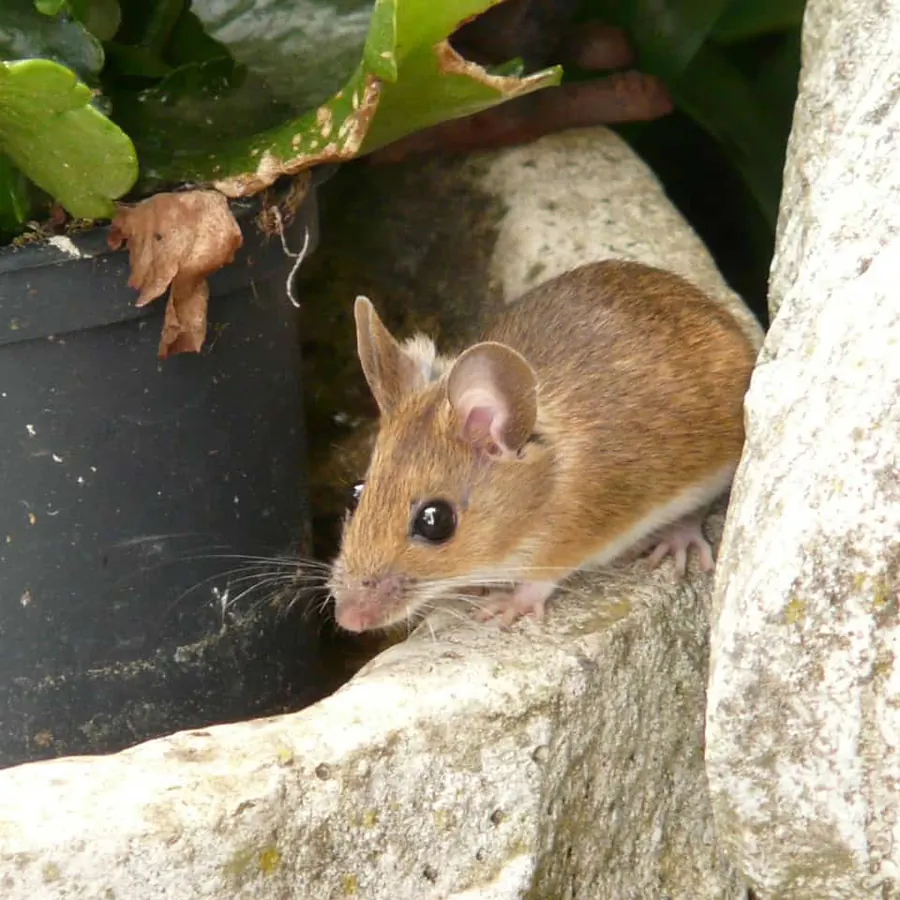
It often starts in the garage. A bag of dog pellets with a neat hole chewed in the corner, a few droppings on the shelf with the camping gear, nesting material made from shredded cardboard. A week later there's scratching above the ceiling. That's a rodent problem moving indoors, and the sooner it's dealt with, the smaller the job.
The fix has three parts: remove the rodents that are already inside, find and close the way they're getting in, and clean up afterwards. Skip any one of those and you'll be back where you started.
Where Dana Bay rodents come from
Dana Bay is surrounded by fynbos and open ground, and that veld is home to a healthy population of field mice and rats. Most of the time they stay out there. They move towards houses when food runs short, when the nights get cold, or when their cover is disturbed, for example when an empty plot nearby is cleared or a stretch of bush is burnt or cut back.
Because most homes here are newer builds, people expect them to be sealed tight. In practice, the weak points are the same as anywhere: the gap under a garage door, unscreened air vents, holes where pipes and cables enter the walls, and the space where the roof sheeting meets the wall plate. A mouse needs a gap about the width of a pencil. A young rat isn't much bigger.
Is it actually rodents?
Check for these before you call:
- Droppings: rice-sized for mice, raisin-sized or larger for rats
- Gnaw marks on cupboard edges, plastic containers, pool pipes or wiring
- Greasy rub marks along walls or beams where they run the same route every night
- Scurrying or scratching in the ceiling, mostly after dark
- Pets suddenly fixated on one spot behind the fridge or a storage cupboard
How we deal with it
We inspect the whole property
That means the roof space, the garage, any outside rooms or wendy houses, the kitchen and the garden boundary. We're looking for nests, runs, feeding spots and, above all, the entry points.
We pick the right control method for your home
Most Dana Bay households have pets, and many have young children, so we use lockable, tamper-resistant bait stations placed along the runs we've found. Where poison isn't suitable, we use traps. In roof voids and wall cavities we may also use tracking powder, which rodents pick up on their fur as they move through.
We show you how to keep them out
We'll point out every gap we find and tell you what fixes it: a brush strip on the garage door, mesh over a vent, a pipe collar sealed with the right filler. Some of this is a weekend job for you. Some is better left to a builder.
We come back
Rodent work nearly always needs a follow-up. We check the stations, see what's been taken and make sure activity has stopped. Once it has, we can sanitise the affected areas, because droppings and urine carry diseases such as leptospirosis and salmonella.
The mistake that hurts more than the rats
Scattering loose poison in the garden or the roof. It's tempting, but it's a bad idea here for a few reasons. Pets find it. Poisoned rodents die in the ceiling or wall cavity, where you can smell them for weeks and can't get to them. And a poisoned rat staggering about outside is an easy meal for an owl or a cat, which then gets poisoned too. Living next to the fynbos, that's a real concern. Bait belongs in locked stations, placed where the rodents run.
Keeping the veld outside
- Store pet food, bird seed and chicken feed in metal or heavy plastic bins with lids, not in the bag.
- Pick up fallen fruit and don't leave pet bowls outside overnight.
- Keep the garage tidy and off the floor. Cardboard boxes and old blankets are nesting material.
- Close compost bins properly and don't add cooked food.
The Dana Bay tip: if your garden backs onto open veld, stack firewood and garden refuse away from the house, ideally on a raised rack near the boundary rather than against the garage wall. Woodpiles are rodent apartments, and having them right next to your walls gives the rodents a sheltered base a few steps from the gap under the door.
How much will it cost?
That depends on how big the property is, how established the rodents are, how many stations are needed and how much proofing advice and follow-up the job needs. A couple of mice in a garage caught early is a small job. Rats that have been breeding in the roof for months take longer. We'll quote once we've had a look.
An honest note: if you've seen one mouse and found a few droppings, a couple of well-placed snap traps and a sealed gap under the garage door may be all you need. If you're hearing them every night or finding fresh droppings in several places, that's a colony, and it's time for a proper programme.
Seeing other pests? Have a look at our general pest control in Dana Bay page. For more about how we work with rodents across the region, see rodent control in George.
Call us on 044 012 5011 and tell us what you've found. We're SAPCA registered and our rodent treatments come with a 3-month guarantee.
Questions we get asked
Do rats in the roof mean the house is dirty?
No. Some of the neatest homes in Dana Bay get rodents because of where they are, next to open veld. It's about access and shelter far more than cleanliness.
Can rodents get into a newer house?
Yes. Even new homes have gaps at garage doors, vents, pipe entries and under the roof sheeting, and that's usually all a mouse needs.
Will the bait stations be a danger to my children?
The stations we use are locked and tamper-resistant, so children and pets can't get at the bait inside. If there's any doubt, we use traps instead.
Why can I smell something in the ceiling?
Most often it's a rodent that's died in the roof or a wall cavity, usually after loose poison was used. We can help find the source and sanitise the area.
Do you remove the dead rodents?
We check and service the stations and traps on our follow-up visits and deal with what we find there. After activity stops, we can also clean and sanitise the affected areas.