


Two birds on the roof ridge in spring. By midsummer there are a dozen, a nest under every solar panel, and a crust of droppings down the wall. Pigeons don't move in gradually. They breed.
Pigeons have lived alongside people for thousands of years, and they're very good at it. They nest on ledges, in roof spaces and under solar panels, breed through most of the year, and return to the same building for generations. For homeowners, the problems are noise, droppings, blocked gutters and mites. For businesses, they're fouled stock, slippery walkways, damaged buildings and failed hygiene audits.
The pigeons on Garden Route buildings
Feral pigeons
The town pigeon, descended from the domesticated rock dove. Grey-blue with two dark bars across each wing, often with an iridescent green and purple neck, although colours vary a lot, from almost white to dark brown. They're not indigenous, and they're the main problem bird around harbours, town centres, warehouses and factories.
Speckled pigeons
Also called rock pigeons. An indigenous species, larger than a feral pigeon, with a reddish-brown back covered in white spots, a grey head and a bare red patch of skin around the eye. They nest naturally on cliffs and have adapted well to buildings, so they're very common under roofs and solar panels in George, Mossel Bay and the inland towns.
Doves, like the laughing dove and Cape turtle dove, nest mostly in trees and rarely cause the same problems.
Why pigeons choose your building
- Shelter. A sheltered, dry, flat ledge or cavity safe from cats and birds of prey. The gap under solar panels is close to perfect
- Food nearby. Bird feeders, spilt pet food or chicken feed, bins, take-away scraps and grain stores
- Loyalty. Pigeons return to where they hatched and where they've nested before. Once a building is established as a nesting site, new birds keep arriving
Breeding
Pigeons usually lay two eggs at a time and can breed several times a year, in warm areas almost year-round. The young grow quickly and are ready to leave the nest within about a month, so a pair can produce a lot of birds in a year.
The problems they cause
- Droppings. Acidic and corrosive to paint, metal roof sheeting, solar panel frames and stone. They make walkways and steps slippery
- Blocked gutters. Nesting material and droppings block gutters and downpipes, leading to overflows and water damage
- Health risks. Dried droppings can carry fungi and bacteria, and the dust from a large build-up shouldn't be breathed in. Clean with a mask, gloves and damp methods, not a dry broom
- Mites and insects. Nests harbour bird mites, which bite people when the birds leave, and carpet beetles, which feed on feathers and debris and can spread into the house
- Noise. Cooing, scratching and flapping in the roof and on the panels, starting early in the morning
What works and what doesn't
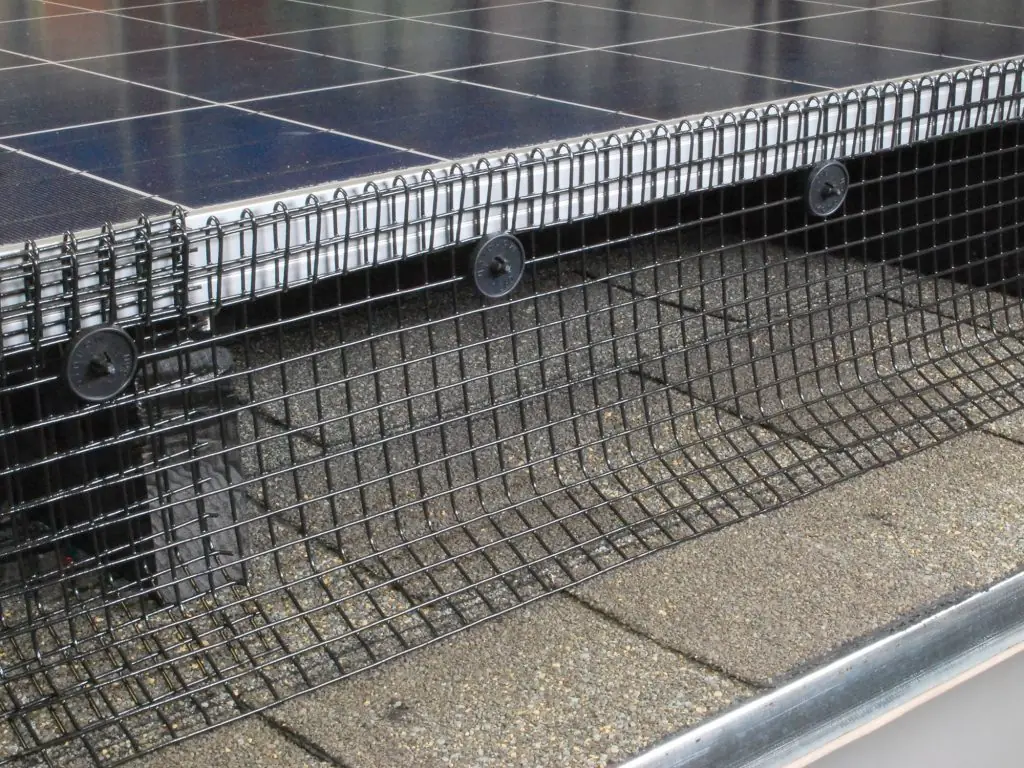
Fake owls, spinning reflectors and hanging CDs work for a week or two, until the birds realise nothing happens. Shooing them away works for an afternoon. Feeding them, even occasionally, keeps them coming. What lasts is proofing: closing the gaps they nest in, fitting mesh around solar panels and deterrents on the ledges where they perch, and removing the food sources that drew them. Many indigenous birds are protected, so proofing that keeps birds out without harming them is the right approach for both feral and speckled pigeons.
Our bird control page explains how we proof roofs, solar panels and commercial buildings, and our page on bird control in Mossel Bay covers harbour-town pigeons. If you've had nests in the roof and are now being bitten at night, see our carpet beetle and bed bug profiles to rule out the alternatives.
Pigeons fouling barns and feed on a farm are dealt with under farm pest control.
Frequently asked questions
Why do pigeons nest under solar panels?
It's dry, shaded and out of reach of cats and hawks, which is everything a pigeon wants in a nest site.
Are pigeons protected?
Feral pigeons aren't indigenous, but speckled pigeons and many other indigenous birds are protected. Proofing keeps all of them out without harming them.
Is it safe to sweep up pigeon droppings?
Not when they're dry and piled up. Old droppings can hold fungi and bacteria that rise as dust. Dampen them first and wear a mask and gloves, or leave a big build-up to us.
How fast do pigeons breed?
A pair usually lays two eggs at a time and can breed several times a year, with chicks leaving the nest in about a month.
Why do pigeons keep coming back to the same ledge?
They're loyal to a roost and nest site, and their own droppings mark it as safe. Until the ledge is made unusable, they'll keep returning.