


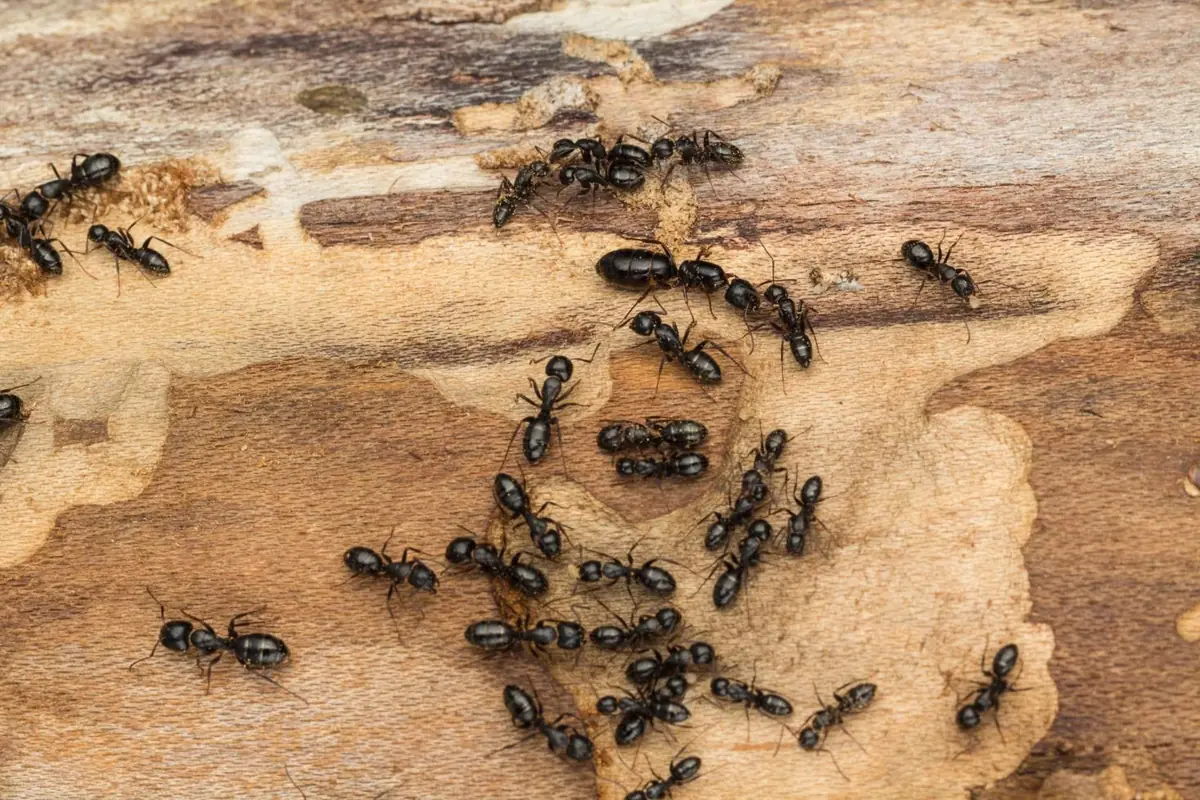
A thin, busy line of small brown ants along the edge of the counter, up the wall and into the sugar. Wipe them away and they're back by lunchtime. If that sounds familiar, you've probably met the Argentine ant.
The Argentine ant is a small invasive ant from South America that has spread through much of the world, including the Western Cape and the Garden Route, where it's now one of the most common ants in homes and gardens. It's the ant behind most of the long, steady trails in kitchens and bathrooms, especially after rain or in hot, dry weather. What makes it hard to control is the way it lives: instead of single colonies with one queen, Argentine ants form huge, connected networks of nests with many queens, and the ants from one nest happily share with the next.
What they look like
- Small, about 2 to 3 mm long, all the same size within a trail
- Plain light to dark brown, with no markings
- They move quickly in neat, steady trails, usually following edges: skirtings, counter tops, cables, door frames
- They don't sting, and a bite is barely noticeable
- Crushed, they give off a faint musty smell
Where they nest
Argentine ants nest shallowly in moist soil: under paving and pots, in mulch and leaf litter, at the base of plants, in wall cavities and under bins. Nests move easily. When it rains hard they move uphill, often into the house; in a dry spell they move closer to water. They also farm aphids and scale insects on garden plants for the sweet honeydew those insects produce, so a trail up a lemon tree or a rose bush is another sign.
Why they matter beyond the kitchen
In the Western Cape, Argentine ants push out many of the indigenous ants that fynbos plants depend on to carry and bury their seeds. Where Argentine ants take over, some of those plants struggle to regenerate. They also protect aphids and scale from their natural enemies, which makes garden pest problems worse. So keeping them under control around the house is good for the garden too.
Why spraying makes it worse
Spraying a trail kills the workers on it, but the nests are untouched. Because each network has many queens, a stressed nest simply splits and moves, a process called budding. The usual result of spraying is two trails where there was one. Repellent sprays also make it harder for baits to work, because ants avoid the treated areas.
How they're controlled
The answer is slow-acting bait that the workers carry back to the nests and share with the queens and larvae. It takes days, not minutes, and you'll often see more ants on the bait at first, which is a good sign. Baits are placed along active trails and near the nests, outside as well as in, and a barrier treatment at entry points stops the next lot coming in. Our ant control page explains it in full, and our local pages for ants in George, Knysna and Mossel Bay look at what we see in each town.
What you can do
- Wipe the trail with soapy water rather than spray: it removes the scent trail without driving the nest to split
- Keep sugar, honey, pet food and fruit sealed or in the fridge
- Fix leaking taps and dripping air-conditioner pipes, which they use as water sources
- Trim plants and branches touching the house, which they use as bridges
- If you're using bait from the shop, leave it alone and don't spray near it
If the ants have wings and are pouring out of a crack after rain, make sure they're not termites. Flying ants or termites shows how to tell them apart in a few seconds.
A year of Argentine ants
They're with us all year, but the pattern is predictable. Numbers build in spring and early summer, trails come indoors after heavy rain when nests flood, and again in the hottest, driest weeks when they're looking for water. Winter is quieter, but in a warm kitchen they can carry on. Baiting in spring, before numbers peak, gives the best result for the rest of the year.
Frequently asked questions
What are the small brown ants in my kitchen?
In the Garden Route, small, plain brown ants moving in neat trails are very often Argentine ants, an invasive species that nests in moist soil and comes indoors after rain.
Why do the ants keep coming back after I spray them?
Spraying only kills the workers on the trail. Argentine ant nests have many queens and split into new nests when stressed, so spraying can make the problem bigger.
Do Argentine ants bite or sting?
They don't sting, and their bite is barely noticeable. They're a nuisance rather than a danger.
Why are there more ants after the bait was put down?
That's normal for the first few days. Workers are collecting the bait and taking it back to the nests, which is how it reaches the queens.
Are Argentine ants bad for the garden?
Yes. They protect aphids and scale insects on garden plants, and in the Western Cape they displace the indigenous ants that fynbos plants need to spread their seeds.