

Mud tubes on a wall, a skirting board that sounds hollow, wings on the windowsill after rain. If you're seeing any of that, here's what it means and how we deal with it.
If you think you have termites, don't spray them and don't rip anything open. Phone us, leave the mud tubes where they are, and let us trace where the colony is coming in. Termites are one of the few pests where the first treatment has to be right, because a colony you only half-kill simply moves to another wall.
We've treated termites from Stilbaai to Plettenberg Bay and over the mountains in Oudtshoorn for more than 25 years. Two very different termites cause the trouble here, and the treatment depends on which one you have.
The two termites we deal with most
Subterranean termites
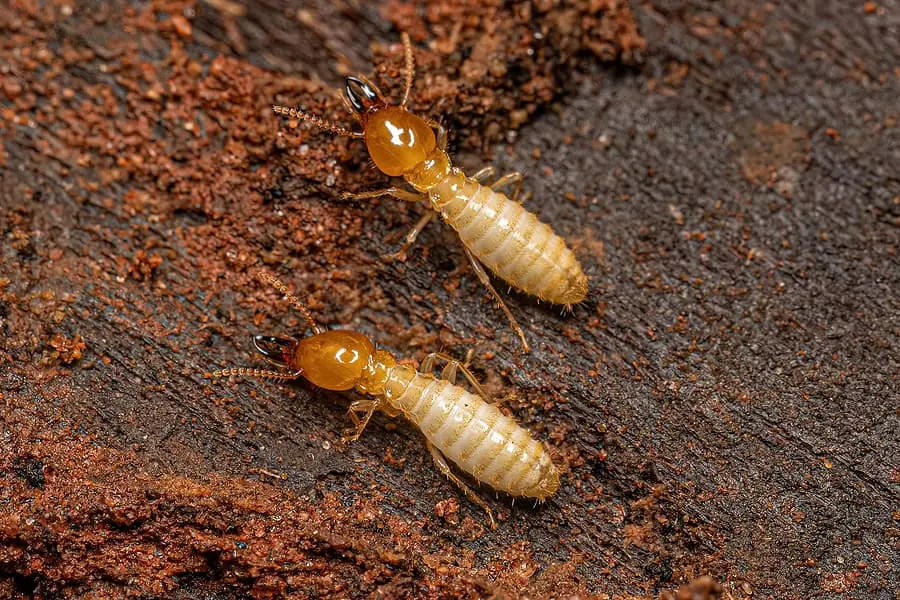
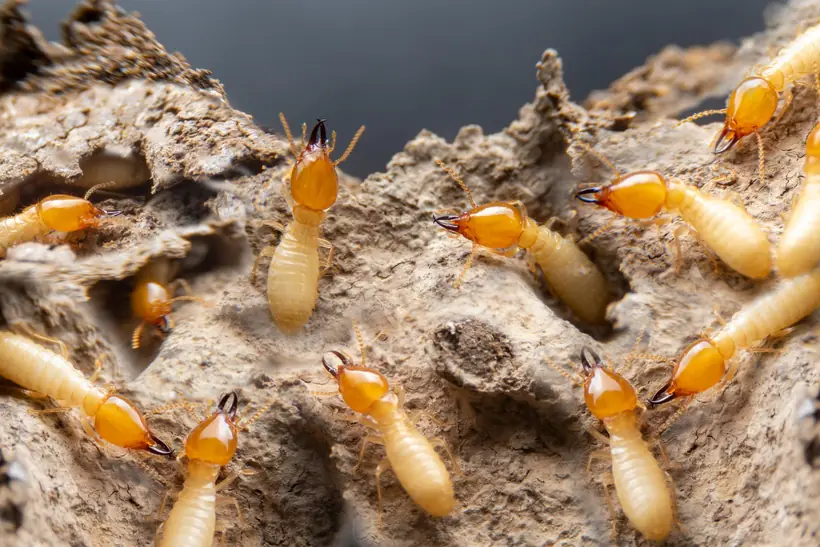
These are the ones that damage buildings. The colony lives in the soil, sometimes a fair way from the house, and the workers travel to wood through mud tubes they build up foundations, inside cavity walls and behind plaster. They eat from the inside out, so a door frame or skirting board can look perfect until you push a screwdriver into it. You will rarely see the insects themselves: pale, soft-bodied and terrified of light and dry air. Our subterranean termite profile has close-up signs and photos.
Harvester termites
Harvesters don't eat your house. They cut grass and dry plant material and carry it underground, which is why a lawn, a paddock or a lucerne field develops bare, scalped patches with little heaps of loose soil around open holes. They forage in daylight, often in the cool hours, and they are a real problem on smallholdings and in the Klein Karoo. More on how to spot them in our harvester termite profile.
Flying ants and flying termites both swarm after rain, and people mix them up all the time. Our guide to telling flying ants from termites explains the differences in wings, waist and antennae, which you can check in thirty seconds.
Signs that termites are in the building
- Pencil-thin brown mud tubes running up a foundation wall, a pillar, the inside of a garage or along a skirting board
- Timber that sounds hollow or papery when you knock on it, especially door frames, skirtings and built-in cupboards on ground level
- Paint or wallpaper that bubbles, with soil-like material behind it
- Small piles of discarded wings on windowsills or near lights, usually the morning after the first good rain of the season
- Floor boards that suddenly feel soft or dip near an outside wall
- Soil packed into cracks in plaster or into the gaps around a door frame
One of these on its own doesn't always mean termites. Two or more together almost always does.
How we treat termites
- Inspection We follow the mud tubes and damaged timber back towards the soil, check the outside walls, paving, garden beds against the house and any wooden structures in the garden, and work out where the workers are getting in. On older homes we also look under suspended timber floors where we can get access.
- A treatment plan you can see Before any work starts, we show you where the activity is and what we propose to treat. Termite jobs involve drilling, so you should know where and why.
- Soil treatment For subterranean termites the main tool is a continuous chemical barrier in the soil along the foundations, applied by trenching outside and drilling and injecting through paving, slabs or floors where needed. Termites crossing the treated soil carry the termiticide back with them.
- Direct treatment Active galleries, mud tubes and nests we can reach are treated directly, and damaged timber is treated so that it doesn't stay a food source.
- Harvester termites These are treated differently, with a registered bait or granular product placed at the open foraging holes, timed for when the workers are actively collecting.
- Follow-up We come back to check that the tubes stay dead and no new ones appear. Any carpentry repairs should wait until we've confirmed that.
Termite work is covered by our guarantee, and we put the terms in writing with your quote so you know exactly what is included.
Building or renovating?
The cheapest termite treatment you'll ever pay for is the one done before the slab is poured. Pre-construction soil poisoning treats the ground under and around a new building and comes with a certificate for your builder and plans. If you're adding a room or a garage, the same applies to the new foundation.
Selling a house is the other moment termites come up. The beetle certificate a buyer asks for in the Western Cape covers wood-destroying beetles, not termites, but our inspectors will tell you if they see termite activity while they're in the roof and under the floors. For beetle damage in timber, see wood borer treatment.
Where termites cause the most trouble here
On the coast, the damage we find is usually in older homes where timber touches soil: a door frame set into a damp floor, a wooden deck built against the wall, a flower bed heaped up above the damp-proof course. Holiday houses in places like Plettenberg Bay and Wilderness get hit hardest, simply because nobody is there to notice the first mud tube. We have local pages for termite control in George, Knysna and Mossel Bay.
Inland it changes. In and around Oudtshoorn, harvester termites strip lawns, sports fields and grazing in dry spells, and subterranean termites find their way into outbuildings, sheds and old farmhouses with timber roofs.
What people get wrong
The classic mistake is spraying the mud tubes with a can of insecticide. It kills the handful of workers in that tube and tells the colony to build somewhere else. The second is ripping out damaged skirting boards before anyone has traced the activity, which destroys the trail we need to follow. Leave it, take a photo, and call.
What termite treatment costs
There's no fixed price, and anyone who quotes one over the phone is guessing. The cost depends on the length of foundation that needs a barrier, how much drilling through paving or floors is involved, whether the house has a suspended timber floor, how widespread the activity is, and whether it's subterranean or harvester termites. A harvester treatment on a lawn is a much smaller job than a barrier around a whole house. We inspect first, then quote, so the number you get is for your property.
If you've found mud tubes or hollow timber, phone us on 044 012 5011 or send a photo through WhatsApp. You can also book an inspection online.
Which termite is it?
Three termites, three very different problems. Match what you're seeing to the right one.
 In the timber
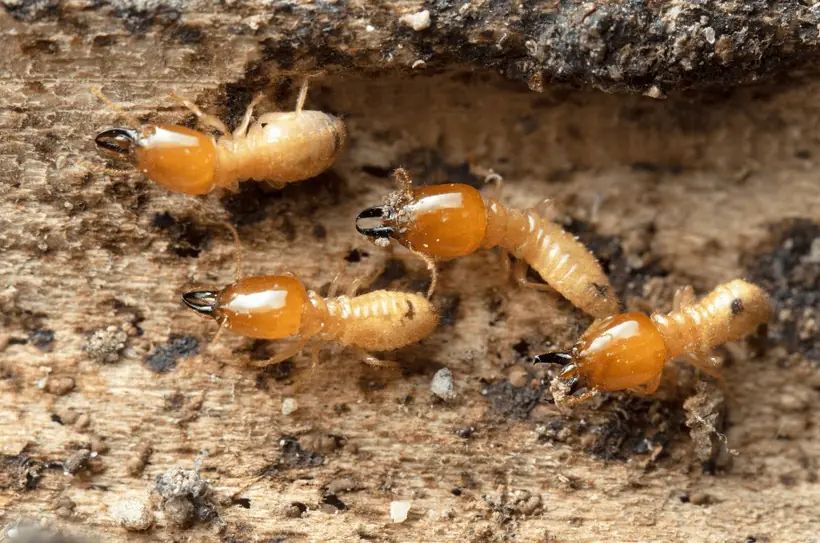
Drywood termites
Live and nest inside dry wood
- Nest
- Inside the wood itself
- Soil contact
- None, no mud tubes
- Eats
- Furniture, frames, roof timber
- Tell-tale sign
- Tiny hard pellets
What you'll notice
Small heaps of sand-like pellets under pin holes in timber, that come back after you sweep them up.
Risk level
- Building timber
- Lawn and garden
- Hard to spot
 In the soil
Subterranean termites
Nest underground, travel in mud tubes
- Nest
- In the soil
- Gets in by
- Mud tubes up walls
- Workers
- Pale cream, a few mm
- Swarms
- Warm evenings after rain
What you'll notice
Pencil-thick mud tubes up a foundation, a wall or the back of a cupboard, and wings on the windowsill after rain.
Risk level
- Building timber
- Lawn and garden
- Hard to spot
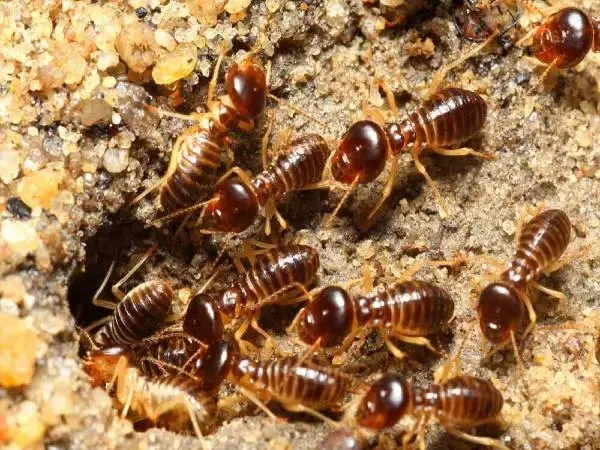 In the lawn
Harvester termites
Cut grass and carry it underground
- Nest
- Deep underground
- Eats
- Grass and plant litter
- Workers
- Brown to almost black
- Out foraging
- Cool mornings and evenings
What you'll notice
Small holes with loose soil heaps, grass cut into short pieces, and bare patches that grow in dry weather.
Risk level
- Building timber
- Lawn and garden
- Hard to spot
Frequently asked questions
How do I know if I have termites or flying ants?
Look at the waist and wings. Termites have a thick, straight waist and four wings of equal length, while flying ants have a pinched waist and front wings that are longer than the back ones.
Are termites common in the Garden Route?
Yes. Subterranean termites are found right along the coast and damage timber in homes, and harvester termites are common in lawns and grazing, especially in the Klein Karoo.
Do I have to move out for a termite treatment?
No. A soil barrier and gallery treatment is done around you, though we'll ask you to keep children and pets away from areas being drilled and treated until they're dry.
Can termites come back after treatment?
They can if the barrier is broken, for example by new paving, building work or garden beds dug against the wall. Tell us before you make changes near the foundations and we'll check the barrier.
Do harvester termites damage houses?
No. Harvester termites eat grass and dry plant material, not structural timber, but they can strip a lawn or a camp of grazing quickly in dry weather.
How long does a termite treatment take?
It depends on the length of the foundations and how much drilling through paving or floors is needed. We'll tell you how long to expect when we quote.