


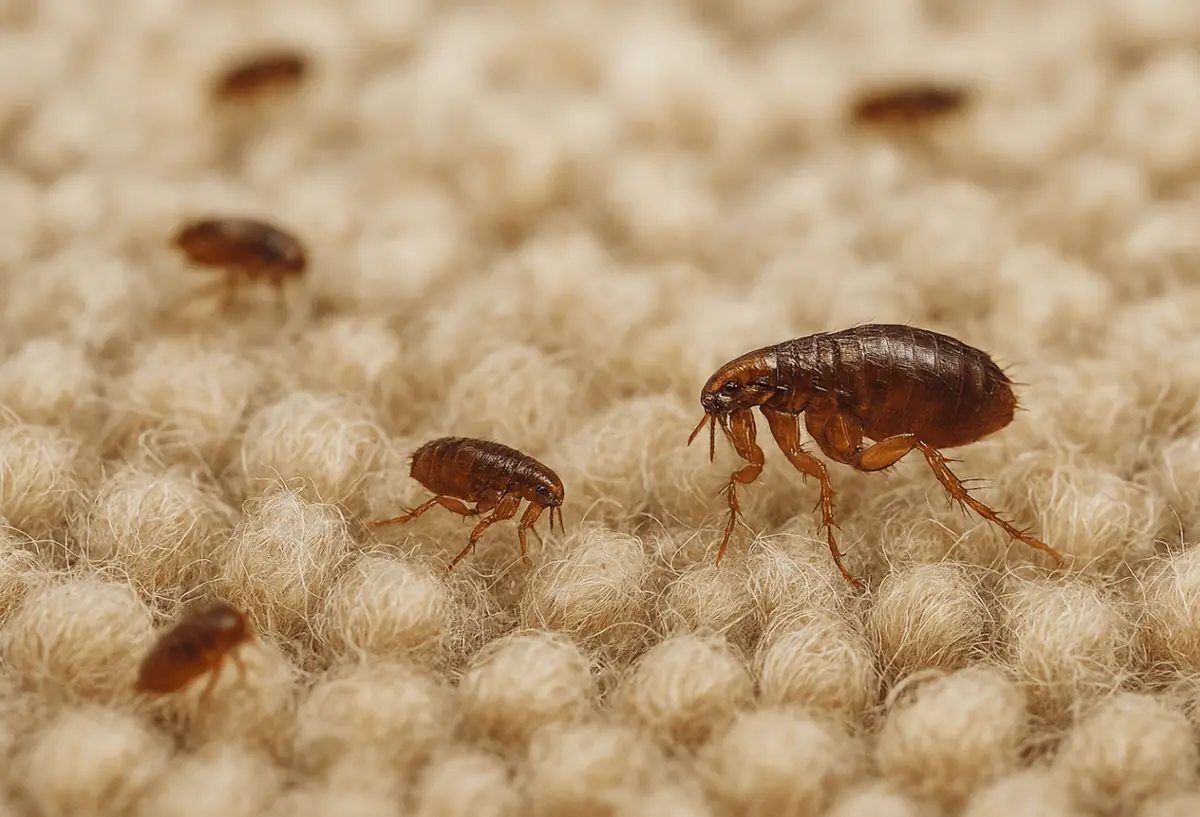
You've treated the dogs and the bites haven't stopped. That's because most of the fleas aren't on the dogs. They're in the carpet, the couch and the shady spot under the deck.
Getting rid of fleas means treating the pets, the house and the garden in the same week. Adult fleas live on your dog or cat, but their eggs fall off wherever the animal sleeps, and the larvae and pupae develop in carpets, pet beds, couches, car seats and shaded soil. Treat only the pets and new fleas keep hatching from the house. Treat only the house and the pets bring them straight back. Ticks are similar: the ones on your dog are the visible part of a population living in the garden, the kennel or the cracks in an outside wall.
We treat homes, gardens, kennels and holiday houses for fleas and ticks across the Garden Route.
Signs of fleas
- Itchy red bites, usually around ankles and lower legs
- Pets scratching, biting at their back or losing hair near the tail
- Black specks in the pet's fur or bedding that turn red-brown when you press them on wet paper. That's flea dirt, which is digested blood
- Tiny dark insects jumping onto white socks when you walk across the carpet
There's more about their life cycle in our flea profile.
Why fleas seem to appear out of nowhere
Flea pupae can lie dormant in a carpet or under a deck for weeks or months, waiting for vibration, warmth and carbon dioxide that tell them a host is near. That's why people walk into a house that has stood empty, or come back from holiday, and get bitten within minutes. Holiday homes and newly rented houses are classic for this, and so are the first warm weeks of spring.
Ticks around the house
The brown dog tick is the one that moves into homes and kennels. Unlike most ticks, it can complete its whole life cycle indoors, so you find them climbing walls, in cracks around skirting boards and behind kennel boards. Other ticks are picked up on walks through long grass, fynbos and coastal bush. Dog ticks can transmit tick-borne diseases like biliary, so a heavy tick load is a vet question as well as a pest one. Our tick profile explains what to look for.
Bites, but no pets?
If you're being bitten and there's no dog or cat in the house, fleas can still be the cause. A previous tenant's pet leaves pupae in the carpet that can wait for months. Rats, mice and birds living in the roof bring their own fleas, and when the animals die or leave, those fleas come down into the house looking for a new host. Before treating, though, it's worth ruling out the other usual suspects: bed bugs, which bite in lines on the upper body at night; bird mites from a nest in the roof; and mosquitoes. Flea bites tend to be on the ankles and lower legs. Tell us where the bites are and when they happen, and we can usually narrow it down before we arrive.
How we treat fleas and ticks
- Plan with your vet's treatment Your pets need a vet-recommended flea and tick product, ideally applied the same week we treat. We'll ask what you're using and when it was last applied.
- Inside treatment Carpets, rugs, under furniture, pet sleeping areas, cracks along skirtings and upholstered furniture where pets lie are treated with products registered for fleas, including a growth regulator that stops larvae from developing.
- Outside treatment Shaded areas where pets rest, under decks, along walls, kennels and runs, and the lawn near the house. Fleas and ticks don't survive well in full sun, so the shady spots are where it counts.
- Follow-up Pupae are protected from treatment until they hatch. We'll explain what to expect over the next two weeks and when a second treatment is needed.
What you need to do
- Vacuum thoroughly just before we arrive and again every day or two for two weeks afterwards. Vacuuming triggers pupae to hatch so they meet the treatment, and empties out eggs and larvae
- Wash pet bedding on a hot wash
- Keep pets and children off treated surfaces until they're dry. There's more on preparing the house in our pets and children safety guide
- Don't wash or mop the treated floors for the first week or so if you can avoid it
Fleas in your town
We have local flea and tick pages for George, Mossel Bay and Hartenbos. If your holiday house sits empty for months, read our guide to flea season with pets and consider a check under our holiday home pest control service.
What it costs
The quote reflects the size of the house, how much carpet and upholstery there is, the size of the garden areas the pets use and whether kennels or outbuildings are included. A flat with one cat is quick. A big house with a pack of dogs, a large garden and kennels takes more time. A light infestation often needs only one visit and good aftercare; a heavy one needs a second treatment.
Call 044 012 5011, or book online and mention how many dogs and cats live with you.
Frequently asked questions
Why am I still seeing fleas after the treatment?
For one to two weeks it's normal. Pupae in the carpet are protected until they hatch, and vacuuming helps them hatch and meet the treatment. If you're still seeing fleas after two weeks, call us.
Do I need to treat my pets as well?
Yes. Pets need a vet-recommended flea and tick product applied around the same time, otherwise they keep bringing fleas back into the house.
Is flea treatment safe for my pets?
Yes, once treated areas are dry. Keep pets out of treated rooms and off treated lawn until then, and tell us about any birds or fish in the house.
Why do I get bitten when I arrive at our holiday house?
Flea pupae wait dormant in carpets and under decks until they sense movement and warmth. When you walk in after months away, they all hatch at once.
Can ticks live inside the house?
The brown dog tick can. It completes its life cycle indoors and hides in cracks, behind skirtings and in kennels, which is why tick problems need the house and kennel treated, not only the dog.
Should I vacuum after flea treatment?
Yes. Vacuum every day or two for about two weeks. It doesn't remove the treatment from deep in the carpet, and it brings out pupae so they hatch and die.