

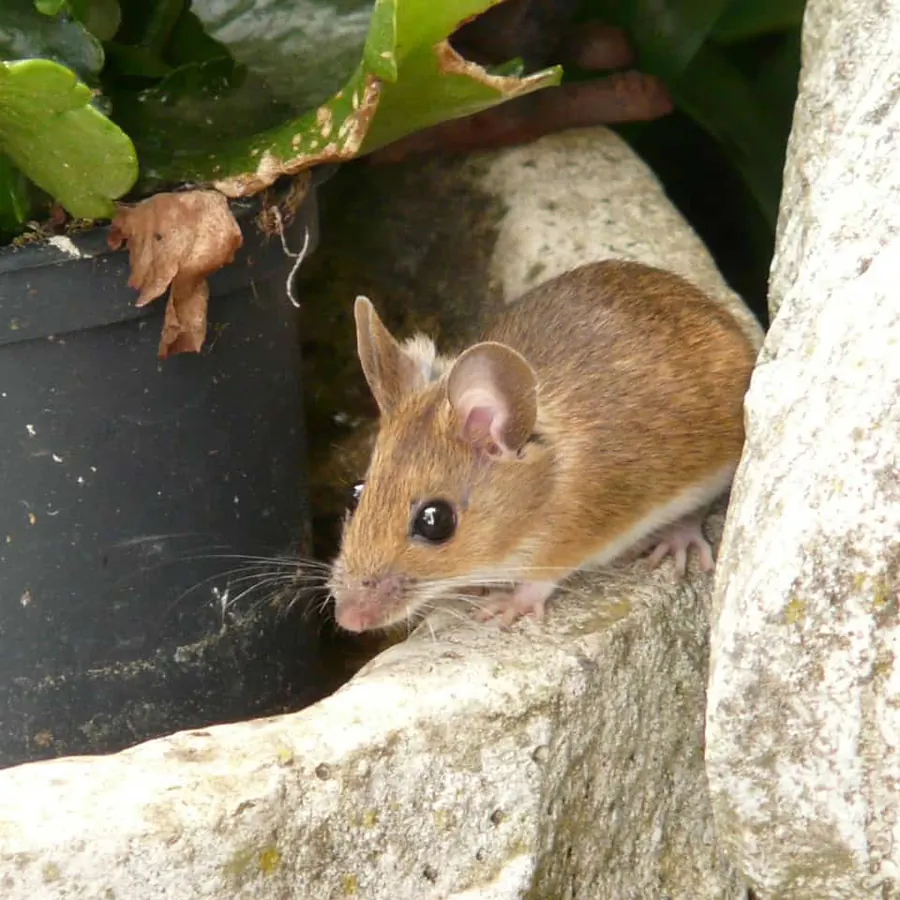
Rodents in a Tergniet home are best handled with an inspection, lockable bait stations or traps placed along their routes, and proofing of the gaps they're using. For a holiday house there's one extra step that makes the biggest difference of all: getting the house rodent-ready before you lock up and leave.
The empty-house problem
Tergniet is a small holiday area close to the beach, east of Hartenbos and near Klein Brak. Many homes here are used for holidays and long weekends and stand empty in between. To a mouse or rat a closed house is ideal: no people, no noise, no cats, and often a forgotten packet of rusks in the cupboard. By the time the family arrives in December, there can be droppings in the drawers, nests in the linen and chewed wiring in the roof.
Permanent residents aren't spared either. Homes near the beach and coastal bush see rodents moving in when the weather turns cold and wet.
Before you lock up: a checklist
- Empty the pantry. Take all food home or throw it out, including pet food, birdseed, sugar and anything in a cardboard box.
- Clean the braai and the bins. Fat, bones and fish scraps outside will draw rodents to the property even if the house is sealed.
- Check under the doors. If you can see daylight under an outside or garage door, a mouse can get under it.
- Look at the roofline. Gaps where the roof meets the wall, broken vent covers and open eaves are common entry points in older homes.
- Get bedding off the floor. Store linen and towels in sealed containers or high cupboards.
- Arrange station checks. If bait stations are in place, they should be checked while the house is empty, not only when you're there.
If you already have rodents
Our process starts with a thorough look around: roof space, cupboards, garage, outside walls and garden. We're looking for droppings, gnaw marks, grease smears, nests and the gaps they're using.
We then place tamper-resistant bait stations along their runs, set traps where poison isn't appropriate, and use tracking powder in wall and roof voids if the house suits it. With grandchildren and dogs often around during the holidays, lockable stations are an important part of keeping it safe.
Next comes proofing. We'll show you each entry point and what to do about it, from steel mesh over vents to sealing a gap around a pipe. Some of it is a quick DIY job; bigger repairs may need a builder.
Finally, we come back to check activity and adjust the stations. Once the rodents are gone, we can sanitise the areas they used, which matters in kitchens and linen cupboards where droppings and urine may have contaminated surfaces.
Why waiting costs more
A pair of mice that gets in at the end of the season has months of peace and quiet to breed. Rats chew through wiring and plastic pipes, and in a roof space that can lead to an electrical fault. Droppings and urine carry disease. A problem caught early is cheaper and simpler to fix than one discovered on the first day of the holidays.
For permanent homes the timing is different, but the logic is the same. Autumn is when rodents start looking for shelter, so that's the time to walk around the outside of the house, look for gaps and trim back anything growing against the walls. A quick check in April saves a lot of noise in the ceiling in July.
Something people get wrong
Scattering loose rat poison through the house before locking up. Rodents eat it and often die inside walls or the ceiling, and you come back to a smell you can't track down. Loose poison is also a real risk to pets and children when the family returns. Stations and traps, placed properly, avoid both problems.
How much will it cost?
That depends on the size of the house, how long the rodents have had the run of it, and how much proofing is needed. Mice caught early are a small job. A roof full of rats in a house that's been empty since last summer needs more stations, follow-up visits and probably some repairs. If you'd like the house checked regularly while it's empty, we can arrange scheduled visits. We quote free after an inspection, and for a single mouse in a house you're living in, a couple of traps may be all it takes.
We're SAPCA registered and have worked in the Garden Route for more than 25 years. Rodent treatments come with a 3-month guarantee. Nearby, see rodent control in Hartenbos and Klein Brak River, or for other pests around the house, pest control in Tergniet.
Call us on 044 012 5011, ideally before you close up the house for the season.
Questions we get asked
Can you check bait stations while I'm not there?
Yes, as long as we can get access, for example through a neighbour, caretaker or key box. We'll let you know what we found after each visit.
Are bait stations safe with grandchildren visiting?
Yes. The stations are lockable and tamper-resistant, so children and pets can't reach the bait. It's still worth teaching children to leave them alone.
What should I do if I find droppings when I arrive?
Don't sweep or vacuum them dry. Wear gloves, dampen the droppings with disinfectant, wipe them up and throw the cloth away, then call us to find where they're coming from.
Can mice really get through such a small gap?
Yes. Mice squeeze through surprisingly small openings, so if a gap fits a ballpoint pen, assume a mouse can use it.
Do you treat for insects on the same visit?
Yes. We also handle ants, cockroaches, fleas and spiders in Tergniet, and can deal with both on one visit.