


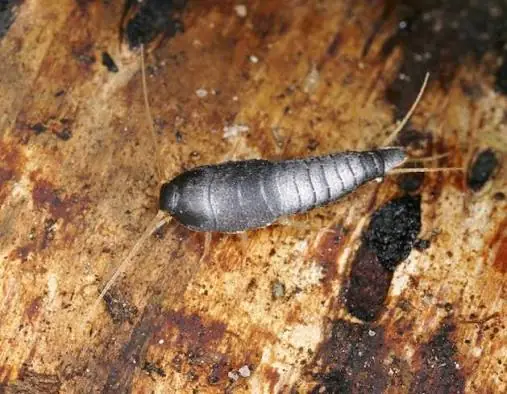
Lift an old box in the garage or open the linen cupboard and a small silver insect wriggles away into a crack, moving like a fish. That's a fishmoth, and it's been eating the starch out of your things.
Fishmoths, also called silverfish, are small, wingless, very old insects that live in damp, dark, undisturbed places and feed on starch and sugar. They don't bite, sting or carry disease, but they damage paper, books, photographs, wallpaper, clothing and stored food, and they turn up in large numbers in the humid coastal houses of the Garden Route. Fishmoths are a sign of damp as much as they are a pest problem, and fixing one without the other rarely lasts.
What they look like
- Carrot- or teardrop-shaped, wide at the front and narrowing to the tail, about 1 cm long
- Covered in silvery grey scales that rub off like dust when you touch them
- Two long antennae at the front and three long, thin bristles at the back
- No wings. They run fast and wriggle, which is where the name comes from
- They're out at night and hide during the day
What they eat
Fishmoths eat starches, sugars and proteins. That makes their menu surprisingly wide:
- Paper, especially glossy paper, and the glue in book bindings and envelopes
- Wallpaper and the paste behind it
- Photographs and old documents
- Cotton, linen and rayon, especially starched or stained fabric
- Cereal, flour and other dry food in open packets
- Dead insects, dandruff and the dust in cupboard corners
The damage looks like irregular holes, notched edges or scraped surfaces, sometimes with small yellowish stains and their tiny pepper-like droppings.
Why Garden Route homes get so many
Fishmoths need humidity. They thrive in rooms where the air stays damp and still, which describes a lot of houses near the sea and the lagoons, especially in Knysna, Sedgefield, Wilderness and around Plettenberg Bay. Holiday homes that stand closed for months are a classic case: the air goes stale and damp, and fishmoths spread through the linen cupboards and bookshelves undisturbed. Garages and outside store rooms full of cardboard boxes are another.
They also live a long time for an insect, several years, so a population builds up slowly and steadily.
How to get rid of them
The best results come from treatment and drier conditions together.
- Reduce the damp Ventilate, open cupboards regularly, fix leaks and rising damp, and use a dehumidifier in closed rooms. In a dry room, fishmoths struggle to survive.
- Clear the clutter Move stored papers and books out of cardboard boxes into sealed plastic containers, and off the floor of garages and outside rooms.
- Treat their hiding places A residual treatment into cracks, crevices, skirtings, cupboard joints, behind bookshelves and into roof and wall voids reaches the places they hide during the day.
- Protect food Dry food in sealed containers rather than open packets.
Our insect control page explains how we treat fishmoths alongside the other household insects, and our guide to fishmoths, booklice and damp homes looks at the damp side in more detail. If you're finding tiny, pale insects on the same damp books, those are probably booklice, which thrive in the same conditions.
Fishmoths in holiday homes
If your Garden Route house stands empty for most of the year, a treatment before you close it up, and leaving the cupboard doors open and the air moving if you can, saves a lot of damaged linen. Our holiday home pest control visit covers this.
Protecting books, photos and documents
If you have papers that matter, such as family photographs, old letters, title deeds or a book collection, keep them off the floor, out of cardboard boxes and away from outside walls, in sealed plastic or archival boxes in the driest room of the house. Check them every few months. Fishmoth damage is slow, so a quick look now and then catches it before it does real harm.
Frequently asked questions
Are fishmoths harmful?
Not to people. They don't bite or carry disease, but they damage paper, books, photos, wallpaper and fabrics, and contaminate dry food.
Why do I have so many fishmoths?
Usually because the house or cupboard is damp and undisturbed. Fishmoths need humidity, so coastal homes, closed rooms and garages with cardboard boxes suit them perfectly.
What attracts fishmoths?
Damp, darkness and starchy food: paper, book glue, wallpaper paste, starched fabrics, cereals and flour.
Will a dehumidifier get rid of fishmoths?
It helps a lot, because fishmoths struggle in dry air. Combined with a treatment of their hiding places, it's the most effective approach.
Are fishmoths the same as silverfish?
Yes. Fishmoth is the common South African name for the silverfish, a small silver, wingless insect.