

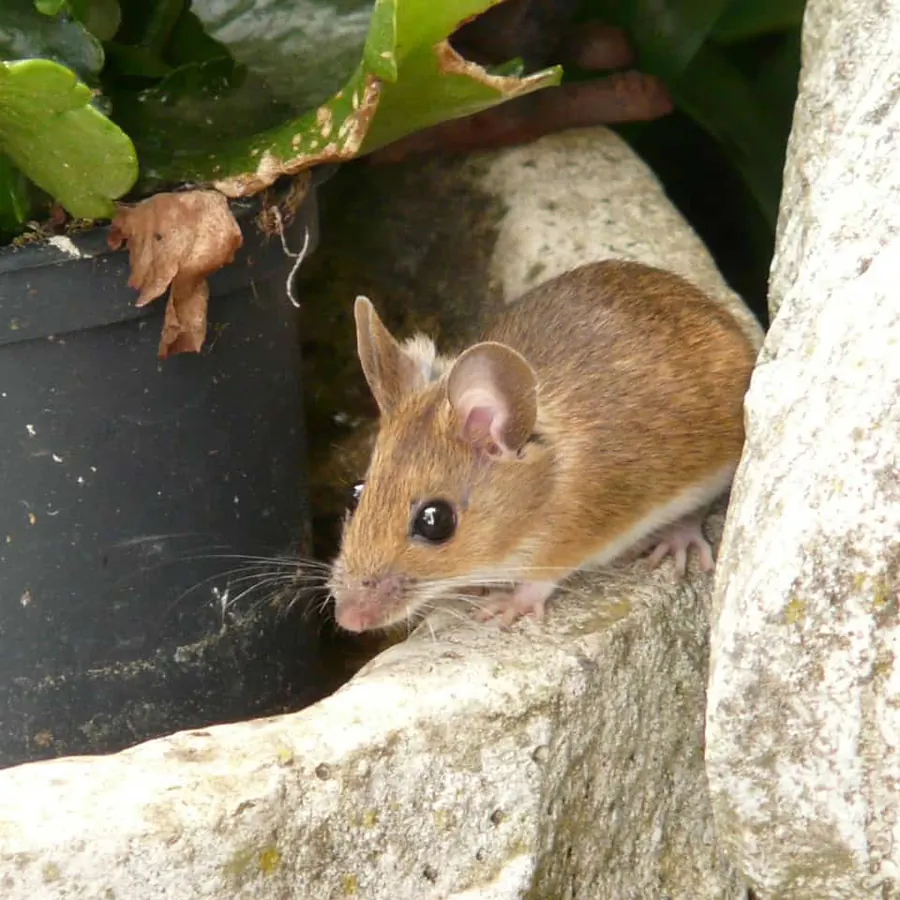
On a Klein Brak River property, a rodent problem almost always comes down to two things: water and feed. Remove the rats and mice you already have with bait stations or traps, then make the feed and the buildings hard to get into, and the problem shrinks to something manageable. Leave the feed open and you'll be trapping rats forever.
Why the river and the smallholdings matter
Klein Brak River is a small village with homes along the river and smallholdings around it. Brown rats are strong swimmers, they like to burrow in soft ground near water, and they'll travel from the riverbank to anywhere there's food. On a smallholding that means chicken feed, spilled grain under the horse's bucket, dog food on the stoep and the compost heap. Mice prefer the inside of things: feed rooms, tack rooms, garages, the back of a kitchen cupboard and the roof.
Outbuildings are the weak point. Sheds, stables and garages are usually less sealed than the house, they hold the food, and nobody's in them at night. Rodents set up there first and move into the house when the weather turns cold and wet.
Signs to look for around the property
- Burrows with smooth, well-used entrances along walls, under concrete slabs or in banks.
- Droppings in feed rooms, along shelves and in the roof. Fresh ones are dark and soft.
- Gnawed feed bags, chewed corners on wooden doors, damaged irrigation pipe.
- Greasy rub marks along the walls and beams they travel on.
- Eggs going missing from the coop.
- Dogs and cats suddenly very interested in one corner of the shed.
How we deal with it
We start with a walk around the whole property, not just the house. Where's the feed kept? Where do the animals eat? Where's the water? Which buildings have gaps under doors or holes in the walls? That tells us where the rodents are living and the routes they're using.
Then we place control where it makes sense. Lockable bait stations go along walls and runs, positioned so chickens, dogs and children can't get at them. In a feed room, or anywhere we'd rather not have bait, we use traps. Tracking powder can go into wall voids and runs where rodents travel but animals don't.
We give you a proofing list. This is the part that stops them coming back: steel mesh over vents and gaps, a strip on the bottom of the feed room door, moving the woodpile away from the wall, raising feed off the floor.
We come back to check. Stations are inspected and refilled, and we move them to match what the rodents are actually doing. Once activity stops, we can sanitise areas where droppings and urine have built up, which matters anywhere food or feed is kept.
The local tip that makes the biggest difference
Put the feed away at night. On smallholdings, most of the rodents we deal with are being fed by accident: chicken feeders left full overnight, horse feed in an open bin, a bag of dog pellets propped open in the garage. Use metal bins with tight lids, hang or raise feeders so spilled food doesn't pile up underneath, and sweep the feed room. Rats can't build up big numbers without a reliable meal.
What most people get wrong
Scattering loose poison. It seems the cheap answer on a property with lots of space, but loose bait gets carried off and dropped where dogs, chickens and wild birds can find it, and a pet that eats a poisoned rat can be poisoned too. That's why we use lockable stations and traps, and why we'd rather fix the feed than lay more bait.
How much will it cost?
The variables are the size of the property, how many buildings need treatment, how established the rodents are and how much proofing is needed. A house with mice in the kitchen is a small job. A smallholding with rats in the feed room, stables and roof needs more stations, follow-up visits and a proper proofing plan. Properties with feed stored all year often do best on a regular service with scheduled checks. If you've only got one mouse in the pantry, a couple of snap traps might be all you need, and we'll say so. You'll get a straight answer and a free quote.
We also do insect control in Klein Brak River, and fumigation for feed and stored goods that are infested with weevils or moths. For our full approach to rats and mice, see rodent control in George. Pest Worx is SAPCA registered, with more than 25 years in the Garden Route, and our rodent treatments carry a 3-month guarantee. Call 044 012 5011 to arrange a visit.
Questions we get asked
Will bait stations harm my chickens?
Not when they're set up properly. We use lockable stations placed where chickens can't reach them, and inside coops and feed rooms we use traps instead of bait.
Are the rats coming from the river?
Some probably are, but they stay because of what they find on your property. Take away easy food and shelter and the river becomes a much less useful base.
Can the dogs stay out in the garden during treatment?
Yes. Bait stations are tamper-resistant and traps are set where pets can't get at them. Let us know about your animals and we'll plan around them.
Can rats make my animals sick?
They can. Rats contaminate feed and water with droppings and urine, and they carry diseases such as leptospirosis and salmonella that can affect people and animals.
Won't a good farm cat do the job?
A cat may keep mice down, but it rarely controls an established rat population. It also won't do anything about the gaps and the open feed that keep bringing them back.
Do you treat stables, sheds and garages?
Yes. On most Klein Brak properties the outbuildings are where we do the most work, because that's where the rodents are living.