


The dog's been treated, the cat's been treated, and your ankles are still covered in bites. That's because the fleas on your pets are only a small part of the problem. The rest is in the house.
Fleas are small, wingless, blood-feeding insects that live on dogs, cats and other animals and bite people when they get the chance. The flea you see jumping off the dog is an adult, but adults make up only a small share of a flea population. The rest are eggs, larvae and pupae living in carpets, pet beds, furniture, car seats and the shady spots in the garden where your pets lie. That's why treating the pet without treating its surroundings rarely ends the problem.
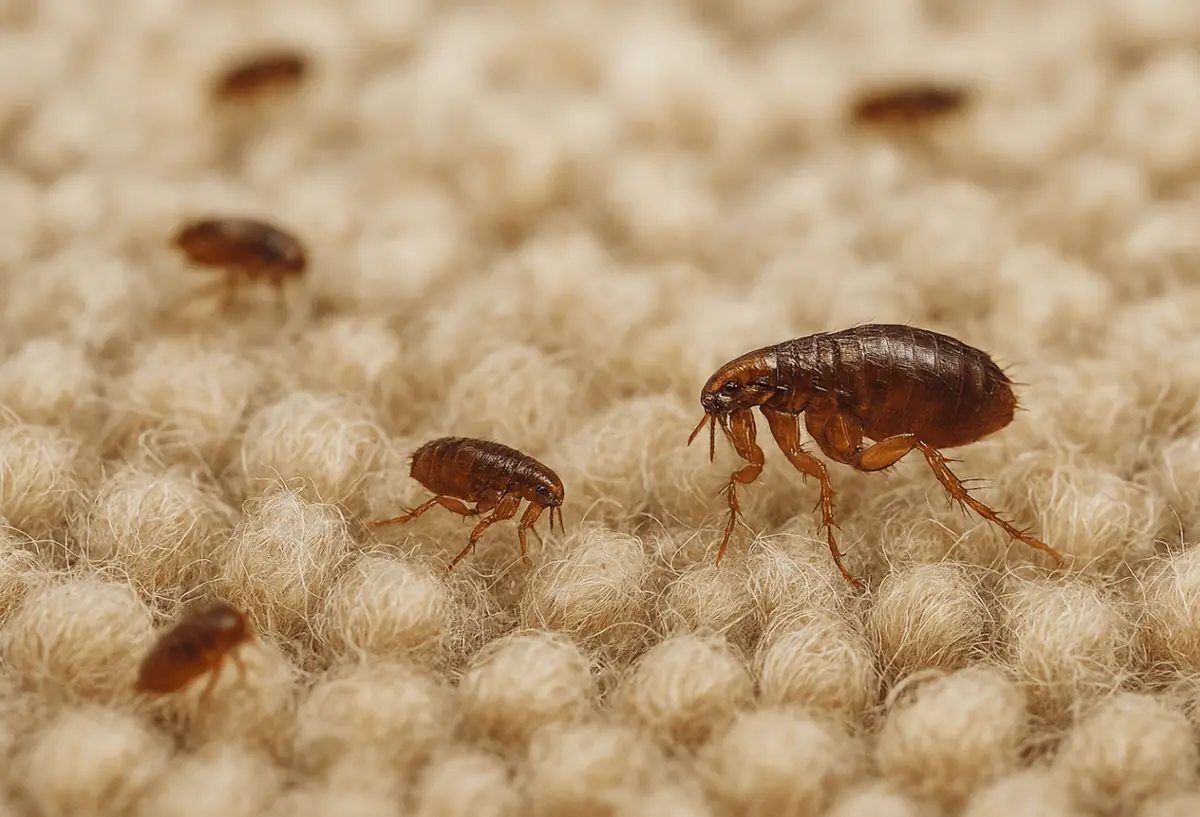
What they look like
- Tiny, about 1 to 3 mm long
- Dark reddish brown
- Flattened from side to side, which lets them move easily through fur
- No wings, but powerful back legs that let them jump many times their own length
- The most common flea on both cats and dogs in South Africa is the cat flea
The flea life cycle
- Eggs An adult female lays eggs on the animal, and they fall off wherever it walks, sleeps and lies. That spreads them through the house and garden.
- Larvae Tiny, worm-like larvae hatch and burrow deep into carpets, cracks in floors, pet beds and shaded soil, away from light. They feed on organic debris and on flea dirt, the dried blood passed by adult fleas.
- Pupae The larvae spin a sticky cocoon that picks up dust and fibres, which camouflages it and protects it from most treatments. Inside, the flea develops into an adult and can wait for weeks or months for the right moment.
- Adults Vibration, warmth and the carbon dioxide we breathe out tell a waiting pupa that a host is near, and the adult flea emerges and jumps on.
In warm, humid weather the whole cycle can take just a few weeks. In cooler conditions it slows down.
Signs of fleas
- Itchy red bites, usually in clusters around the ankles and lower legs
- A dog or cat that won't stop scratching, chews at the base of its tail or has thinning fur there
- Flea dirt: black specks in fur and bedding that turn red-brown when pressed on damp white paper
- Tiny dark specks leaping onto your legs as you cross a rug
Why fleas seem to come from nowhere
Because pupae can wait so long, fleas often appear in a house that's been empty: a holiday home after months away, a rental after a tenant's pet has left, or your own house after a long trip. People walk in, the pupae sense the movement, and hundreds of fleas hatch within hours. See our guide to flea season with pets.
Are fleas dangerous?
Flea bites are itchy and, for some people and pets, cause an allergic skin reaction. Heavy infestations can make young or weak animals anaemic. Pets that swallow fleas while grooming can pick up tapeworm. That's worth mentioning to your vet if you're dealing with a bad flea problem.
How to get rid of fleas
Beating fleas means hitting all three places within the same week:
- Pets: a flea product recommended by your vet
- House: a treatment with an insect growth regulator in carpets, rugs, pet beds, furniture and cracks, so larvae never mature
- Garden: shady spots where pets rest, under decks, along walls and in kennels
- You: vacuum every day or two for a couple of weeks, which brings pupae out to hatch and meet the treatment
Our flea and tick control page explains the treatment in detail, with local pages for George, Mossel Bay and Hartenbos.
Fleas in Garden Route homes
The coastal climate suits fleas well: mild winters, humid air and sandy gardens where larvae survive in the shade under decks and shrubs. That means flea season starts early in spring and runs late into autumn. Holiday homes, rentals that change hands and houses where a pet has recently left are where we see the worst of it, and our holiday home pest control visit deals with them before you arrive.
Frequently asked questions
Why do I still have fleas after treating my dog?
Most of the flea population lives in the house and garden as eggs, larvae and pupae. Until those are treated too, new fleas keep hatching.
How long can fleas live without a host?
Flea pupae can wait in their cocoons for weeks or months until they sense a host nearby, which is why fleas appear in houses that have been empty.
What does flea dirt look like?
Black specks in your pet's fur or bedding. Press them on damp white paper and they turn red-brown, because they're digested blood.
Do fleas live on people?
No. Fleas bite people, usually around the ankles, but they don't live on us. They live on pets and in the places pets rest.
Can fleas make my pets sick?
Heavy infestations can cause allergic skin reactions and anaemia in young animals, and pets that swallow fleas while grooming can pick up tapeworm.