

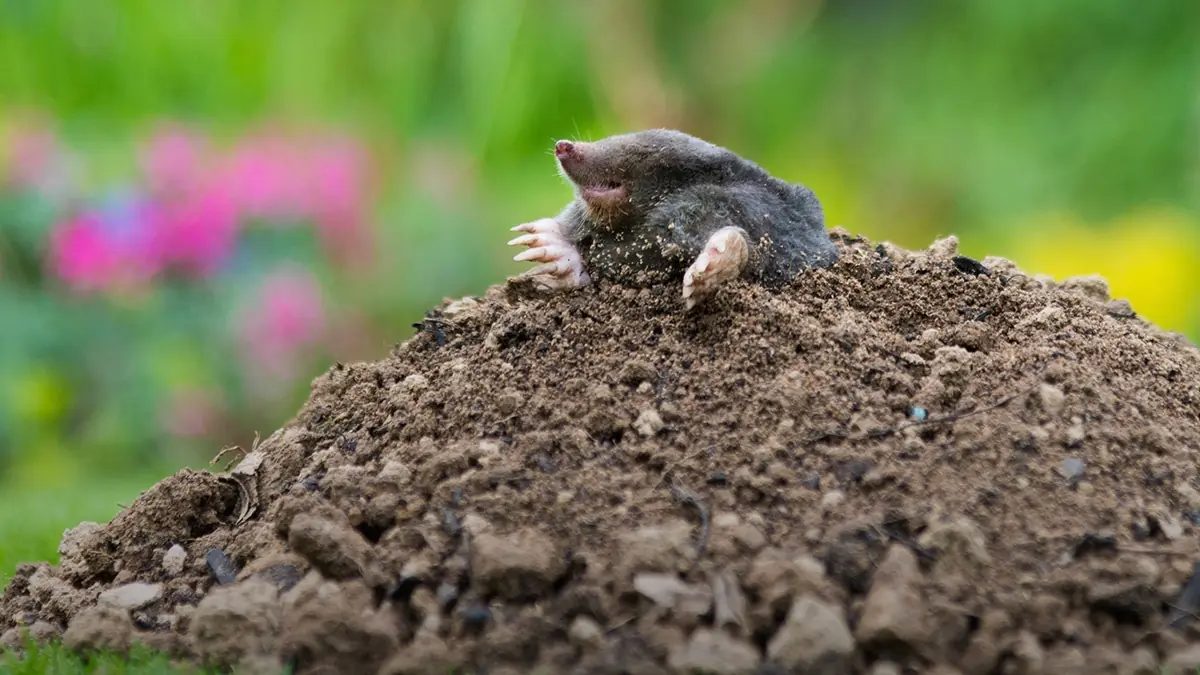
They're almost never seen, but the evidence is everywhere: a line of fresh soil mounds, a raised ridge running across the lawn, a rose bush that simply fell over. Which animal did it makes all the difference.
Three very different animals tunnel through Garden Route gardens, and people call all of them moles. Two are rodents that eat plants: the molerats. One is a small insect eater that's actually doing less damage than it looks: the golden mole. Knowing which one you have decides whether you need to do anything about it at all.
Golden moles
- What they are. Small, blind, burrowing mammals, not rodents. They have no visible eyes or ears, a leathery nose pad for pushing through soil, and short, dense fur with a beautiful metallic sheen in bronze, gold or green
- Size. Small, about the length of a hand
- Food. Earthworms, insect larvae and other soil invertebrates. They don't eat plants
- Signs. Long, raised ridges just below the surface of the lawn or flowerbed, where the soil has been pushed up as they tunnel. Few or no mounds of loose soil
Golden moles are a nuisance in a lawn, because the ridges lift the grass and dry it out. But they don't kill plants, and their presence usually means the soil is full of grubs and worms. Some golden mole species are threatened, and they're not the animal molerat control is aimed at.
Molerats
Molerats are rodents with large front teeth that stick out in front of the lips, so they can dig without getting soil in their mouths. They eat roots, bulbs, tubers and the underground parts of plants, and they push up mounds of loose soil as they dig their tunnel systems.
Cape dune molerat
The giant of the group: one of the largest burrowing rodents in the world, the size of a small rabbit, with sandy-coloured fur. It lives in deep, sandy soils along the coast, which explains the huge mounds in sandy gardens along the coast. One animal can push up many large mounds in a short time.
Cape molerat
Smaller, with a distinctive face: a black-and-white patterned head with white patches around the eyes and ears. Found in a range of soils, including gardens, sports fields and farmland.
Common molerat
Small, grey-brown, and living in family colonies with a single breeding pair. Common in heavier soils inland and on farms.
Signs of molerats
- New heaps of crumbly soil, one after another, each with its hole plugged from below
- Plants that wilt suddenly and can be lifted out of the ground with no roots left
- Bulbs that disappear from beds
- Soft, sinking patches where tunnels run under the lawn
- Vegetables like carrots, potatoes and beetroot eaten from below
Why it matters which one
Molerats damage gardens, lawns, vegetable patches, orchards and sports fields, and they don't leave by themselves. Golden moles are mostly a cosmetic problem and, being insect eaters, respond to different conditions. Treating for one when it's the other wastes time and money. A clear photo of a mound or ridge is usually enough for us to tell.
When they're most active
All of them dig most when the soil is soft after rain, and that's when new mounds and ridges appear. In dry, hard summer soil they dig deeper and less often, and a garden can look clear for months.
Control
With molerats, nothing works reliably except locating the tunnel in use and treating that. Water, smoke, mothballs and vibrating stakes don't work, because molerats seal off and dig around any part of the tunnel they don't like. Our mole control page explains how we treat, with local pages for George, Sedgefield and Dana Bay.
Golden moles are a different story. They follow the grubs, so a lawn that's heavily watered and full of larvae keeps attracting them. Easing off the watering and leaving the soil to firm up can move them on, and their ridges can simply be pressed flat and the grass left to recover.
Molerats in vegetable plots and young orchards on farms and smallholdings are covered under farm pest control.
Frequently asked questions
How can I tell which one I've got?
Look at the soil. Heaps of loose earth pushed up from below are molerat work. Long, raised ridges you can press flat with your foot are a golden mole travelling just under the surface.
What do molerats eat?
Roots, bulbs, tubers and the underground parts of plants, which is why plants suddenly wilt or disappear.
Do golden moles damage plants?
Not directly. They eat earthworms and insect larvae. Their tunnels can lift and dry out lawns, but they don't eat plants.
Why are the mounds so big in sandy gardens?
Sandy coastal soils are home to the Cape dune molerat, one of the largest burrowing rodents in the world, which pushes up very large mounds.
Why do mounds appear overnight after rain?
Wet soil is soft and easy to shift, so molerats extend their tunnels then and push the loose earth up to the surface.