

A black line across the kitchen counter, sand heaped between the pavers, ants in the dog's bowl. Killing the ones you can see does almost nothing. The colony is what has to go.
Ants are dealt with by getting a slow-acting bait back into the colony, not by spraying the trail. Worker ants carry bait home and share it with the queens and the brood, and a colony that loses its queens collapses. Spray the trail instead and you kill a few hundred foragers out of tens of thousands, while some kinds of ant respond by splitting into new nests. The result is familiar to anyone who has tried it: ants in three rooms where there used to be ants in one.
We treat ants right across our area, from George and Mossel Bay to Plett and Oudtshoorn.
The ants we see most
- Argentine ants. Small, light to dark brown, moving in long, fast, busy trails. They came from South America and are now everywhere in the Western Cape, forming huge connected colonies across whole neighbourhoods. They come indoors after rain and in dry spells, looking for water and sugar. Our Argentine ant profile explains why they're so hard to shift.
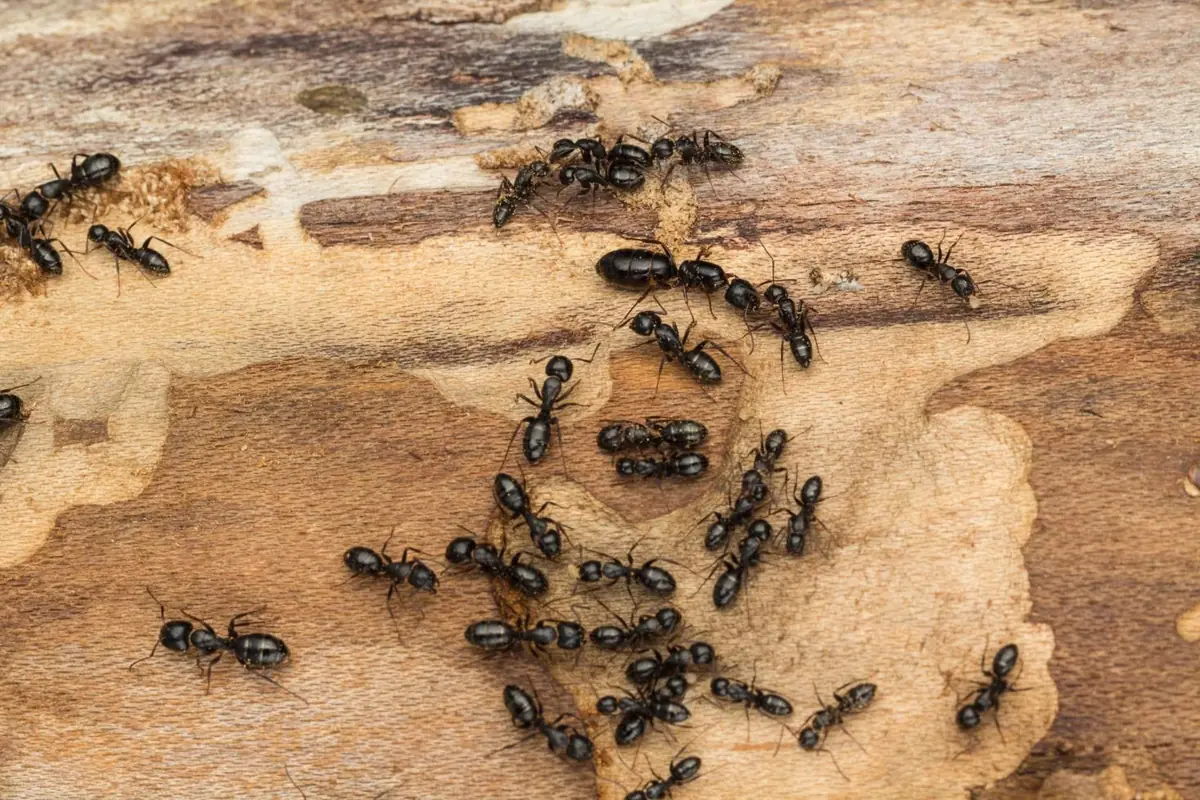
- Pugnacious ants. Bigger, black and bad-tempered, nesting in lawns and sandy soil and pushing up heaps of sand. They bite, and they're common in sandy coastal gardens.
- Brown house ants. Tiny, with big-headed soldiers, nesting under paving and along foundations. Sand pouring out between paving bricks is often them.
- Sugar ants. Large, often black and orange, mostly active at night, nesting in damp or rotting timber and wall cavities.
Why they come inside
Rain floods their nests and pushes them indoors. Hot, dry weather sends them looking for water, which is why they turn up in bathrooms and around taps. Sugar is the third reason: honey, fruit, pet food, the rim of a cooldrink bottle in the recycling. Plants matter too. Argentine ants farm aphids, mealybugs and scale insects on garden plants and protect them for the honeydew, so a rose bush covered in aphids is often an ant problem in disguise.
How we treat ants
- Follow the trails We find where the ants are coming in and track them back towards the nest, outside if possible.
- Bait the colony Ant bait, matched to what that species is feeding on, goes onto the trails and near entry points. It's meant to be carried away, so you'll see ants crowding onto it for a day or two. Leave them.
- Barrier where they enter An odourless, non-repellent residual treatment around the outside of the house, at door frames, weep holes and where pipes come through the wall, kills ants crossing it without scattering the colony.
- Nests in paving and lawns Ant nests under paving and in lawns are treated directly with a product suited to soil and sand.
- Advice on what's attracting them We'll point out what is pulling them in: a leaking tap, open pet food, aphid-covered plants against the wall.
Ants or termites?
Flying ants and flying termites both appear in swarms after rain, and from a distance they look the same. Ants have a pinched waist and elbowed antennae; termites have a thick waist and straight antennae. If you've found wings on the windowsill, read our guide on telling flying ants from termites, because the answer changes what needs doing.
Ants in your town
There are local ant pages too: ant control in George, Mossel Bay, Knysna and Plettenberg Bay. Ants are also part of our general insect control service if you've got a mix of crawling insects.
What we'd tell a friend
Before you call anyone, wipe the trail with soapy water to remove the scent and put the sugar, honey and pet food away. If they're gone in a day and don't come back, you're done. If they're back the next morning, the colony is close and well established, and that's when bait and a barrier are worth paying for.
Rain on the coast, drought in the Karoo
Ant problems follow the weather. On the coast, the first warm days after a wet spell bring trails indoors, because nests in lawns and flowerbeds have flooded and the ants are looking for dry ground and food. In the Klein Karoo it often works the other way round: in a long, hot dry spell, ants come inside for water, and you find them at the dog's bowl, in the shower and around the kitchen tap. Either way, the trail points back to the nest. Follow it outside before you wipe it away. Whether it leads to a crack in the paving, a flowerbed or a gap under the wall tells us where bait will do the most good, and a photo of where the trail goes in is one of the most useful things you can send us.
What it costs
Ant work is priced on the property's size, the number of colonies involved, whether nests are under paving or in lawns, and whether you want a once-off treatment or ongoing control. Argentine ants in particular can need a follow-up, because neighbouring colonies keep moving in. We quote after we've seen the trails.
Phone 044 012 5011 or request a call back. You don't need to leave the house or unpack anything for an ant treatment.
Frequently asked questions
Why are the ants worse after you put bait down?
For a day or two you'll see more ants on the bait. That's what we want: they're carrying it back to the colony. Don't spray them or wipe the bait away.
How long does ant bait take to work?
Usually a few days to a couple of weeks, depending on the size of the colony. Slow is the point, because the ants need time to share the bait with the queens.
Why do ants come into the house after rain?
Rain floods their nests in the soil, so they move to higher, drier ground, which is often your kitchen. Hot, dry spells send them in looking for water.
Are ants harmful?
Most aren't dangerous, though pugnacious ants bite and ants can contaminate food. Argentine ants also protect aphids and mealybugs on your plants, which damages the garden.
Can you treat ants nesting under paving?
Yes. Nests under paving and in lawns are treated directly with a product made for soil and sand, alongside bait for the foragers.
Will the ants come back?
Argentine ants can, because neighbouring colonies move into the gap. A barrier around the house and keeping food sealed make a big difference, and a follow-up keeps them out.