


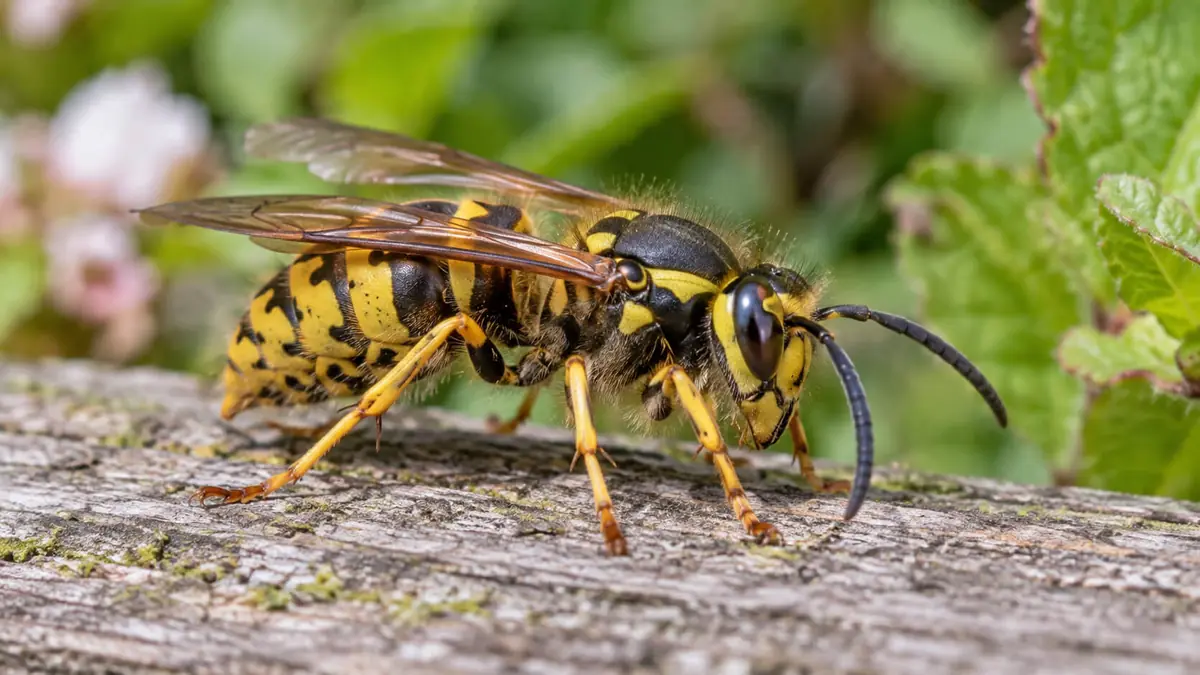
A wasp is not a bee in a yellow jersey. It's a hunter, it can sting more than once, and the grey paper nest it builds under your eaves gets bigger every week from spring until autumn.
Wasps are slim, smooth-bodied insects with a narrow waist, and most of the species around Garden Route homes are predators that hunt caterpillars, flies and spiders to feed their young. In the garden, that makes them useful. Near a door, a pool, a playground or an outdoor table, it makes them a problem, because the social species defend their nests and can sting repeatedly.
The wasps you'll meet
Paper wasps
The most common nest-building wasps around houses. They're long-legged, slender wasps, brown, reddish or yellow and black depending on the species, and they fly with their back legs dangling. Their nests are open, grey, papery combs of hexagonal cells hanging from a single stalk, built from wood fibre chewed into pulp. Look for them tucked under the eaves, in door and window frames, behind shutters, in hedges, beneath outdoor furniture and inside meter boxes and sprinkler covers.
Mud daubers
Solitary wasps that build small tubes or pots of mud on walls, ceilings, in garages and under eaves, often in rows. They fill each cell with paralysed spiders as food for their larvae. They're not aggressive, rarely sting, and don't defend their nests like paper wasps. Their nests are more of a mess to clean than a danger.
German wasps
An invasive European wasp that has established itself in parts of the Western Cape. Stockier and more yellow and black than paper wasps, it builds an enclosed paper nest, often hidden in a cavity, in the ground or in a wall, that can grow to thousands of wasps. It scavenges meat, fish and sweet food, so it's the wasp most likely to bother you at a braai or an outdoor restaurant.
How a paper wasp nest grows
In spring, a single mated female starts a small nest of a few cells and raises the first workers herself. As those workers take over, the nest grows steadily through summer, adding cells and adults, and by late summer it can be the size of a hand or larger, with many wasps. That's when most stings happen, because the nest is big and busy and people are outdoors. In autumn the colony declines, and new mated females leave to overwinter in sheltered spots and start again the next spring.
Wasp or bee?
- Wasps: smooth and shiny, narrow waist, brightly marked, papery or mud nests, interested in meat and sweet drinks
- Bees: hairy, rounder, golden brown, wax comb inside a cavity, interested in flowers
See our honey bee profile for more on bees.
If you're stung
Wasps don't leave a stinger behind, so they can sting more than once. Step away from the nest before anything else, then clean the sting and cool it with ice wrapped in a cloth. If the lips, face or throat swell, breathing gets difficult, the person feels faint, or there are many stings, they need a doctor or emergency room without delay. Children and people with known allergies need closest watching.
What to do about a nest
A small nest far from where people walk, sit or play can often be left alone. A nest near a door, window, pool, outdoor seating or play area is worth removing, and the earlier in spring the better. Don't knock nests down with a broom or hose them from close range, and never try to burn one under the eaves. Our wasp removal page explains how we treat and remove nests, and we have local pages for George, Plettenberg Bay and Oudtshoorn.
If wasps are a problem every summer at a holiday house, our holiday home pest control visit checks the eaves before you arrive, while nests are still small.
On farms and smallholdings, check sheds, stables and outbuildings in spring too, because paper wasps build in quiet corners that nobody visits until a nest is large.
Frequently asked questions
Can a wasp sting more than once?
Yes. Unlike honey bees, wasps don't lose their stinger, so they can sting repeatedly.
What do paper wasp nests look like?
Open grey combs of papery hexagonal cells hanging from a single stalk, usually under eaves, in door and window frames or in hedges.
Are mud daubers dangerous?
Not really. They're solitary, rarely sting and don't defend their nests the way paper wasps do.
When are wasps worst?
Late summer, when nests have grown to their largest and people spend the most time outdoors.
Are wasps useful?
Yes. Many wasps hunt caterpillars, flies and spiders, which helps the garden. The problem is only when a nest is close to people.