


A bag of feed with a hole chewed in the corner. Weevils boiling out of last season's seed. Flies so thick in the dairy you can hear them. Farm pest problems are bigger, and they cost money every day they carry on.
Farm pest control is about protecting feed, stored product, animals and the farmhouse at the same time, with methods that work on a large scale and don't harm the owls, dogs and livestock that share the yard. The biggest losses usually come from rats and mice in feed stores, insects in stored grain and seed, and flies around animals. Each needs a programme rather than a once-off spray, because a farm keeps producing the food and shelter that pests need.
We work on dairy, livestock, ostrich, vegetable and mixed farms, smallholdings and lifestyle plots across the Garden Route and Klein Karoo.
Rats and mice in feed stores and sheds
Feed stores, grain bins, chicken houses and barns are where rodent numbers explode on a farm. Rats eat and foul feed, chew bags, wiring and irrigation pipe, and carry disease to livestock. Our approach on farms:
- Bait stations, not loose bait. Tamper-resistant stations, placed along walls, around feed stores and along the routes rats use, so dogs, cats, children and livestock can't reach the bait
- Wildlife in mind. Barn owls and other raptors are a farmer's best rodent control. We place and manage bait so the risk to them is kept as low as possible, and we'll talk to you about where traps make more sense than bait
- Feed store hygiene. Feed off the floor and away from the walls, spills cleaned up, bins with tight lids. Rodents need food, water and cover, and on a farm the first one is everywhere
- Proofing advice. Which gaps in doors, walls and roofs matter most, so you can close them
Our rodent control page covers the detail, and roof rats and house mice each have a profile.
Stored grain, seed and feed
Weevils, grain borers, flour beetles and meal moths can ruin stored maize, wheat, seed and pelleted feed in a single warm season. Once they're inside the bags or the bulk, surface sprays don't reach them. Sealing the stock under gas-tight sheets and fumigating it with phosphine reaches every stage, larvae inside the kernels included. The store must be closed off until it's been aired and cleared. Good practice between fumigations, like cleaning out old stock before new arrives and not mixing old and new grain, makes the treatment last longer. See our stored product insects profile.
Flies around animals
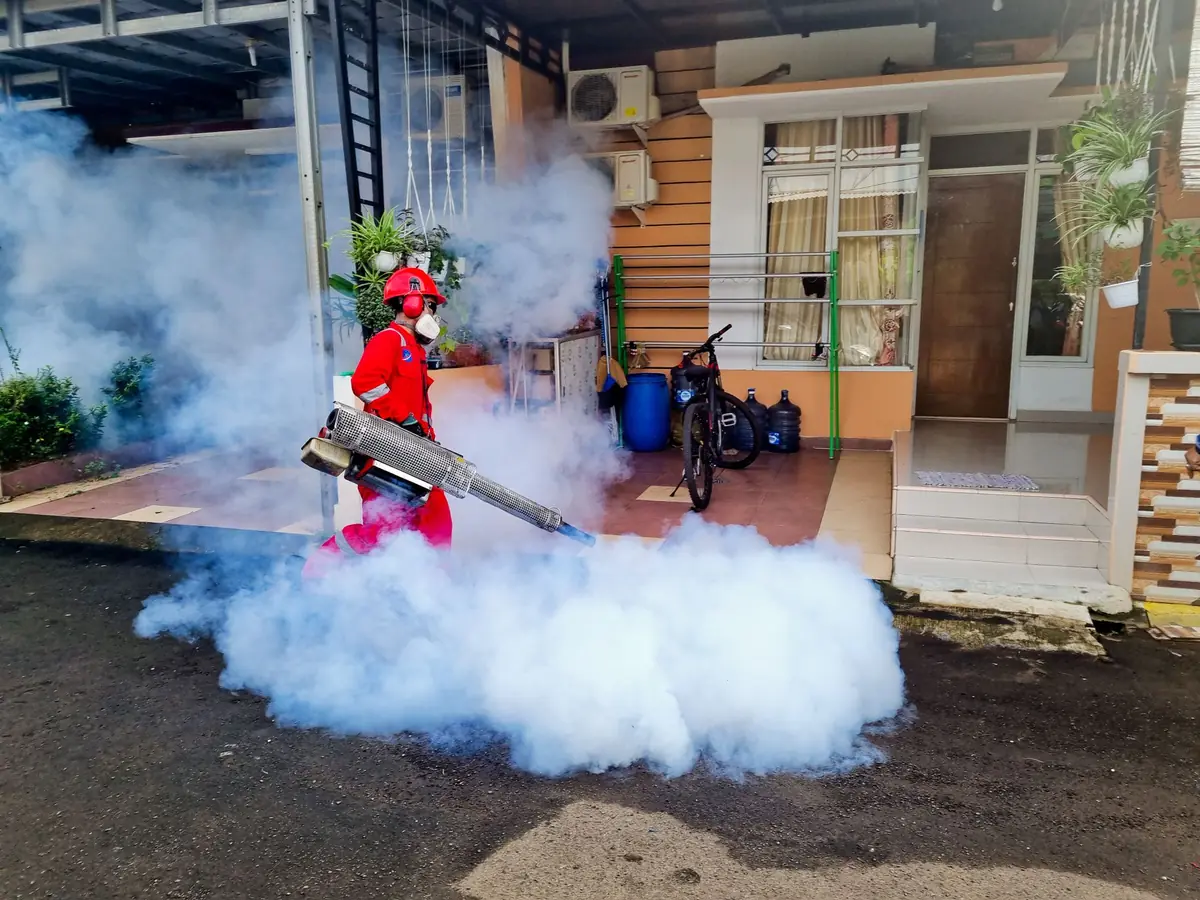
Dairies, calf pens, stables, piggeries and ostrich camps breed flies in manure, wet bedding and spilt feed, and in the hot Klein Karoo summer numbers rise very quickly. Fly control on farms is mostly about the breeding sites: manure removed or managed every few days, wet spots drained, feed spills cleaned up. Resting areas on walls, rafters and fences are treated on a schedule through the season. Our fly control page explains the approach, and fly control in Oudtshoorn looks at the Klein Karoo side.
Birds in sheds and barns
Pigeons and sparrows roost on rafters and steelwork, eat and foul feed, and leave droppings on equipment and stored product. Proofing gaps and fitting deterrents on roosting beams moves them on. See bird control.
The farmhouse and outbuildings
Farmhouses get everything a town house gets, plus more. In the Klein Karoo that means scorpions in stone walls and outbuildings, covered on our scorpion and spider control page. Along the coast it's rats in thatch and roof spaces, bees in walls and wasps under the eaves. Termites in old outbuildings and harvester termites eating the lawn around the house are common on both sides of the Outeniquas.
Staff housing
Staff quarters and farm worker housing often share the farm's pests, cockroaches and rodents most of all, and sometimes bed bugs. They're part of the same programme. Treating the main house and leaving the staff housing next to it untreated means the problem comes straight back, and it's the right thing to do for the people who live there.
Molerats in vegetable plots and orchards
Molerats eat roots, bulbs and young trees from below, and a few can wreck a vegetable garden or a new orchard row. See mole control.
How a farm programme works
- Walk the farm Feed stores, sheds, animal housing, the farmhouse, staff housing and the yard. We map where the pests are and what's feeding them.
- Plan Bait station positions, fly control timing, fumigation dates for stored product, and what needs fixing on your side.
- Regular visits Stations checked and serviced, fly treatments through the season, and records kept, which matters if you supply a packhouse, a dairy buyer or an export market that audits you.
- Adjust Farms change through the year, with harvest, calving and feed deliveries. The programme changes with them.
What it costs
Every farm is different, so the price follows the size of the farm, how many buildings are included, the number of bait stations, how much stored product needs fumigating and how often we visit. A smallholding with one shed and a farmhouse is a modest programme. A large dairy or mixed farm with feed stores and staff housing is a bigger one. We'll walk the farm first and quote on what we find.
Farmers can phone 044 012 5011 to set up a visit, or send the farm's name and district along with what's going on.
Frequently asked questions
Is rodent bait safe to use on a farm with dogs and owls?
Bait sits inside tamper-resistant stations, out of reach of farm dogs, stock and children, and we manage placement to keep the risk to owls and other wildlife as low as possible.
What's the answer to weevils in a grain store?
Sheet the stock gas-tight and have it fumigated by a registered fumigator. The gas reaches weevils at every stage, inside the grain too. The store must be closed until it's been aired and cleared.
Can you help with flies in a dairy?
Yes. We treat resting areas and breeding sites through the fly season, and advise on manure, bedding and feed management, which makes the biggest difference.
Do you keep records for audits?
Yes. Service records and bait station plans are kept for every visit, which packhouses, dairy buyers and export auditors often want to see.
Do you treat the farmhouse as well?
Yes. The farmhouse, staff housing and outbuildings can be included in the same programme, for scorpions, rodents, insects and anything else.
Do you work in the Klein Karoo?
Yes. We work on farms around Oudtshoorn, Dysseldorp and the surrounding Klein Karoo, as well as along the coast from Mossel Bay to Plettenberg Bay.