

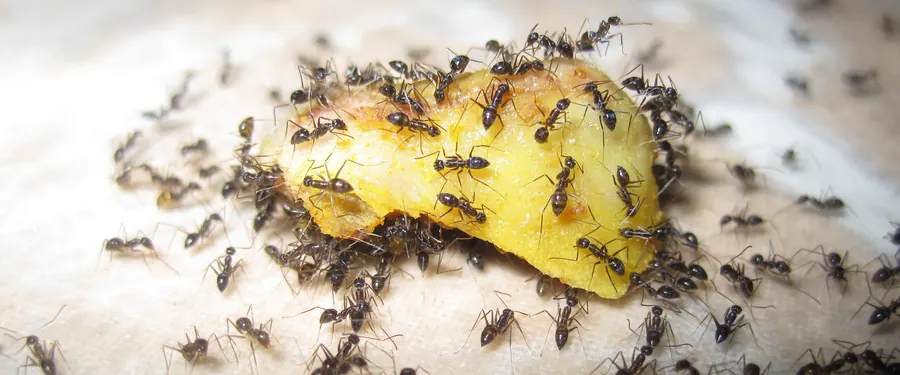
We can't change the fact that Sedgefield is surrounded by water and bush, and we wouldn't want to. What we can do is make your house a hard place for insects to live: treat the walls, frames and hiding places so the ants, spiders, fleas and fishmoths that wander in don't stay, and help you remove the things that draw them close.
What can and can't be treated
It's worth being straight about this up front. We treat buildings and the ground immediately around them. We don't spray gardens that run down to the wetlands, the edges of Swartvlei or the dune bush, and nobody should. Mosquitoes that breed in still water around the vlei and the lagoon are part of lakeside living. Screens on windows, nets over beds and getting rid of standing water in your own garden will do more about them than any spray.
Where we make a real difference is with insects that come inside and set up home: ant colonies under the floor or in wall cavities, spiders in eaves and under thatch, fleas in carpets, fishmoths in cupboards and books, and weevils or moths in the pantry.
Thatch, timber and damp: why Sedgefield houses are different
Some homes in town are thatched, and many more have timber ceilings, wooden decks or open eaves. Thatch is a wonderful insulator, but it also gives spiders and other insects plenty of shelter, and the underside of a thatch roof is hard to keep clean. Damp air from the lakes and the sea suits fishmoths, which feed on paper, starch and fabric. Gardens close to wetlands stay moist, which keeps ant colonies active for longer.
Holiday homes add their own twist. A house left closed and humid for weeks is ideal for fishmoths, and spiders build up undisturbed in rooms nobody uses.
How a treatment goes
Inspection
We work out where the insects are coming from: ant trails back to their entry point, spider activity at eaves and window frames, flea hotspots where pets sleep, signs of fishmoths in cupboards, damage to packets in the pantry. In thatched homes we pay attention to where the thatch meets the walls, because a lot of insects get in there.
Treatment
We use odourless, non-staining residual sprays as a barrier around the outside of the house, at door and window frames and along skirting inside. Ants get baits that the workers carry back to the colony. Fleas and fishmoths get targeted treatment where they live. In the pantry, we help you clear out infested stock and treat the shelves.
Afterwards
You can stay home throughout, and there's no need to unpack cupboards. Keep children and pets off treated surfaces until they're dry, then carry on as normal. Our treatments carry a 3-month guarantee.
Prevention, Sedgefield style
- Let the house breathe. If it's a holiday home, open it up and air it on every visit, and consider moisture absorbers in cupboards. Drier cupboards mean fewer fishmoths.
- Store linen and books in sealed boxes when you lock up, rather than on open shelves.
- Empty standing water in your own garden: pot saucers, buckets, blocked gutters. You can't drain the vlei, but you can stop mosquitoes breeding at your back door.
- Brush down eaves and the underside of the thatch with a soft broom now and then to remove webs and egg sacs.
- Cut plants back so they don't touch the walls, the deck or the thatch.
The mistake to avoid
Setting off a bug bomb in a thatched room. Aerosol foggers release a fine cloud of spray that is often flammable, and they settle on open surfaces without reaching the cracks where insects actually hide. Under a thatch ceiling, that's the wrong tool on two counts. A targeted treatment is safer and works far better.
What will it cost?
That depends on the size of the house and garden, how many types of insect we're treating, how established they are and whether a follow-up is needed. Thatched or very open houses can take a little longer to treat properly. If you're only seeing a few ants after rain, a shop-bought ant bait on the trail may be all you need, and we're happy to say so. If they keep coming back, or you have several problems at once, we'll quote for a proper treatment before any work starts.
Pest Worx is SAPCA registered and has worked in the Garden Route for more than 25 years. See pest control in Sedgefield for other pests, rodent control in Sedgefield if something bigger is in the roof, or insect control in George for more on how we treat insects. Unsure what you've found? Try our identification guide, or give us a call on 044 012 5011.
Questions we get asked
Can you get rid of mosquitoes in Sedgefield?
Not at the source, because they breed in the vlei, the lagoon and other still water we can't and shouldn't treat. Screens, bed nets and clearing standing water on your own property are the most effective steps.
Is it safe to treat a thatched house?
Yes, with the right products. We use residual sprays applied by hand rather than foggers, and we'll explain where we're treating before we start.
Are fishmoths harmful?
Not to people. They do damage books, papers, photographs and some fabrics, and a large number usually points to a damp, closed-up space.
Will the treatment affect the wetlands or wildlife?
We keep treatment to the building and the area right around it, not the garden running down to the water or the bush.
Do I need to move out while you treat?
No. Stay at home, leave the cupboards as they are, and keep children and pets off treated surfaces until they're dry.