


A speck moving across the windowsill. A small, hairy grub under the edge of the rug. Something with wings on the kitchen floor after a thunderstorm. Before anyone sprays anything, it pays to know exactly which insect you're looking at.
Insect control in George starts with a name. Booklice, carpet beetles, weevils, fishmoths, millipedes and ants each live and breed differently, so the treatment that finishes one barely touches the next. A general spray along the skirtings looks busy, but it misses the bag of flour where the beetles are breeding and the damp wall that keeps the booklice going. So on any insect job in George, the first part of the visit is working out what the insect is and where it's coming from. Sometimes a clear photo is enough to tell you whether you need us at all.
Five mix-ups worth sorting out
These are pairs of insects people confuse, and the difference changes what happens next.
Flying ants or termites? When a summer storm passes and winged insects stream out of the lawn or a gap in the paving, they could be either. Ants have a pinched waist and a back pair of wings shorter than the front; termites have a thick, straight body and four wings of equal length that drop off easily. Ants are a nuisance. Termites near the house need a proper look. Our guide to flying ants and termites has the details.
Booklice or mites? Tiny, pale insects wandering over books, windowsills or a freshly painted wall in a damp room are usually booklice. They don't bite. If someone in the house is waking up with itchy bites, the cause is something else, and we'll look for it separately.
Carpet beetle larva or caterpillar? A small, bristly, banded grub under a rug or at the back of a wardrobe is a carpet beetle larva, and it's the stage that eats wool. The adults are tiny round beetles that turn up on windowsills in spring. See the carpet beetle profile.
Weevils or flour beetles? One has a snout and the other doesn't, but in a George pantry the fix is the same: find the infested packet, throw it out and clean the shelf. More on stored product insects.
Millipede or centipede? A slow, shiny, curled-up creature with two pairs of legs on each body segment is a millipede, and it's harmless. A fast, flattened one with a single pair per segment is a centipede, which can give a sharp nip. Carry it outside in a jar rather than picking it up.
New houses that are still drying out
Plaster, screed and paint hold a surprising amount of water, and a new house can take many months to dry out properly. Until it does, a thin film of mould grows on walls, inside cupboards and on the backs of pictures, too faint to see, and booklice feed on it. That's why owners of brand-new homes on George's newer developments sometimes find hundreds of tiny pale insects on the walls of a house that's spotless.
Spraying doesn't solve this on its own. What does: open windows on dry days, run a dehumidifier in the worst rooms, leave cupboard doors ajar, and keep furniture a hand's width off outside walls. Once the house dries, the booklice go. If numbers are high in the meantime, a treatment of cupboard voids and shelving cuts them down while the drying does its work. Our booklice profile explains more.
Damp corners in older homes
Older George houses have their own damp spots: a built-in cupboard on a south-facing wall, a bathroom with no extractor fan, a garage storeroom full of boxes. That's where fishmoths live, eating paper, glue, wallpaper paste and the starch in stored linen. An odourless residual treatment in the cracks, voids and shelf corners kills the ones hiding there, but if the cupboard stays damp, new ones move in. The guide to fishmoths, booklice and damp homes goes through the drying-out side step by step.
Ant trails after rain
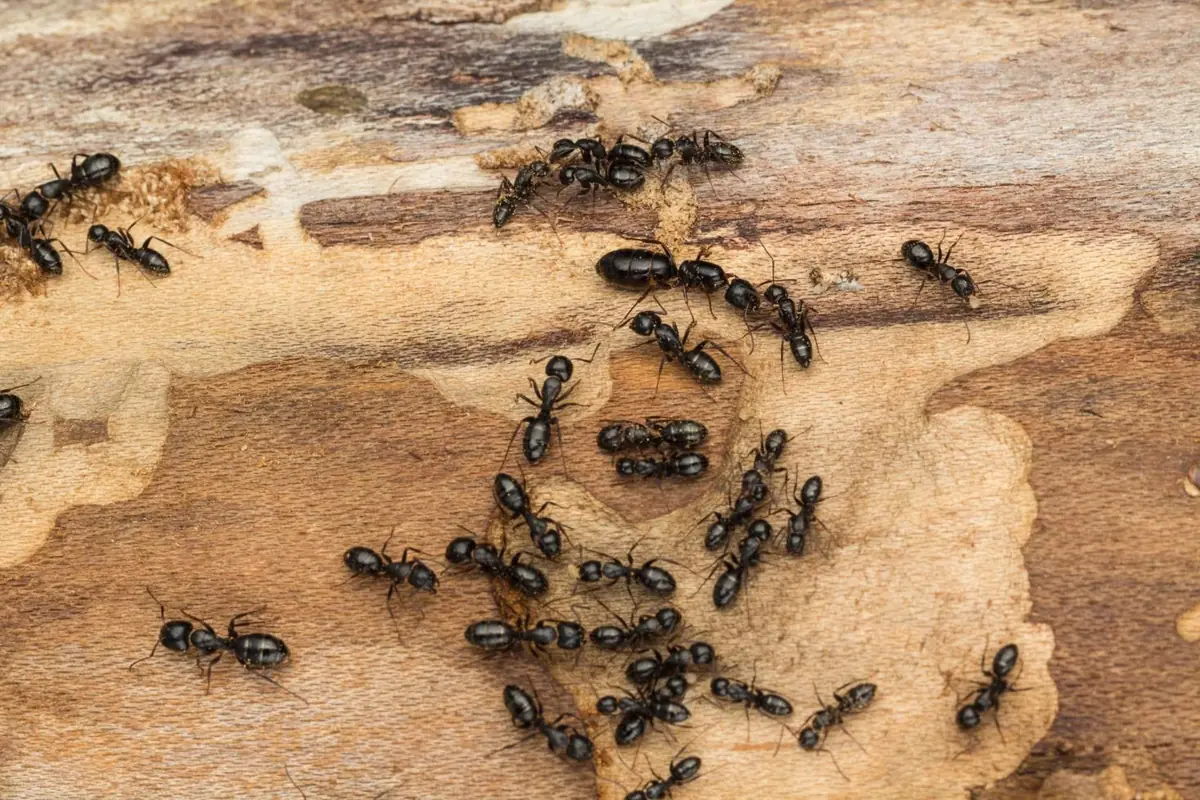
Heavy rain floods ant nests in the garden, and the colony moves indoors in long trails along skirtings and up kitchen cupboards. A can of spray clears the trail for an afternoon, but the queens are safe underground and the trail is back by morning. Ant bait, carried back to the nest by the workers, is what finishes the colony, with a non-repellent barrier at the doors and weep holes to stop the next wave. The ant control page covers it fully.
On the visit
We'll ask what you've seen and where, then go looking: inside cupboards, under rugs, behind the washing machine, along the outside walls. Once we know the insect and its source, we treat to suit it, whether that's a residual spray in cracks and voids, bait, a barrier outside, or simply clear advice on what to throw out and what to dry out. Nobody needs to move out or empty the kitchen. Keep children and pets off sprayed surfaces until they're dry. For the broader picture of what we deal with, see insect control.
Over the hills
Further along the coast, insect control in Wilderness deals with lake midges and forest damp, and insect control in Knysna has its own page too. For rats, cockroaches and everything else in town, start with pest control in George.
What decides the cost
Three things: the insect, the number of rooms involved, and whether the garden side of the walls needs a barrier too. Some calls end with advice and no treatment at all. We'll be straight about which yours is before any work starts.
Not sure what you've found? Take a clear, close photo next to a coin for size and WhatsApp it to us, or ring 044 012 5011 and describe it. You can also ask for a visit online.
Frequently asked questions
Our new house in George has tiny pale insects on the walls. What are they?
Most likely booklice, feeding on mould you can't see while the plaster dries out. Ventilate, use a dehumidifier and keep furniture off the walls. They fade as the house dries.
Winged insects came out of the ground after a storm. Should we worry?
Check the shape. A pinched waist and unequal wings means ants. A straight body and four equal wings means termites, and those are worth having inspected.
Can you identify an insect from a photo?
Yes, if it's clear and close with something for scale. Send it to us on WhatsApp and we'll tell you what it is and whether it needs treatment.
Will one spray deal with all the insects in our house?
No. Pantry beetles need the infested food gone, booklice need drier air and ants need bait. We treat each one the way that works for it.
Do booklice bite or damage books?
They don't bite. They graze on mould on paper and bindings rather than eating the paper, but a heavy population on old books is a sign the room is too damp.
Do you treat insects in George offices and shops?
Yes. We handle commercial premises across town, from offices with fishmoths in the archive room to shops with stored product insects in their stock.