


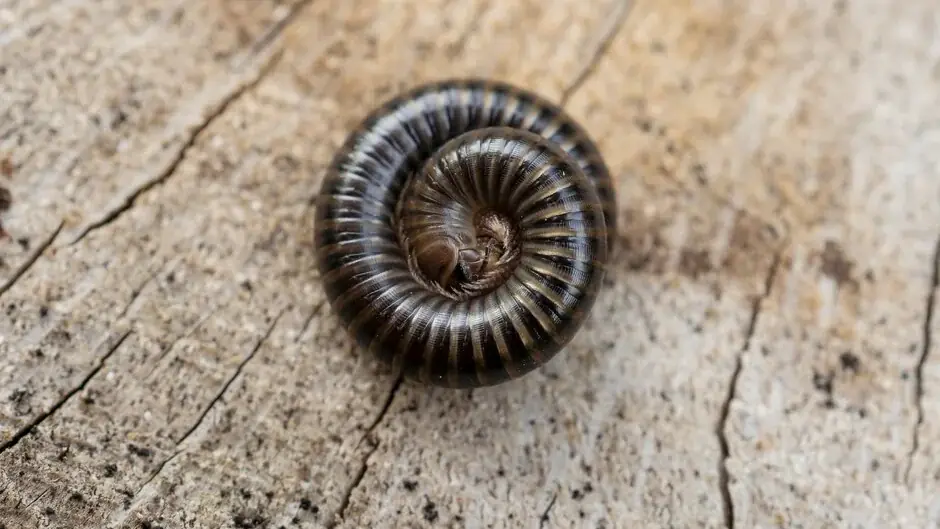
Two days of heavy rain, and now there are curled-up black millipedes in the garage, along the passage and in the shower. They're harmless, but they keep coming.
Sweep them up rather than squashing them, put something across the bottom of the doors tonight, and accept that a few more will come in over the next nights while the ground drains. The proper fix is outside the house: a dry strip along the walls and, for houses that go through this every wet season, a barrier put down ahead of the wet weather. Spraying inside does very little, because the millipedes on your floor are already on their way out of the garden.
Why rain sends them indoors
Millipedes live in the top layer of soil, mulch and leaf litter, where they eat rotting plant material. They need moisture, but when heavy rain saturates the ground, they climb up and out. On a wet night large numbers move across a garden at once, and the walls of your house are in the way. Some climb the walls; many find the gap under a door.
Because it happens to every millipede in the area at the same time, the invasion can feel sudden and enormous. It's also temporary. As the soil drains over the next few days to a couple of weeks, the numbers drop away. Our millipedes profile explains more about them.
The morning after
They're mostly active at night, so you'll find them in the morning: in the garage, along the bottom of sliding doors, in the tracks of the door itself, around the shower and bath drains, and against the skirtings in passages.
- Sweep or vacuum them up. Empty the vacuum outside afterwards
- Don't crush them on the carpet or tiles. Crushed millipedes release a fluid that stains
- Tip them out well away from the house, on the far side of the garden. They'll go back to the soil
- Check shoes left in the garage before putting them on
Getting the stains out
The defensive fluid leaves yellow to reddish-brown marks on grout, carpets and pale floors, and on fingers.
- Tiles and floors: wipe straight away with warm soapy water. Old marks can need a few goes
- Grout: a paste of bicarbonate of soda and water, scrubbed with an old toothbrush and rinsed, often lifts it
- Carpet: blot, don't rub, with a damp cloth and a little dishwashing liquid
- Skin: wash with soap and water. The colour fades on its own over a few days. Keep stained fingers away from eyes, because the fluid stings
Tonight: close the doors
Millipedes are slow and most come in at floor level, so a simple barrier along the bottom of the doors stops a lot of them.
- Lay a rolled towel or a draught snake along the bottom of garage doors and sliding doors
- Keep outside doors closed after dark
- Check that the rubber seal at the bottom of the garage door actually touches the floor all the way across
- Close the bath and shower plugs at night if they're turning up there
The garden changes that make the difference
Millipedes come from the beds and lawn closest to the house. Give them a dry, bare zone to cross and far fewer reach the walls.
- Create a dry strip of about a metre along the walls: paving, gravel, or bare soil, with no mulch, leaf litter or dense ground cover
- Move the compost heap and mulch piles well away from the house
- Water in the morning, not the evening, so the soil next to the walls isn't soaking wet overnight. Point sprinklers away from the foundations
- Clear leaves from gutters so they don't overflow onto the beds below
- Check where downpipes discharge. A downpipe that floods a bed beside the house makes that corner a millipede magnet
When a barrier treatment is worth it
If you're in a house that backs onto bush, forest or fynbos, or has deep mulched beds right up to the walls, this is likely to happen every rainy season. Then it pays to have the outside of the house treated. A residual product goes along the foundations, door thresholds, air bricks, weep holes and paving edges, so millipedes walking towards the house pick it up before they get in.
Timing matters. Put it down while the garden is still fairly dry and the forecast turns wet, rather than in the middle of the flood. After a long spell of very heavy rain, the treatment on exposed soil weakens, and a top-up may make sense. See insect control for how outside treatments are done, or the local pages for George and Wilderness, where houses often back onto forest and open ground.
Children and pets
Millipedes don't bite or sting. Small children who pick them up end up with brown-stained fingers, which is harmless but should be washed before they touch their eyes or mouth. A dog that mouths a millipede usually drools and paws at its mouth for a while because the taste is unpleasant. Rinse its mouth with water if it'll let you. If it keeps vomiting or seems unwell, call your vet.
Is it actually millipedes?
- Woodlice (also called pill bugs) are grey, oval and armoured, with fourteen legs, and some roll into a ball. They come in after rain for the same reasons and the same fixes work
- Centipedes are flat and fast, with one pair of legs per body segment, and can give a painful bite. Use a dustpan, not your hand
- Earthworms on the paving after a downpour are just escaping the flooded soil. Leave them; they're good for the garden
If they're coming in every time it rains and you've had enough, phone 044 012 5011 or ask us about a barrier treatment.
Frequently asked questions
How long will the millipedes keep coming in?
Usually a few nights to a couple of weeks after heavy rain, tailing off as the ground drains. If they're still coming in big numbers weeks later, something near the house is staying wet.
How do I get millipede stains off tiles and grout?
Wipe tiles quickly with warm soapy water. For stained grout, scrub with a paste of bicarbonate of soda and water and rinse. Older marks may need a few attempts.
Should I spray insecticide inside the house?
There's little point. The millipedes indoors are already dying off, and more keep arriving from the garden. Treat outside, along the walls and doorways, where they come from.
Do we need a treatment after every rain?
No. One barrier treatment before the rainy season is the usual approach, with a top-up only after a long spell of very heavy rain.
My dog chewed a millipede. Should I worry?
Usually not. Drooling and pawing at the mouth for a while is common because of the taste. Rinse its mouth with water, and call the vet if it keeps vomiting or seems unwell.
Are the grey ones that roll into a ball millipedes too?
No, those are woodlice, which are small land crustaceans. They come in after rain for the same reasons, and the same dry strip and door seals keep them out.