
If you own or manage holiday accommodation in Hartenbos, the best time to treat for insects is a few weeks before the December rush, not on Christmas Eve when guests are already complaining. For people who live here year-round it's simpler: tell us what you're seeing, and we'll find where it's coming from and treat it.
The Hartenbos year
Few places on the Garden Route swing so hard between seasons. For most of the year the holiday flats, caravan parks and the resort are fairly quiet. Then December arrives and they fill up, with braais every evening, bins overflowing and doors and windows open around the clock. Each half of the year brings its own insects.
In the quiet months, closed-up flats with little air movement suit fishmoths, cockroaches and spiders, and ants find their way in around windows and doors with nobody there to notice. In summer, flies take over around bins and braai areas, ants follow spilt food and cool drinks, and fleas can build up in units where pets have stayed.
What we usually find
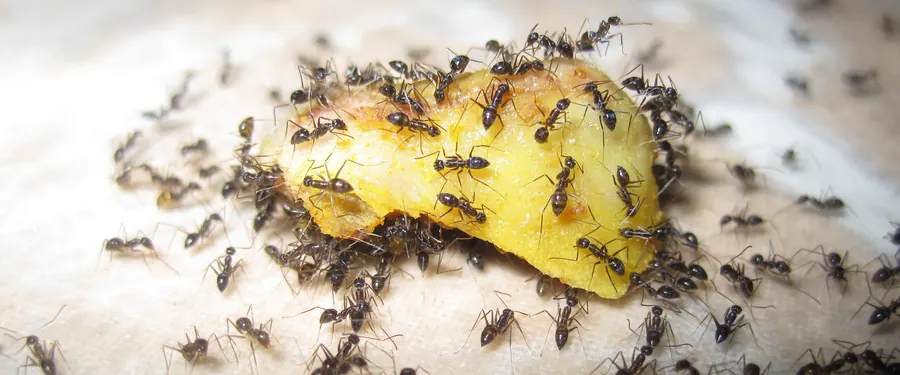
- Ants trailing along skirting boards and into kitchens, often nesting under the paving outside
- Flies around refuse areas, braai spots and anywhere fish is cleaned
- Fishmoths in cupboards, behind stored linen and among old paper and boxes
- Cockroaches in flat and resort kitchens, especially in blocks with shared plumbing
- Fleas in carpets and furniture where pets have stayed
- Spiders in corners, under eaves and in storerooms nobody opens
Resorts, caravan parks and rentals
Commercial accommodation needs a different rhythm. A one-off spray in October won't carry you through a season of changeovers. For resorts, caravan parks and owners with several units, we plan treatments around the season: a thorough treatment before the busy period, attention to ablution blocks, kitchens and refuse areas, and a check during or after the peak. In blocks with shared walls and plumbing, treating units together stops insects simply moving next door.
Living here all year
Not everyone in Hartenbos is on holiday. For permanent residents the season works the other way round: December brings full flats next door, extra rubbish and more braai smoke, and the flies and ants that come with them spill over into quieter homes nearby. A barrier treatment around the outside of the house before the season, and keeping your own bins tightly closed, goes a long way to keeping that outside.
How we treat
Every job starts with an inspection to find out what's attracting the insects and where they're living. Then we use what suits that pest: odourless, non-staining residual sprays as a barrier inside and around the outside of the building, ant bait that workers carry back to the nest, and gel bait for cockroaches. There's no need to unpack cupboards or move out, and treated areas are safe for children and pets once dry, which matters when guests are arriving the next day.
Before you lock up for winter
This is where a little effort saves a lot of trouble later:
- Empty and clean the fridge, leave it propped open, and take all rubbish away rather than leaving it in the outside bin
- Store linen in sealed plastic tubs instead of open shelves, so fishmoths can't get at it
- Clear crumbs from couches, drawers and under the stove
- Close or cover floor drains in showers and kitchens
- Ask a neighbour or agent to open up and air the flat now and then
An honest point about flies
Fly spray and citronella candles help on a December evening, but they don't solve a fly problem. Flies breed in rubbish and food waste, and the fix is lidded bins, quick removal of braai and fish scraps, and regular cleaning of refuse areas. We can treat the spots where flies rest around buildings, but no treatment outlasts an open bin in the sun.
How much will it cost?
That comes down to how many units or how much ground we're covering, which insects we're treating, how established they are and whether you want a single treatment or a seasonal plan. One flat with an ant trail is a small job. A resort, a caravan park or an owner with several units is usually priced as a programme of visits. We'll look first and give you a quote. If you've just spotted a few ants after the last guests left crumbs everywhere, a good clean and a shop-bought ant bait may well sort it.
Dealing with something bigger? See rodent control in Hartenbos or cockroach control. Our Mossel Bay insect control page covers the town next door.
Call 044 012 5011 to book a pre-season treatment or just ask a question. We're SAPCA registered, with more than 25 years in the Garden Route, and our treatments come with a 3-month guarantee.
Questions we get asked
Can you treat my flat while I'm away?
Usually, yes, as long as someone such as a neighbour, agent or the body corporate can let us in. We'll let you know afterwards what we found and what we did.
Is it safe for guests to arrive the day after a treatment?
Yes, for a normal insect treatment. Once the treated surfaces are dry, they're safe for adults, children and pets.
What are the silver insects in my cupboards?
Almost certainly fishmoths, also called silverfish. They feed on starch in paper, fabric and glue and like dark, slightly damp spaces such as a flat that's been closed up for months.
Does the 3-month guarantee cover the holiday season?
It runs for three months from the treatment, so a treatment in late November covers the December and January peak. If the insects we treated come back in that time, we re-treat.
Do you treat caravan park ablution blocks?
Yes. Ablution blocks, scullery areas and refuse points are often where insect problems start in a caravan park, so we include them in commercial treatments.