

The right insect treatment depends on which insect you've got and where it's living. On a Klein Brak River property, with the river close by, gardens running down to the water and smallholdings with animals and feed, that can be several things at once. Here's a quick guide to what we see most and how we handle each one.
Start here: what are you seeing?
Ants in long trails
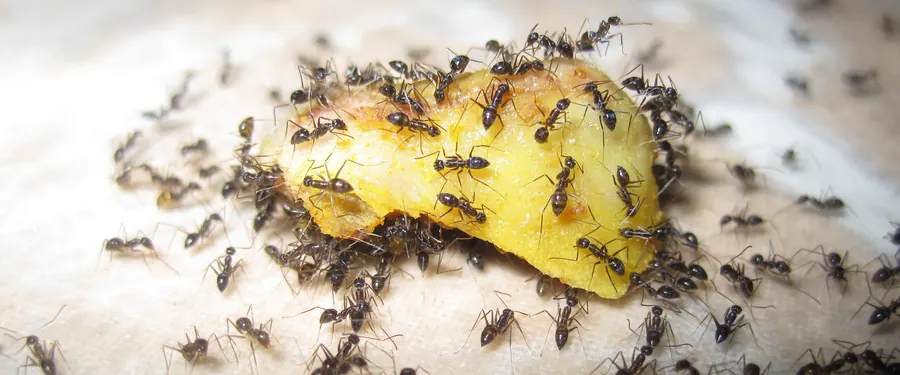
Ants are the most common call we get. After rain they move indoors looking for somewhere dry and something sweet. The fix is ant bait that the workers carry back to the nest, which kills the colony rather than just the trail. Spraying the trail scatters them and often splits one nest into several.
Fleas
Dogs, cats, and visiting farm animals bring fleas onto a property, and they breed in bedding, carpets and the shady spots in the garden where animals lie. We treat inside and outside together, and we'll ask you to have your pets treated by your vet at the same time. Doing only one of those three is why flea problems drag on.
Flies
Livestock, manure, compost and bins all breed flies. Residual spray on the surfaces where flies rest, like walls near doors, the undersides of eaves and inside outbuildings, cuts numbers down. But fly control on a smallholding is mostly about removing breeding material: manure and wet feed cleared regularly, bins closed.
Fish moths and silverfish
The humid air near the river suits them. They live in bookshelves, cupboards, boxes of paper and behind skirting boards, and they damage books, photos and clothes. A residual spray in the cupboards and voids deals with them.
Weevils, beetles and pantry moths
These stored product insects come in with flour, cereal, birdseed or animal feed and spread through the pantry or feed room. Throw out infested packets, clean the shelves, and we'll treat the cupboards. For a feed store or a large quantity of stored grain, we may recommend fumigation instead.
Spiders
Spiders follow their food. Fewer insects around the house means fewer spiders, so a general barrier treatment usually takes care of both.
Cockroaches have their own page: cockroach control in Klein Brak River. Not sure what you've found? Try our identification guide.
Life on the river
Klein Brak River is a small village of homes along the river and smallholdings around it. Water, thick gardens and animals all mean more insects than you'd find in a town house with a paved yard. That isn't a problem you'll ever eliminate, and we'd be lying if we said otherwise. The goal is to keep insects out of the house and under control around it.
How a treatment day goes
We start with a walk around the property, inside and out, to find the nests, breeding sites and ways in. Then we treat: odourless, non-staining residual sprays as a protective barrier inside and around the outside of the house, baits for ants, and targeted treatment of outbuildings where needed.
You don't need to unpack cupboards or leave the house. Children and pets can go back into treated areas once they're dry. Keep chickens and other animals out of treated outbuildings until then.
The common mistake: treating the house and ignoring the yard
On a smallholding, most insect problems start outside. Spraying the kitchen while the dog's bed in the shed is full of fleas, or the compost heap next to the back door is full of fly larvae, only buys you a week or two. We treat the source, and we'll be straight with you about the changes outside that will make the biggest difference.
Prevention that works here
- Keep feed and pet food in sealed bins, off the floor.
- Move compost and manure heaps well away from the house.
- Wash animal bedding often, and vacuum where pets sleep.
- Trim plants and grass back from the house walls so there's a clear strip.
- Seal gaps around doors, windows and pipes.
The local tip: when the river rises after heavy rain, ants on low-lying properties move uphill fast, often straight into the house. If you're expecting a wet spell, that's a good time to put ant bait out along the edges of the house before the trails arrive.
How much will it cost?
It depends on the size of the house, how many outbuildings need treating, which insects we're dealing with and how established they are. A general barrier treatment for ants and spiders on a house is a fairly simple job. A flea problem that's spread through the house, garden and sheds, or a feed room full of weevils, takes longer and may need a follow-up. We'll give you a free quote.
For a small ant trail, shop-bought ant bait placed along the trail can work. If they keep returning, or the problem is in the walls, it's time for a proper treatment.
Treatments carry a 3-month guarantee, and we've worked across the Garden Route for more than 25 years. For rats and mice, see rodent control in Klein Brak River, or read about insect control in George.
Call 044 012 5011 and tell us what you're seeing. We'll tell you what it'll take.
Questions we get asked
Do I need to treat my pets for fleas as well?
Yes. Have your vet treat your pets at the same time as we treat the house and garden. If the animals keep carrying fleas, the problem comes back.
Can you get rid of mosquitoes near the river?
We can reduce numbers around the house with residual spray on the surfaces where they rest, but near a river you'll never remove them completely. Emptying standing water in buckets, gutters and pot saucers helps a lot.
Is the spray safe for my chickens?
Keep chickens out of treated areas until the spray is dry. We'll tell you exactly where we've treated so you can manage that.
Why are the ants back after I sprayed them?
Spray kills the workers you can see but not the queen or the nest. Baits that ants carry home are what finish off the colony.
What should I do with weevilly flour?
Throw it out, along with any other open packets on the same shelf. Clean the shelves well and store new dry goods in sealed containers.
How often should a smallholding be treated?
That depends on the property and the insects, but many owners treat once or twice a year, before the warmer months. We can suggest a sensible schedule after an inspection.