


Holes in the good tablecloth, specks moving across the bathroom windowsill, a musty cupboard you'd rather not open. These insects are telling you something about the air in your house.
Fishmoths and booklice are damp problems that happen to have legs. Both need humid, still air to survive, and both fade away in a dry, well-aired house. A treatment can bring fishmoth numbers down quickly, but if the cupboard stays damp they come back. Booklice usually need no spray at all, just drier conditions. So start with the damp, and treat where the insects are already established.
Which one have you got?
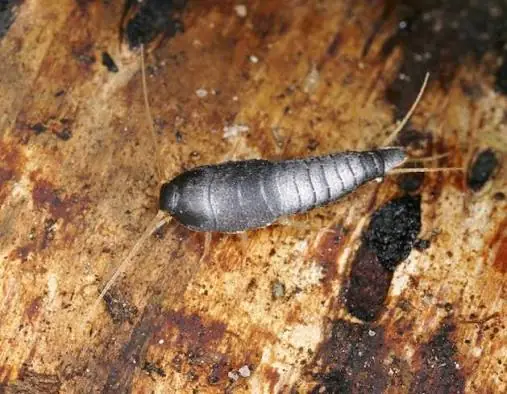
- Fishmoths (also called silverfish) are about a centimetre long, shaped like a teardrop, silvery and fast. You find them at night in bathrooms, linen cupboards and bookshelves, and you notice the damage: ragged holes in cotton, scraped patches on wallpaper and the edges of book pages grazed thin
- Booklice are tiny, a millimetre or two, pale and soft, and you usually notice them as moving specks of dust on a windowsill, a wall or the top of a flour bag. They eat mould, not your belongings
Our profiles on fishmoths and booklice describe each in more detail.
Where the damp comes from
Along the coast, the air itself carries a lot of moisture, especially near the lagoons and lakes around Knysna, Sedgefield and Wilderness. Add what a household produces every day and an ordinary house can stay damp in its corners for months. The usual sources:
- Hot showers in a bathroom with no extractor fan, or with the window kept shut
- Cooking without a lid or an extractor
- Washing dried indoors on rainy winter days
- Condensation running down single-glazed windows on cold mornings
- Rising damp in the lower walls of older houses
- A leaking gutter, downpipe or roof sheet soaking one wall
- Garden beds, creepers or paving built up against an outside wall
- Rooms and cupboards that are kept closed
A room-by-room check
Bathroom. Look at the corners of the ceiling and the back of the toilet for black mould spots. Run the extractor fan for twenty minutes after every shower, or leave the window open. Wipe down the shower glass and tiles.
Kitchen and pantry. Booklice like flour, cereal and pet food stored in damp corners. Decant dry food into sealed plastic or glass containers, and check anything at the back of the bottom shelf.
Bedrooms. Built-in cupboards on an outside wall are the classic problem: shoes and leather bags turn white with mould, and clothes smell stale. Leave the doors ajar for a few hours a day, and keep a gap between the clothes and the back wall.
Linen cupboard. Stacks of folded cotton in a closed cupboard, often next to the bathroom, is ideal fishmoth country. Air and refold it now and then, and wash anything that has been sitting for a season before using it.
Study and bookshelves. Pull the books slightly forward so air moves behind them. Old books with starch-based bindings are the most at risk.
Garage and store rooms. Cardboard boxes on a concrete floor draw up damp and feed fishmoths. Lift them onto shelves or pallets, or better, repack into sealed plastic crates.
Roof space. If the ceiling in one room has a stain or the insects keep coming from one spot, check above it for a leak.
Cheap fixes that work
- Air the house every day, even in winter, for at least an hour. Cross-ventilation, with windows open on opposite sides, does more than one big open window
- Moisture absorber tubs in closed cupboards help, as long as you empty or replace them when they fill
- A dehumidifier in the worst room makes a dramatic difference. Run it with the doors and windows closed and empty it daily
- Move furniture a hand's width away from outside walls
- Fix the gutters and downpipes so water runs away from the walls
- A cheap hygrometer tells you whether it's working. Fishmoths and booklice both struggle once a room stays below roughly 60 percent humidity
When a treatment makes sense
If you're still finding fishmoths regularly after a few weeks of drying out, or there are lots of them in skirtings, built-in cupboards and bookshelves, a treatment helps. The cracks, cupboard corners, skirtings and voids where they hide get a residual spray with no smell that leaves no marks. You don't need to empty cupboards for it. Booklice are rarely worth spraying on their own, unless the room can't easily be dried.
Our insect control page explains how general insect treatments are done.
Rescuing books, photos and papers
Take the most precious items out of cardboard and into sealed plastic boxes, and store them in the driest room in the house, never the garage or roof. Books with insects in them can be sealed in a plastic bag and kept in a freezer for about a week, which kills insects and eggs inside without damaging the paper. Let them warm up in the bag before opening, so condensation doesn't form on the pages.
Closed-up houses
A holiday home is especially prone, because the air inside goes still for months. If yours stands empty, leave inside doors and cupboard doors open when you lock up, and ask someone to air the house now and then. The countdown in getting a holiday home ready for December covers opening it up again.
When it's bigger than insects
Mould growing across a ceiling, tide marks on the lower walls or plaster crumbling away are building problems. A builder or damp specialist needs to look at them. We deal with the insects; the damp itself may need more.
If the insects are winning despite the drying out, ring 044 012 5011 or describe the problem to us, and mention which rooms are worst.
Frequently asked questions
Do fishmoths mean my house is dirty?
No. They point to damp, not dirt. Spotless houses near the sea and lagoons get fishmoths if the cupboards stay closed and humid.
Will a dehumidifier get rid of booklice?
Often, yes. Booklice need humid air and the mould that grows in it, so a room that stays dry for a few weeks usually loses them without any spray.
Can fishmoths damage clothes?
They can, especially cotton and linen that's starched, stained or stored for a long time. Wash stored textiles before putting them away and keep the cupboard aired.
Do moisture absorber tubs in cupboards actually work?
In small closed spaces like cupboards and wardrobes, yes. They need emptying or replacing when they fill, and they won't dry a whole room.
How should I store old photos and documents?
Sealed plastic crates kept in a dry bedroom or study are best. Avoid cardboard, the garage and the roof space, where damp and fishmoths both get at them.
Do I have to take everything out of the cupboards for a fishmoth treatment?
No. The treatment goes into the cracks, corners and voids where they hide, and it doesn't stain. Treated areas are safe once dry.