

Klein Brak River isn't a town of flats and restaurants. It's riverside homes and smallholdings, with sheds, stables, feed rooms and long runs of old drainpipe. That changes how cockroaches behave here, and it changes how we treat them. Most of the time the indoor problem has an outdoor source, and dealing with only one half of it means they keep coming back.
Two different cockroaches, two different problems
The big ones from outside
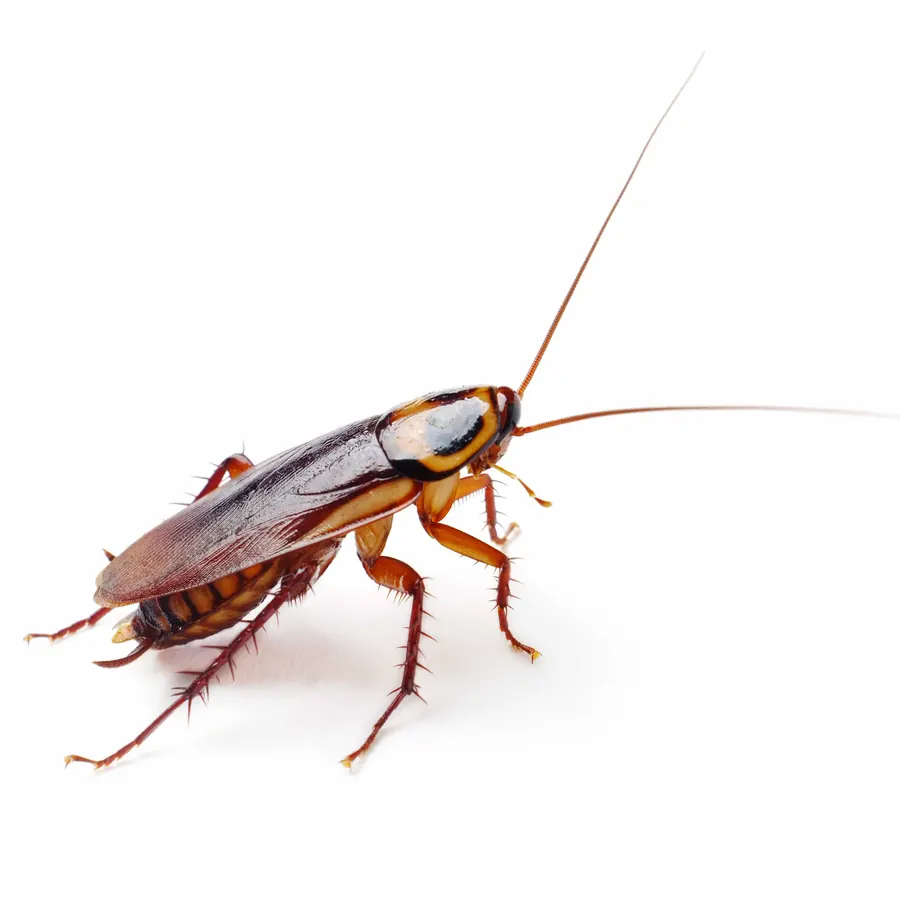
American cockroaches are the large, reddish-brown ones that sometimes fly on hot, humid evenings. On a riverside property they live in drains, septic tank lids, compost, stacked wood, old feed bags and the damp corners of outbuildings. They come into the house at night through floor drains, gaps under doors and holes where pipes pass through the wall.
The small ones in the kitchen
German cockroaches are smaller and paler, and they live indoors, close to warmth and water: behind the fridge, under the stove, inside the dishwasher door and in cupboard hinges. They usually arrive in groceries, boxes or secondhand furniture and appliances. If you're seeing them in daylight, the colony behind the scenes is large.
Not sure which you have? Our identification guide has pictures and the key differences.
Signs to look for
- Cockroaches running when you switch on a light at night
- Small dark droppings, like ground pepper, in drawers and along shelf edges
- Brown egg cases tucked into corners and behind appliances
- A sour, musty smell in a cupboard or pantry
- Large cockroaches around a floor drain, the laundry or the outside toilet
How we treat a Klein Brak River property
The first part of the visit is a walk around. We look at the kitchen, bathrooms and laundry, then outside at the drains, outbuildings, feed and tack rooms, compost and woodpiles. We want to know where they're breeding and how they're reaching the house.
Inside, we use gel bait for German cockroaches, placed in small dots in the cracks and hinges where they hide. They feed on it and carry it back, which reaches the ones you never see. Where large cockroaches are coming in from outside, we apply an odourless, non-staining residual spray as a protective barrier around doors, drains, the base of the walls and the outbuildings that are feeding the problem.
You don't need to empty the kitchen cupboards or leave the house, and once the spray is dry it's safe for children, dogs and cats. Keep livestock and poultry out of treated outbuildings until surfaces have dried.
Prevention on a smallholding
Cockroaches need shelter, moisture and food. On a property with animals, there's a lot of all three, so prevention is mostly about removing the easy options close to the house.
- Store feed in sealed bins, not open bags. Spilled pellets and grain under a feed room shelf will keep a cockroach population going indefinitely.
- Move the woodpile and compost away from the house walls.
- Fit covers on outside drains and keep inside drain traps full of water. A dry trap in a spare bathroom is an open door from the drain.
- Seal gaps where pipes and cables enter the house.
- Don't leave pet bowls out overnight in the kitchen.
The local tip: after the river has been high, or after a long wet spell, check your outside drains and septic covers. Wet weather pushes cockroaches up and out of the drainage system, and that's often when people suddenly start seeing them indoors.
Where people go wrong
After a gel bait treatment, the natural urge is to scrub the kitchen top to bottom with strong cleaner. That wipes off the bait and makes it taste wrong to the cockroaches, so the treatment stops working. Keep the kitchen as clean as usual, but don't wipe inside the hinges, cracks and appliance backs where we placed bait, and don't spray your own insecticide over it.
How much will it cost?
It comes down to the size of the house, how many outbuildings are involved and how established the cockroaches are. A kitchen with a small German cockroach problem is a short job. A smallholding where large cockroaches are breeding in drains, feed rooms and sheds takes longer, and a follow-up visit is often worthwhile. We'll quote free once we've seen the property.
If you've only seen the odd big cockroach wander in on a summer night, start with the simple things: drain covers, door sweeps, moving the woodpile. If that doesn't help, or you're seeing small ones in the kitchen, give us a call.
Our cockroach treatments carry a 3-month guarantee. For ants, fleas and other insects on the property, see insect control in Klein Brak River. Nearby, we also cover cockroach control in Groot Brak River.
Call 044 012 5011 and tell us what you're seeing. We'll talk it through and book a visit if it's needed.
Questions we get asked
Are cockroaches on a smallholding a sign of poor hygiene?
No. Outbuildings, drains, feed and compost give cockroaches shelter and food no matter how tidy you are. It's about limiting what's close to the house, not about being dirty.
Can you treat the feed room and stables?
Yes. We treat outbuildings with a residual spray where cockroaches are breeding. Animals should be kept out until the treated surfaces have dried.
Why do I only see them at night?
Cockroaches avoid light and come out to feed in the dark. Seeing them during the day usually means there are too many for the hiding places, which points to a large infestation.
Will the gel bait harm my chickens or dogs?
The gel is placed in tiny amounts inside cracks, hinges and behind appliances where animals can't get to it. It isn't spread on open floors.
How soon will I notice a difference?
Usually within a week or two. You may see a few more cockroaches in the first days as the treatment drives them out of hiding.