

Cockroaches in a Mossel Bay flat or kitchen are usually German cockroaches, and they're beaten with gel bait placed where they breed, not with spray on the walls you can see. If you live in a complex, the honest answer is that your neighbours may need treating too, because these insects move through shared pipes and wall cavities.
First, which cockroach have you got?
It matters, because the two common types behave differently.
- German cockroaches are small and light brown, with two dark stripes behind the head. They live indoors, breed fast and hide in warm, tight spots: the motor of a fridge, behind the stove, inside the hinge of a cupboard door. If you see them in daylight, there are a lot of them.
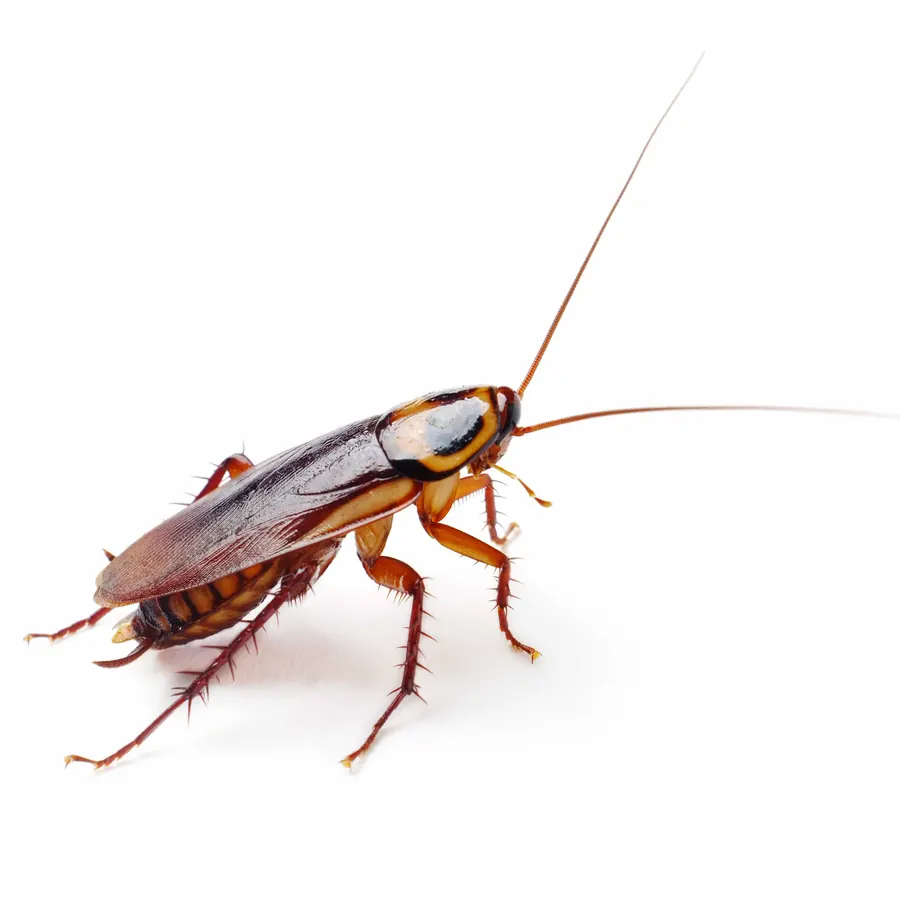
- American cockroaches are the big reddish-brown ones that fly on warm nights. They mostly live in drains, sewers and outside rubbish areas, and wander in through floor drains or under doors.
Not sure? Catch one in a jar and compare it with our identification guide, or describe it to us when you call.
Where they hide in Mossel Bay buildings
Mossel Bay has a large retirement population and a lot of sectional-title living, from older blocks of flats to newer complexes on the edges of town. Shared walls, shared service ducts and shared refuse rooms mean a cockroach problem in one unit seldom stays there. The source is often a refuse area or a plumbing duct rather than the flat that phoned us.
On the commercial side, the harbour and the food businesses around it keep us busy. Takeaways, restaurant kitchens and anywhere fish is cleaned or stored have the warmth, water and scraps cockroaches need. Warehouses and stores that serve the port and the industrial side of town see American cockroaches coming up from drains.
Mossel Bay is drier and windier than George, and that pushes cockroaches into the damp, sheltered places in a building: under sinks, around geysers, in dishwasher cavities and behind kick plates.
How we treat
- Inspect and pinpoint. We check the kitchen, bathrooms, refuse area and any shared ducts to find exactly where they're living and how they're moving.
- Gel bait in the harbourage. Small dots of gel bait go into cracks, hinges and appliance voids. Cockroaches eat it, go back to their hiding place and die there, and others in the group pick it up from them.
- Residual treatment where it helps. For American cockroaches we treat drains, entry points and the outside perimeter with an odourless, non-staining residual spray.
- Check-up. Heavy infestations, especially in commercial kitchens, need a follow-up to deal with young that hatch from egg cases after the first visit.
You don't need to empty your cupboards or leave the flat. Once treated areas are dry, they're safe for children and pets.
Complexes and body corporates
If you manage a block or sit on a body corporate, treating units one at a time as complaints come in tends to chase cockroaches from flat to flat. A building-wide treatment that includes refuse rooms and ducts works far better. We can plan it with the trustees or managing agent, and residents get notice so units can be opened on the day.
The mistake we see most
Bug bombs and aerosol sprays. They kill the cockroaches out in the open and drive the rest deeper into walls and into the units next door. Worse, many sprays leave a residue that cockroaches avoid, which stops them eating gel bait later. If you've already sprayed, tell us and we'll work around it.
A prevention tip for coastal kitchens
If anyone in the house fishes, clean the catch outside and get the scraps into a sealed outside bin the same day. Fish waste sitting in a kitchen bin overnight is a strong draw. Beyond that, fix dripping taps, don't leave pet food out overnight and seal gaps where pipes pass through walls.
How much will it cost?
It depends on the size of the property, how established the cockroaches are, and whether it's one flat, a whole block or a commercial kitchen. A small German cockroach problem in one kitchen is a short job. A restaurant, or a complex with problems in several units, takes longer and usually needs a follow-up, and food businesses often go onto a regular service contract. We'll look first and quote you before we start.
If you've only seen one big cockroach that came in from the garden on a warm night, you probably don't need us. Several small ones in the kitchen is a different matter.
We also handle rats and mice in Mossel Bay and general pest control in Mossel Bay. For a deeper look at how we deal with cockroaches, see cockroach control in George.
Call 044 012 5011 when it suits you. We're SAPCA registered, have worked in the Garden Route for more than 25 years, and back cockroach treatments with a 3-month guarantee.
Questions we get asked
Can I treat just my own flat?
You can, and it will help, but if neighbouring units have cockroaches they'll keep coming through shared pipes and walls. In a block, a building-wide treatment gives the best result.
Why are there still cockroaches a few days after treatment?
That's normal with gel bait. Cockroaches come out to feed on it and die over the following days, and young can still hatch from egg cases laid before we came. Activity should drop steadily, and if it doesn't, our 3-month guarantee covers a return visit.
Do I need to close my restaurant for a cockroach treatment?
Usually not. We can work before opening or after closing, and gel bait goes into cracks and voids rather than onto food surfaces.
Are the big flying cockroaches a sign of a dirty house?
No. American cockroaches live mainly in drains and outdoor areas and wander inside, especially on warm nights. Keeping drain covers in place and sealing gaps under doors helps a lot.
Is gel bait a risk to my cat?
It's placed in tiny amounts in cracks and gaps that pets can't get to. If you have pets, tell us and we'll talk you through where it's going.