

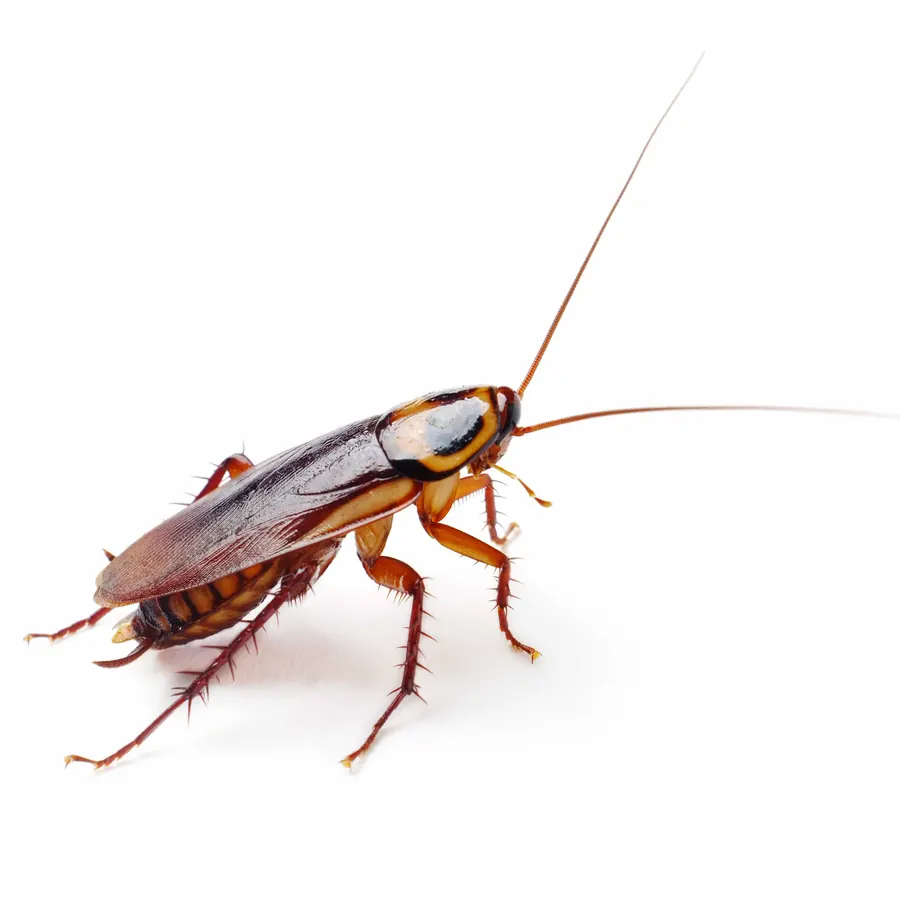
Why do cockroaches keep coming back to a Hartenbos holiday flat, even after you've sprayed? Because in a block of flats, cockroaches don't respect the boundaries of your unit. They live inside shared walls, ducts and plumbing, and they move between flats along pipes and cables. Treating one flat on its own often just pushes them next door for a few weeks. Treating the source, ideally across the affected units, is what actually ends it.
Shared walls, shared cockroaches
The cockroach you find in a holiday flat kitchen is almost always the German cockroach: small, light brown, and fast. It lives indoors in warm, damp places, and in a block of units the best spots are in the walls behind kitchens and bathrooms, where plumbing runs from one flat to the next. Under-sink cupboards, the backs of fridges and stoves, and the motor housings of appliances are all favourites.
Because the plumbing connects, one badly infested flat can keep supplying the rest of the building. That's why we always ask whether neighbouring units have had the same problem, and why a body corporate or managing agent often gets better value treating a whole block or section at once.
The Hartenbos calendar
Hartenbos is quiet for most of the year and packed in December. That pattern suits cockroaches more than you'd think. During the quiet months, a few hide in empty units living on crumbs and grease. Then the season arrives, kitchens are cooking three meals a day, rubbish bins fill up, and the population explodes just when the flats are full.
The best time to treat is before the season, not in the middle of it. Gel bait needs a little time to work through a colony, and treating in October or November means the flat is clear when the first guests arrive, not halfway through their stay.
How we treat a flat or a complex
- Inspection. We check the kitchen, bathroom and any service ducts, and ask about the units next door. We're looking for droppings, egg cases and the hot spots where they cluster.
- Gel baiting. Small dots of gel bait go into cracks, hinges, behind appliances and around plumbing penetrations. Cockroaches feed on it and share it in the colony, so it reaches the ones inside the walls.
- Residual spray where it helps. An odourless, non-staining residual spray around plumbing, skirting and entry points adds a barrier. It doesn't mark walls or fabrics, which matters in furnished rental units.
- Follow-up. For established infestations, a return visit checks the results and tops up the bait.
There's no need to unpack cupboards or move guests out for a normal treatment. Once the spray has dried, the flat is safe for children and pets.
Caravan parks and ablution blocks
Campsites and caravan parks have their own cockroach hotspots: communal kitchens, scullery areas, ablution blocks and the areas around rubbish collection points. American cockroaches, the large reddish-brown ones, often live in the drains and come up through floor drains in showers. Here we focus on the drains, the bin areas and the base of the buildings, and we'll plan the work with you to keep disruption to guests down. We do commercial work regularly, so a service contract for a resort or park is something we can set up.
What owners often get wrong
Leaving an empty unit with its drains dry. When a flat stands empty for months, the water in the shower and basin traps evaporates, and the drain becomes a direct path for cockroaches. Run all the taps and pour a little water into every drain before you lock up, and ask whoever looks after the flat to do the same now and then.
The other mistake is bombing the flat with a fogger just before guests arrive. It drives cockroaches deeper into the walls and leaves a residue on every surface, and they're back as soon as it settles.
How much will it cost?
For a single flat, the price depends on its size and how bad the infestation is. For a complex, it depends on how many units are treated, whether common areas and ducts are included, and how many follow-up visits are needed. Resorts and caravan parks usually do best on a regular contract timed around the season. We'll quote free, and we'll be honest if one flat on its own isn't going to fix a building-wide problem.
Our cockroach treatments come with a 3-month guarantee, and we've worked in the Garden Route for more than 25 years. For other pests in your Hartenbos property, see pest control in Hartenbos. If you're in town, we also handle cockroach control in Mossel Bay.
Call us on 044 012 5011. Tell us about the flat, and the block, and we'll suggest the best way to tackle it.
Questions we get asked
Should the whole block be treated, or just my flat?
If neighbouring units have cockroaches too, treating the whole block or section gives far better results. Treating one flat alone can work for a mild problem, but it often just moves them next door.
Can you treat while guests are staying?
Yes. A normal gel bait and residual spray treatment doesn't require anyone to move out. Guests just need to stay off treated surfaces until they're dry.
Will the treatment stain the furniture or curtains?
No. We use odourless, non-staining residual sprays, and the gel bait is placed only in cracks and crevices.
When should a holiday flat in Hartenbos be treated?
Ideally a few weeks before the December season. That gives the bait time to work through the colony before the flat fills up.
Do you work with bodies corporate and managing agents?
Yes. We do commercial work across the Garden Route and can quote for a single treatment or a regular contract covering units and common areas.
What should I tell the next-door owner?
Tell them you're having a treatment and ask whether they've seen cockroaches. If they have, it's worth treating both units at the same time.