


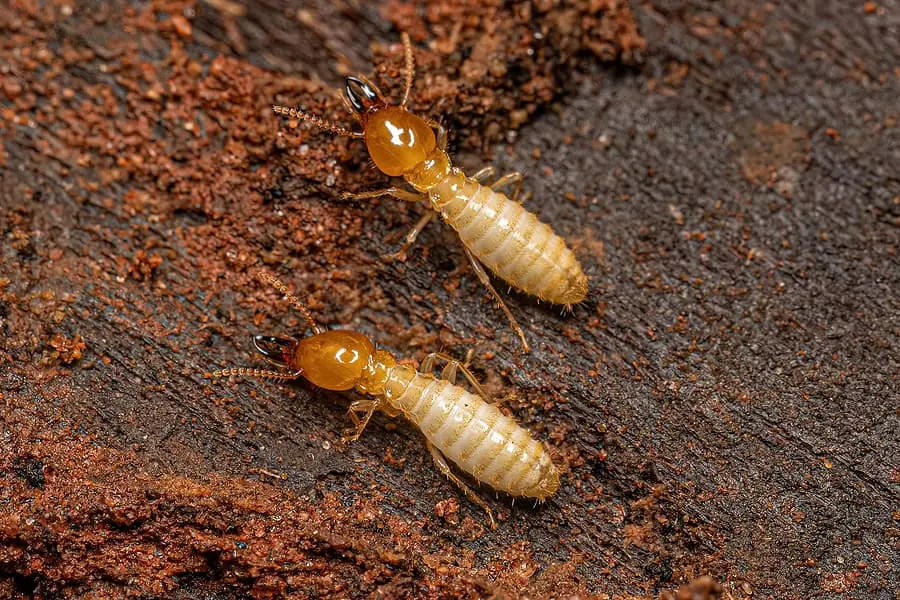
Knysna was built on timber. Yellowwood floors, timber-framed houses, wooden decks hanging over the lagoon, and roof beams that have been there for a century. Subterranean termites see all of that as food.
Mud tubes, hollow-sounding timber or a sudden swarm of winged insects in a Knysna house all point the same way: get it inspected before you do anything else. Subterranean termites live in the soil and come up into buildings through small gaps and inside their own earthen tunnels, hollowing timber out from within. The treatment that lasts combines a chemical barrier in the ground along and under the building, which every termite heading up from the nest has to cross, with direct treatment of the tunnels in the timber. Spraying what you can see, or knocking the tunnels down, just diverts them.
We inspect and treat termites in homes, holiday houses, guest houses, decks, outbuildings and commercial premises across Knysna, from the hillside suburbs to the islands and the estates on the Heads.
Why Knysna houses are at risk
Several things about Knysna make termite problems more likely than in many towns.
- Timber everywhere. Knysna's history is a timber history, and its houses show it: timber-framed homes, yellowwood and pine floors, wooden ceilings, timber cladding, decks, stairs and pergolas. A lot of that timber is close to, or in contact with, the ground
- Damp soil. The forest climate, the rain and the lagoon keep soil moist, and termites need moisture
- Hillside building. Many Knysna houses are built into slopes, with retaining walls, timber stilts and decks on posts. Every post in the ground is a possible route up
- Rebuilding. Many houses went up again after the 2017 fires, and any new slab poured without treated soil beneath it is open to colonies that were already in the ground
Decks, stairs and timber posts
Decks are a weak point in Knysna. A deck on timber posts set into soil gives termites a direct path into the structure, and from the deck to the house. Signs include soil tubes running up posts or the underside of joists, timber that feels soft or sounds hollow, and boards that give underfoot. Treated timber resists termites far better than untreated, but older decks and posts often weren't treated, or the treatment has leached out of the cut ends over the years. If a deck is being replaced, use treated timber, keep wood out of direct soil contact where possible, and ask about treating the soil around the post footings.
Signs inside the house
- Mud tubes on walls, foundations, inside cupboards and up the backs of skirtings
- Door frames, skirtings and floorboards that sound papery when tapped or let a key sink in
- Swarms of winged termites from cracks after rain, and piles of shed wings on windowsills
- Paint blistering over timber, or fine soil packed into joints and cracks
- Boxes and books on the floor of a garage or storeroom eaten from below
Our subterranean termites profile has photos, and if you've found a swarm, flying ants or termites will help you tell which it is.
How we treat termites in Knysna
- Look everywhere they could be Inside, outside, under suspended floors where we can get in, decks, stairs and outbuildings. We follow the live routes, not only the damage.
- Explain before we drill You'll see where the activity is and what we intend to treat, including any drilling, before work begins.
- Treat the ground A soil barrier of termiticide runs along the foundations, around deck and stair footings and beneath paving, by trenching or by drilling and injecting where the ground is sealed.
- Treat the timber Any wood or tunnel still holding live termites gets treated where it is.
- Tell you what needs fixing If timber is badly damaged, a carpenter will need to replace it once the termites are gone, and we'll show you where.
Our guarantee covers termite work, and you'll get its terms in writing with the quote.
Hillside and lagoon properties
Houses on steep slopes and on the lagoon edge can be tricky to treat, because some of the foundations are hard to reach, and the soil near the water needs care. We plan these jobs carefully, treat only where needed, and keep treatments away from the water's edge.
Termites or wood borer?
Older Knysna houses often have both, and they need different treatment. Wood borer beetles fly in, and they leave neat round exit holes with little piles of powder. Termites come up from the ground and leave earth tunnels and timber that's hollow inside but unmarked on the surface. Holes and dust mean wood borer treatment in Knysna. Selling? A beetle certificate in Knysna covers the beetles but not termites.
Building or rebuilding?
Treating the soil before the slab is cast is the cheapest termite protection a new house, extension or rebuild will ever get. See soil poisoning.
What it costs
We only quote after an inspection. Price depends on the metres of foundation and the number of deck and stair footings to treat, the amount of drilling through paving or floors, how hard the site is to work on, and how far the activity has spread. Termites under one deck take far less time than protecting a whole hillside house.
There's more on our main termite control page, and pest control in Knysna has everything else. Ring 044 012 5011 or arrange an inspection online.
Which termite is it?
Three termites, three very different problems. Match what you're seeing to the right one.
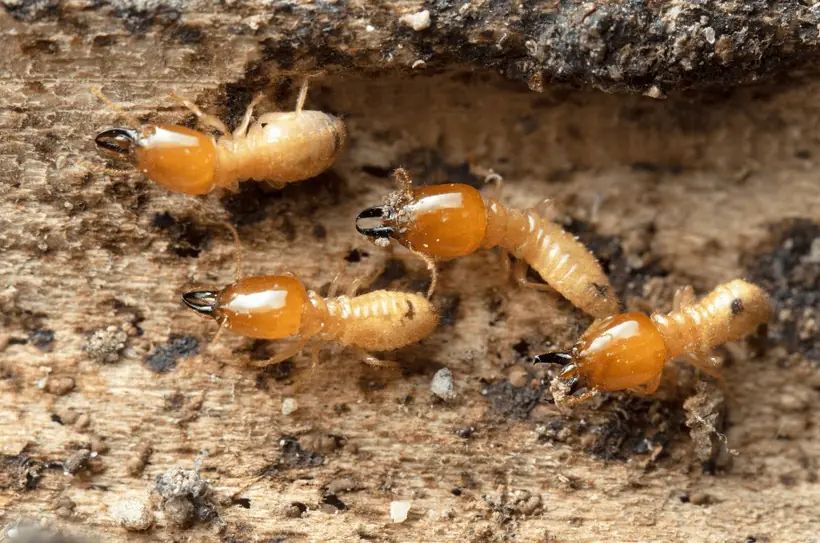 In the timber
Drywood termites
Live and nest inside dry wood
- Nest
- Inside the wood itself
- Soil contact
- None, no mud tubes
- Eats
- Furniture, frames, roof timber
- Tell-tale sign
- Tiny hard pellets
What you'll notice
Small heaps of sand-like pellets under pin holes in timber, that come back after you sweep them up.
Risk level
- Building timber
- Lawn and garden
- Hard to spot
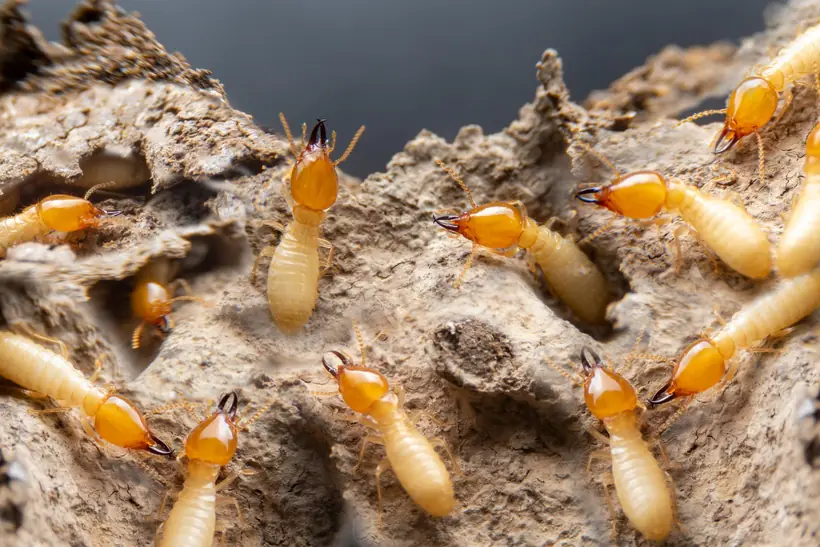 In the soil
Subterranean termites
Nest underground, travel in mud tubes
- Nest
- In the soil
- Gets in by
- Mud tubes up walls
- Workers
- Pale cream, a few mm
- Swarms
- Warm evenings after rain
What you'll notice
Pencil-thick mud tubes up a foundation, a wall or the back of a cupboard, and wings on the windowsill after rain.
Risk level
- Building timber
- Lawn and garden
- Hard to spot
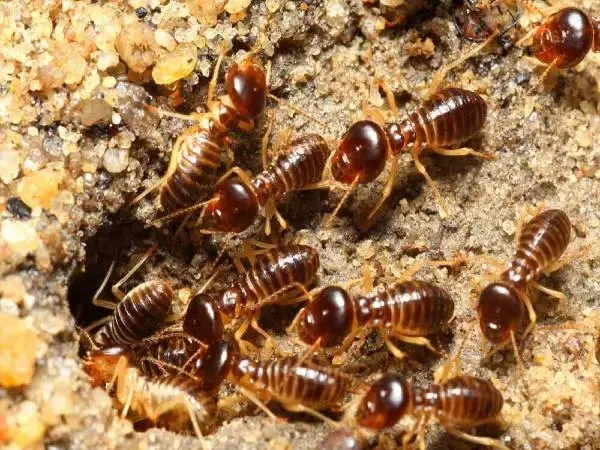 In the lawn
Harvester termites
Cut grass and carry it underground
- Nest
- Deep underground
- Eats
- Grass and plant litter
- Workers
- Brown to almost black
- Out foraging
- Cool mornings and evenings
What you'll notice
Small holes with loose soil heaps, grass cut into short pieces, and bare patches that grow in dry weather.
Risk level
- Building timber
- Lawn and garden
- Hard to spot
Frequently asked questions
Are termites a risk in Knysna?
Yes, especially in houses with timber close to damp soil: decks on posts, cladding that runs near the ground, and hillside homes with timber built into the slope.
Can termites get into my deck?
A timber post standing in soil is a direct route. Check the posts for soil tubes and walk the boards: spongy or hollow-sounding timber needs a closer look.
How do I tell termites from wood borer?
Termites hollow timber from the inside and leave soil-lined tunnels, with no exit holes. Wood borer leaves small round holes and little piles of powdery dust.
Do you treat houses on steep slopes and near the lagoon?
Yes. Sloping sites and properties near the water need careful planning. We treat only where it's needed and keep treatment well away from the water's edge.
Should a house being rebuilt have soil poisoning?
Yes. Treating the soil before the new slab is cast puts protection under the whole footprint, which can't be done as thoroughly once the floor is down.
Do you give a guarantee on termite work in Knysna?
We do. Its terms come in writing with the quote.