


Dana Bay is still growing, with new houses going up between the established ones. That makes termite protection a question for builders and new owners as much as for anyone with a hollow door frame.
For a new house in Dana Bay, termite protection starts before the slab is cast: the ground is treated twice, in the open trenches and again under the future floor, and a certificate is issued. For an existing house, it's an inspection, a treated zone in the soil along the foundations, and treatment of any timber where termites are already working. In both cases the protection only lasts if it's left intact, and in a suburb where gardens, paving and irrigation are going in all the time, that's the part that most often goes wrong.
We do soil poisoning for builders and owners, and termite inspections and treatments for homes and complexes in Dana Bay and across the Mossel Bay area.
Building in Dana Bay
Subterranean termites are present in the soil along this coast, and a new house on a stand that was fynbos last year is no exception. The simplest, most complete protection is soil poisoning before the slab goes down. It's done in two stages:
- Trenches When the foundation trenches are dug and before the footings are cast, the trench sides and bottom are treated.
- Under the floor When the fill inside the foundations is compacted and levelled, before the plastic and the slab go down, the whole area is treated.
After both stages you get a certificate, which the bank, the municipality or your NHBRC inspector may ask for. Your builder needs to call us at each stage, with enough notice that we arrive before the concrete truck does. The soil poisoning page has more on timing.
The garden that undoes the barrier
Here's the mistake we'd most like Dana Bay owners to avoid. The house is finished, the soil was properly treated, the certificate is in the file. Then the landscaping starts: a trench for irrigation along the wall, a new bed dug right up against the foundations, imported topsoil heaped over the original ground level, paving laid with fresh sand against the house, a pool dug next to the stoep. Each of those can cut through or bury the treated zone, and each untreated gap is a way in.
Before the landscaper starts, tell them where the treated zone is and ask them to keep trenches and beds a short distance from the walls, and not to build the ground up against the house. If work has already been done, an inspection tells you whether it needs topping up.
New houses still have timber
A modern house may have steel or treated roof trusses, but it still has door frames, skirtings, built-in cupboards, a pergola and probably a deck. Those are at floor level or close to the ground, which is exactly what termites reach first, and exactly what the soil treatment is there to protect.
Existing homes
Older Dana Bay houses, extensions added years after the original build, and houses where soil poisoning was never done or has long since worn off can all have termites. Look for:
- Narrow earth tubes on the foundations, garage walls, or inside cupboards and behind skirtings
- Door frames and skirtings that sound hollow or crumble, with soil inside the damage
- Bubbling paint over timber, and built-in cupboards that are soft at the base
- Winged termites inside after the first warm rain, and their dropped wings on sills
If you see any of these, leave them alone and let us see them as they are.
How we treat an existing house
- Inspection Inside and out, to find activity, damage, entry points and anything keeping the soil damp.
- Treated zone We treat the soil hard up against the walls, digging alongside bare foundations and drilling neat holes through any paving in the way, so nothing has to be lifted.
- Active galleries Wherever they're found in frames, skirtings and cupboards, they're treated directly.
- Advice On drainage, irrigation and soil levels, because a treated zone soaked by a sprinkler every evening won't last as well.
You stay home throughout. The only rule is that pets and children stay away from where we're working until it has dried. Our guarantee covers termite work, and its terms are written into the quote.
Complexes and estates
In a complex, units share foundations and common gardens. If one unit has termites, the neighbours should be inspected too, and the body corporate is the right body to arrange it. We can inspect and treat units and common property together.
What it costs
For a new build, soil poisoning is priced on the floor area and the length of the foundations. For an existing house, it's the length of wall, the amount of paving to drill through, and the extent of any live damage. An inspection comes first.
For more on the termites themselves, see subterranean termites, and for the region, termite control. Mossel Bay houses are covered on termite control in Mossel Bay, and everything else we do in the suburb on pest control in Dana Bay. Ring 044 012 5011 or book an inspection or a soil treatment.
Which termite is it?
Three termites, three very different problems. Match what you're seeing to the right one.
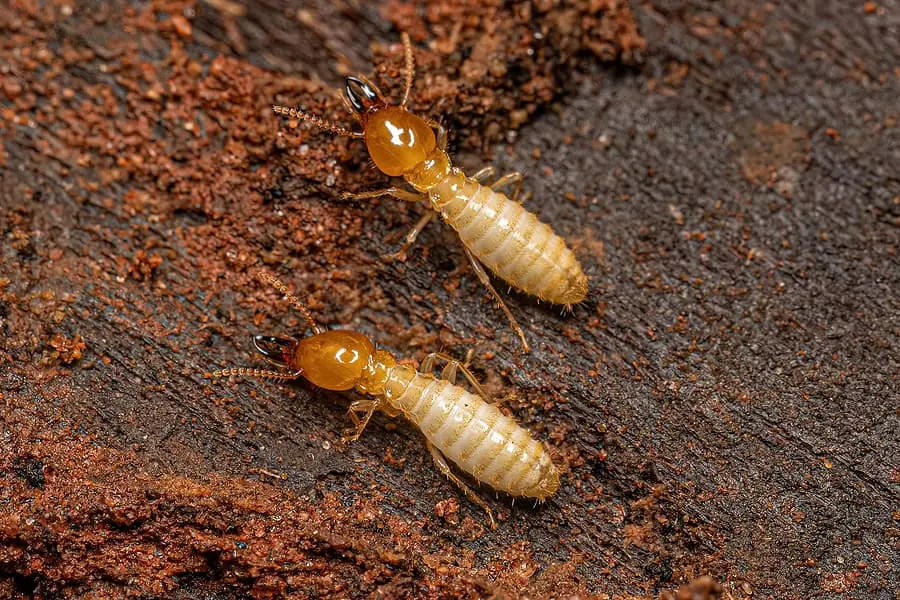
 In the timber
Drywood termites
Live and nest inside dry wood
- Nest
- Inside the wood itself
- Soil contact
- None, no mud tubes
- Eats
- Furniture, frames, roof timber
- Tell-tale sign
- Tiny hard pellets
What you'll notice
Small heaps of sand-like pellets under pin holes in timber, that come back after you sweep them up.
Risk level
- Building timber
- Lawn and garden
- Hard to spot
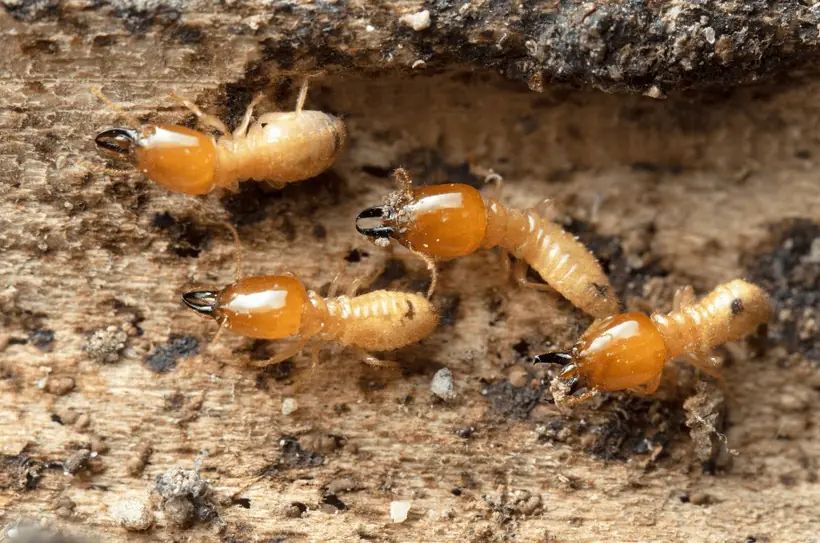
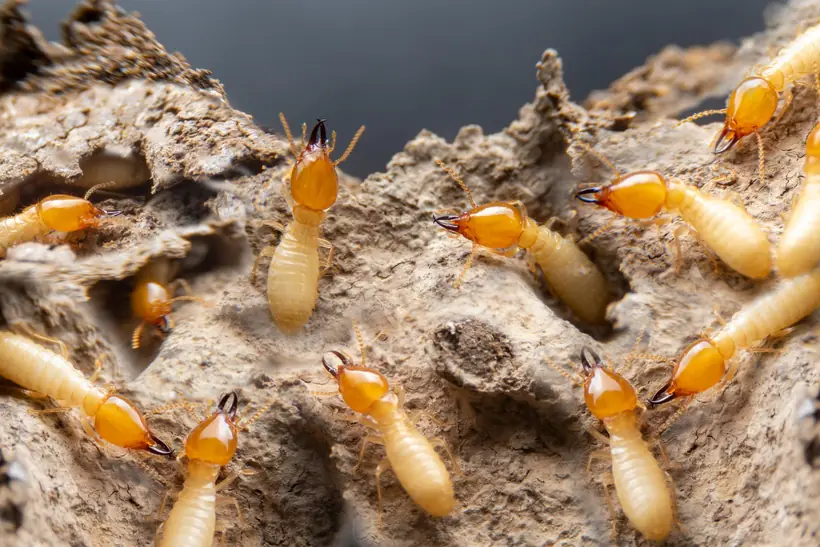 In the soil
Subterranean termites
Nest underground, travel in mud tubes
- Nest
- In the soil
- Gets in by
- Mud tubes up walls
- Workers
- Pale cream, a few mm
- Swarms
- Warm evenings after rain
What you'll notice
Pencil-thick mud tubes up a foundation, a wall or the back of a cupboard, and wings on the windowsill after rain.
Risk level
- Building timber
- Lawn and garden
- Hard to spot
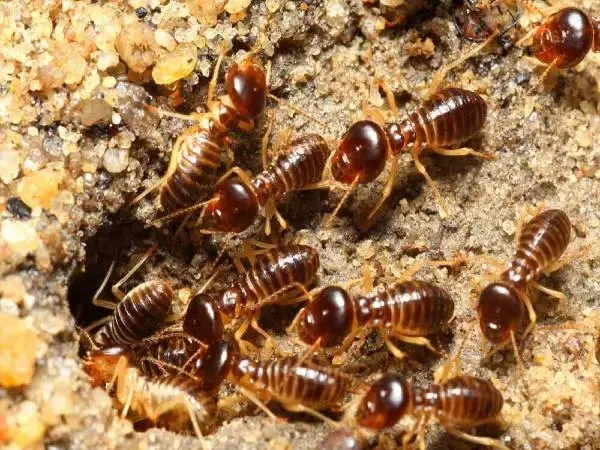 In the lawn
Harvester termites
Cut grass and carry it underground
- Nest
- Deep underground
- Eats
- Grass and plant litter
- Workers
- Brown to almost black
- Out foraging
- Cool mornings and evenings
What you'll notice
Small holes with loose soil heaps, grass cut into short pieces, and bare patches that grow in dry weather.
Risk level
- Building timber
- Lawn and garden
- Hard to spot
Frequently asked questions
When should my builder call you for soil poisoning?
Twice: once when the foundation trenches are open, and again when the fill under the floor is compacted and level, before the plastic and slab go down.
Will there be paperwork for the soil treatment?
Yes. Once both stages are done you get a certificate to keep with your building plans and show to anyone who asks for it later, including a future buyer.
Can landscaping damage the termite barrier?
Yes. Irrigation trenches, beds dug against the walls, soil heaped over the original level and new paving can cut through or bury the treated zone.
Our house is new. Do we still need to worry about termites?
If the soil was treated and the treated zone hasn't been disturbed, you're well protected. If the garden was built up against the walls afterwards, have it checked.
Can you treat an existing house without lifting the paving?
Yes. We drill small holes through the paving and slab edges to treat the soil underneath.
Do units in a complex need treating together?
Where they share foundations and gardens, yes. If one unit has termites, the neighbours should be inspected too.