

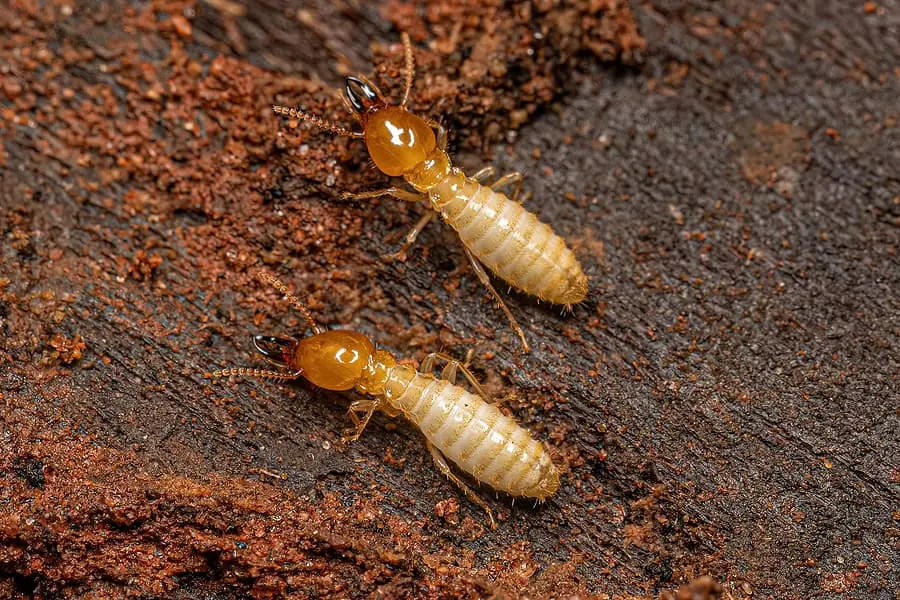
Old village cottages with timber floors, holiday homes beside the estuary and new houses on the hills: Groot Brak has a bit of everything, and termites can find their way into all of it.
Subterranean termites in a Groot Brakrivier house are stopped by treating the soil along the foundations so they can't reach the timber, treating any galleries they've already made, and drying out the ground where the house keeps it wet. Near the estuary that often means dealing with drainage as well. On a new build, the ground under the whole house gets treated while it's still open, before any concrete covers it.
We inspect and treat homes, holiday cottages, complexes and businesses in Groot Brakrivier, and on the coast and hills between Mossel Bay and George.
Living close to the water
Houses near the river mouth, along the lagoon edge and on the island sit on low, sandy ground where the water table is close to the surface and the soil stays damp. Subterranean termites need moisture to survive, so damp ground beside a house is an easy approach. Add gardens watered every evening, downpipes emptying against the walls and boat sheds with timber close to the ground, and there's a lot to keep them interested.
What helps: lead downpipes and garden water away from the walls, keep soil and sand below the damp course, and don't let beds or lawns run right up to the foundations.
Older village homes
Groot Brak's older houses often have suspended timber floors, original wooden window frames and doors, and timber built-ins that have been there for decades. Termites working under a timber floor can do a lot of damage before anything shows above it. Signs to watch for:
- Floorboards that feel springy or sound hollow, especially near outside walls
- Skirtings and door frames that crumble, with soil packed inside
- Thin mud tubes on foundation walls, on the walls of the space under the floor, or up the back of a cupboard
- Small piles of wings on sills after the first warm rains
If the house has an access hatch to the space under the floor, we'll look there too. It tells us far more than the rooms above.
Holiday cottages
A cottage that's closed up from the end of the holidays until the next ones gives termites months of peace. Nobody walks on the floor, nobody opens the cupboards, and damage can build up quietly. An inspection every couple of years, and a quick look around the skirtings and cupboard bases whenever you arrive, catches problems while they're small. We can inspect while you're away if a neighbour or agent lets us in.
How we treat
- A proper look Rooms, outside walls and the void under any timber floor, searching for live termites, damage, damp and the route they took.
- Soil treatment The ground along the foundations is opened or, under paving, reached through drilled holes, and treated so that termites coming from outside have to cross it.
- Under-floor work Where there's a suspended floor, the soil and foundation walls underneath are treated as well.
- Galleries Active timber is treated where we find termites working in it.
- The cause Leaks, drainage and soil levels are pointed out so the treatment isn't undermined.
You can stay in the house. Keep children and pets clear of the work until it's dry. Termite treatments carry our guarantee, set out in writing with the quote.
Building or extending
If you're building on the hills above town, or adding a room to a village house, ask your builder to book us twice: when the trenches are dug, and when the floor fill is ready for its plastic. A certificate follows for the bank and the council. Our soil poisoning page explains the timing.
Boat sheds and outbuildings
Boat sheds, garages and workshops by the water are easy to forget. Timber workbenches standing on the floor, offcuts stacked against a wall, a wooden boat trailer parked on sand for the winter: termites reach all of them from the ground. Keep timber up on blocks or racks, clear the floor along the walls, and ask for the outbuildings to be included in the inspection.
Don't confuse it with borer
Small round holes and fine powder in a floor or a piece of furniture are usually wood borer, not termites. Termites leave no exit holes; they hollow timber from inside and pack the space with soil. If you're not sure which you've got, a photo helps, and our wood borer treatment page explains the other kind.
What it costs
We quote after inspecting, and the figure follows the length of the walls, any under-floor void, the paving to drill and the damage we find. A two-bedroom village cottage and a big waterfront house with a boat shed are very different jobs.
How these termites live is explained in our subterranean termites profile, and the regional picture is on termite control. Groot Brak's other services are on pest control in Groot Brakrivier. If you've found mud tubes or a swarm of winged termites, phone 044 012 5011, or arrange an inspection and we'll look before anything is decided.
Which termite is it?
Three termites, three very different problems. Match what you're seeing to the right one.
 In the timber
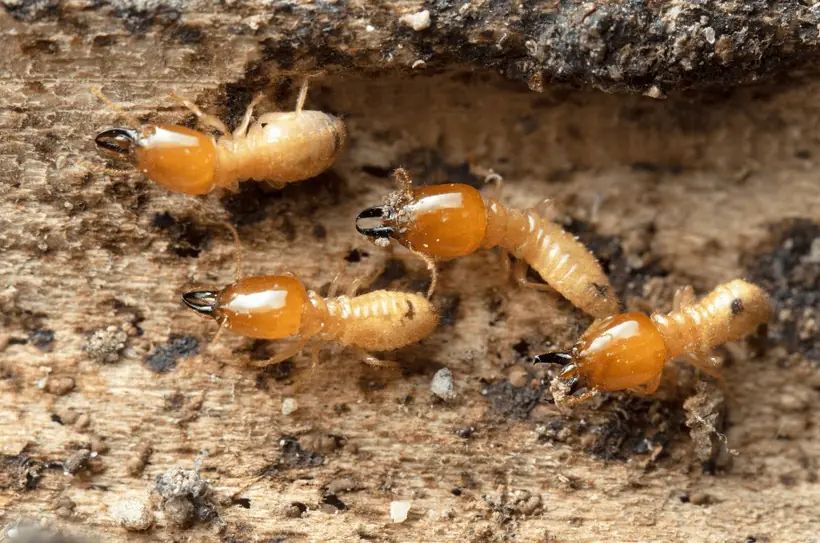
Drywood termites
Live and nest inside dry wood
- Nest
- Inside the wood itself
- Soil contact
- None, no mud tubes
- Eats
- Furniture, frames, roof timber
- Tell-tale sign
- Tiny hard pellets
What you'll notice
Small heaps of sand-like pellets under pin holes in timber, that come back after you sweep them up.
Risk level
- Building timber
- Lawn and garden
- Hard to spot
 In the soil
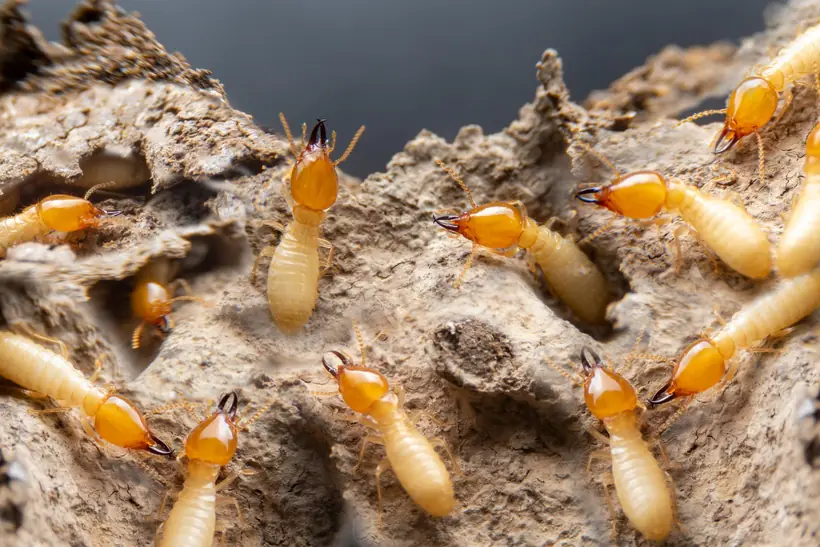
Subterranean termites
Nest underground, travel in mud tubes
- Nest
- In the soil
- Gets in by
- Mud tubes up walls
- Workers
- Pale cream, a few mm
- Swarms
- Warm evenings after rain
What you'll notice
Pencil-thick mud tubes up a foundation, a wall or the back of a cupboard, and wings on the windowsill after rain.
Risk level
- Building timber
- Lawn and garden
- Hard to spot
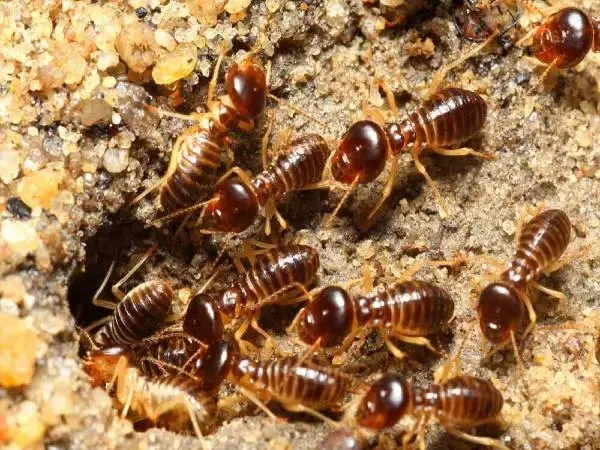 In the lawn
Harvester termites
Cut grass and carry it underground
- Nest
- Deep underground
- Eats
- Grass and plant litter
- Workers
- Brown to almost black
- Out foraging
- Cool mornings and evenings
What you'll notice
Small holes with loose soil heaps, grass cut into short pieces, and bare patches that grow in dry weather.
Risk level
- Building timber
- Lawn and garden
- Hard to spot
Frequently asked questions
Are houses near the Groot Brak estuary more at risk from termites?
They can be. Low, sandy ground with a high water table stays damp, and subterranean termites need moisture.
Can termites damage a timber floor without us noticing?
Yes. They can work under a suspended floor for a long time before boards feel springy or hollow. An inspection of the space underneath is the best check.
We only come down for holidays. Can you check the cottage in between?
Yes. Whoever keeps your spare key opens up for us, and the findings come to you by email.
There are tiny holes and powder in our floorboards. Is that termites?
Probably not. Small round holes with fine powder point to wood borer. Termites leave no holes and fill the damage with soil.
We're building on the hill. Is soil poisoning worth it?
Yes. It's the one chance to treat the ground under the entire house, and you get a certificate for it.
Does the treatment smell?
No. The products are odourless and don't stain, and you can stay in the house while we work.