


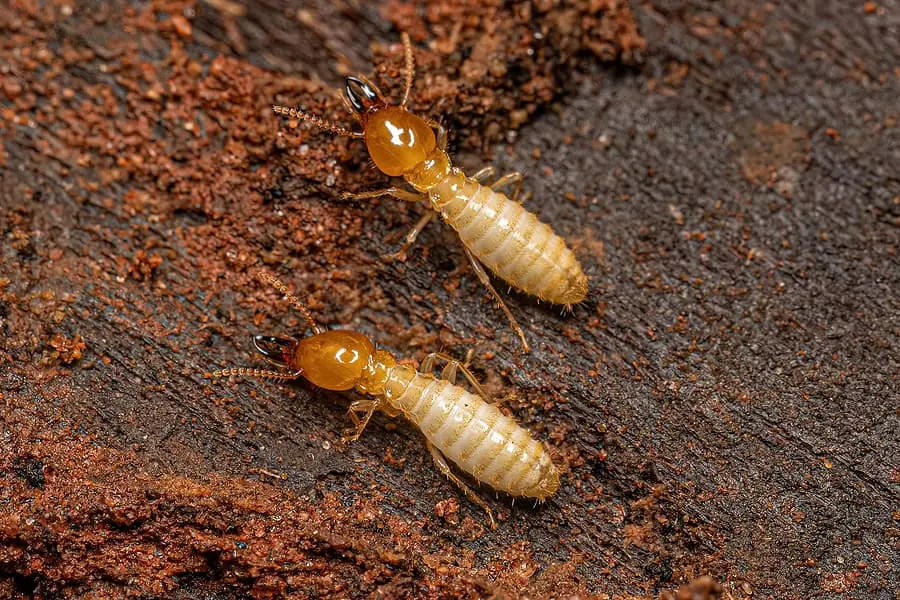
Between the forested hills and the lakes, Wilderness houses sit on damp ground, on slopes and on poles. Termites find a way into all three, and each needs a slightly different plan.
Subterranean termites in a Wilderness house are kept out by creating a treated zone in the soil along every wall where they could get in, treating any timber they're already working in, and dealing with the damp that drew them there. On a hillside that means the uphill walls and retaining walls as much as the front of the house. On the flats near the lakes it means the ground that stays wet after rain. For a cottage on poles, it's every pole where it meets the earth.
We inspect and treat homes, guest houses, lodges and holiday cottages in Wilderness, on the heights above it, and around the lakes.
Three kinds of Wilderness house
On the slope. Many homes here are cut into the hillside, with soil retained against the back wall and terraced gardens stepping down. Soil heaped above floor level on the uphill side stays damp, bridges the damp course and gives termites a hidden route straight into the back of the house, often behind built-in cupboards where nobody looks. We pay that wall the most attention.
On the flats. Houses on low ground towards the lakes and the river sit on soil that holds water after heavy rain. Termites love it. Gardens here are usually well watered too, which keeps the beds against the walls permanently moist.
On poles. Timber cottages and decks raised on poles, popular for their views, give termites a ladder. Where poles stand in soil, or sit on footings with soil heaped around them, each one is a potential entry point.
What gives them away
- Fine soil tubes running up foundations, poles, retaining walls or the back of a cupboard
- Skirtings, door frames or the bottom of built-in cupboards that sound hollow or give when pressed
- Paint or wallpaper that ripples over timber
- Winged swarms indoors on a warm, muggy day, and loose wings left on windowsills afterwards
- On a deck, boards that dip or feel soft underfoot near the posts
Leave tubes and damaged timber alone until we've seen them. Breaking them open sends the termites elsewhere and makes the job of tracing them harder.
How we treat
- Inspection We look inside and out, under decks and suspended floors where we can reach, and along retaining walls, to find activity, damage and the routes in.
- Treated soil zone Where foundations are exposed, we dig a trench beside them; where paving or a slab gets in the way, we drill small holes through it. Either way, the soil hard against the building gets treated. On pole structures, the soil around each pole is treated.
- Active timber Galleries in skirtings, frames, poles and deck timbers are treated where we find them.
- The damp We point out the leaks, downpipes, irrigation and soil levels that need fixing, so the treated zone isn't sitting in a puddle.
Normal life carries on in the house. Keep children and pets out of the work area until it's dry. You'll find the terms of our guarantee for termite work set out in the quote.
Guest houses and lodges
A guest who finds a pile of wings on the bedside table, or termite tubes behind the wardrobe, isn't going to write about the view. We plan work around your bookings, treat one unit or one side of the building at a time if that helps, and keep noise to daytime hours. Regular inspections are worth considering if the property has a lot of timber close to the ground.
Renovating or building
Adding a room, extending a deck or replacing a floor is the moment to deal with termites properly. New foundations should have their soil treated before the slab is cast, in the trenches and again under the floor, and you'll get a certificate. Our soil poisoning page explains when to book. If you're replacing deck posts, set them on concrete footings above the soil rather than straight into the ground.
A local tip: watch the uphill wall
Walk around the back of your house after rain. If soil or a garden bed sits higher than the floor inside, or water runs down the slope and pools against the wall, that's where to start. Cutting the soil back below the damp course and leading the water away with a channel or drain does as much for termite protection as any treatment.
What it costs
Wall length, the amount of paving or slab to drill, the number of poles and deck supports, any active damage, and how steep or awkward the site is: those decide the price. A compact house on level ground costs less than a three-level home on a slope with decks all round. We'll inspect and then quote.
More on how they live is on our subterranean termites page, and the regional termite control page covers the rest of the Garden Route. Other pests in town are covered on pest control in Wilderness, or pest control in Hoekwil if you're up on the heights. Mud tubes on the foundations or a hollow skirting? Call 044 012 5011 for an inspection, or book one online.
Which termite is it?
Three termites, three very different problems. Match what you're seeing to the right one.
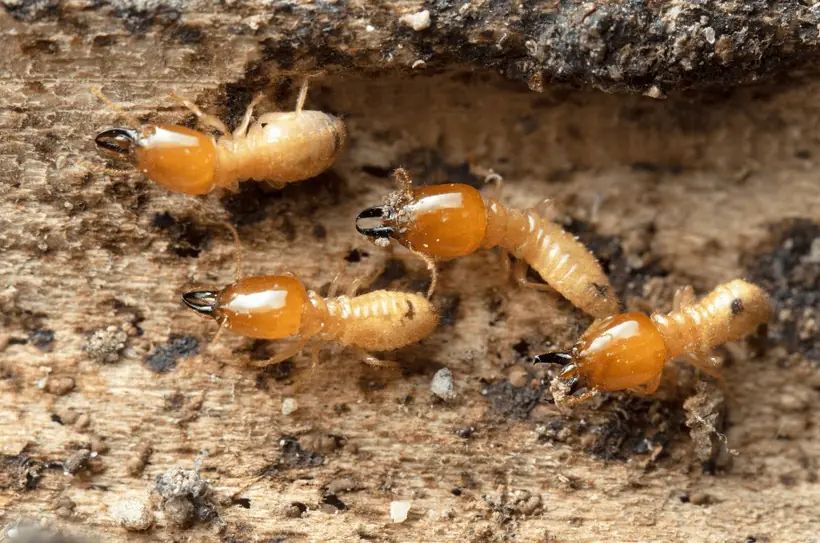 In the timber
Drywood termites
Live and nest inside dry wood
- Nest
- Inside the wood itself
- Soil contact
- None, no mud tubes
- Eats
- Furniture, frames, roof timber
- Tell-tale sign
- Tiny hard pellets
What you'll notice
Small heaps of sand-like pellets under pin holes in timber, that come back after you sweep them up.
Risk level
- Building timber
- Lawn and garden
- Hard to spot
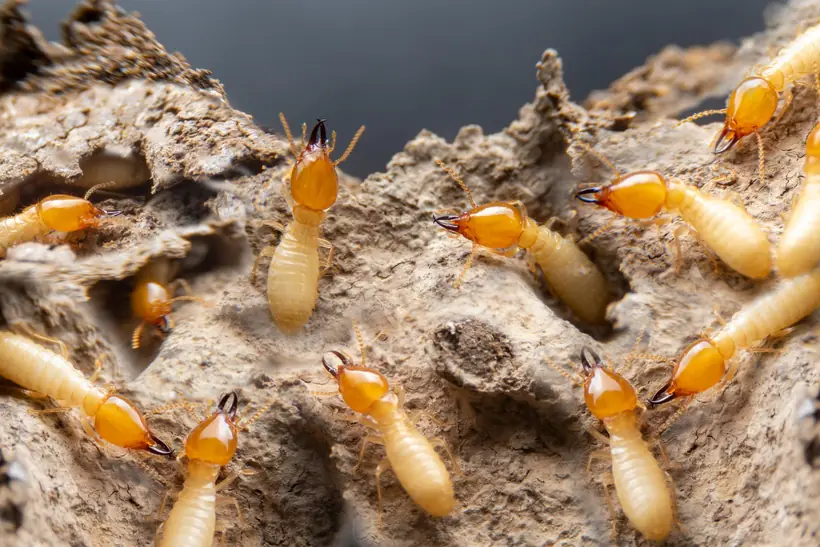 In the soil
Subterranean termites
Nest underground, travel in mud tubes
- Nest
- In the soil
- Gets in by
- Mud tubes up walls
- Workers
- Pale cream, a few mm
- Swarms
- Warm evenings after rain
What you'll notice
Pencil-thick mud tubes up a foundation, a wall or the back of a cupboard, and wings on the windowsill after rain.
Risk level
- Building timber
- Lawn and garden
- Hard to spot
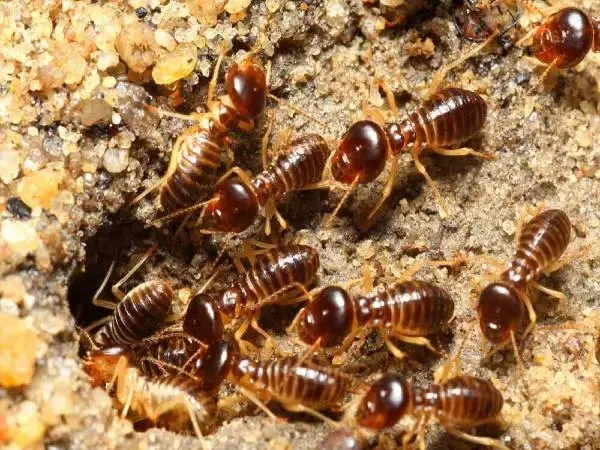 In the lawn
Harvester termites
Cut grass and carry it underground
- Nest
- Deep underground
- Eats
- Grass and plant litter
- Workers
- Brown to almost black
- Out foraging
- Cool mornings and evenings
What you'll notice
Small holes with loose soil heaps, grass cut into short pieces, and bare patches that grow in dry weather.
Risk level
- Building timber
- Lawn and garden
- Hard to spot
Frequently asked questions
Why do termites get in at the back of hillside houses?
Soil retained against the uphill wall stays damp and often sits above the damp course, giving termites a hidden route in, usually behind cupboards.
Can termites climb the poles of a raised cottage or deck?
Yes. They travel up poles inside soil tubes. Each pole standing in soil needs the ground around it treated, and new poles should sit on concrete footings.
Our garden near the lake floods after heavy rain. Does that make termites worse?
Damp ground suits them, so it can. Improving drainage away from the walls helps the treated zone last.
Can you treat a guest house without closing it?
Yes. We plan around bookings and can treat one unit or one side of the building at a time.
Is it safe for our pets?
Once the treated soil and timber are dry, yes. Keep pets out of the work area until then.
We're extending the deck. What should we do about termites?
Set new posts on concrete footings above the soil, keep soil and mulch back from the timber, and have the ground under the new section treated.